Picking out the right Sintering Furnace Belt can really make or break your production line—whether it runs smoothly or comes to a halt right by a hot furnace. For global buyers, it’s not just about snagging the lowest price. You’ve got to look at the bigger picture: stable dimensions, choosing the correct alloy, reliable welding, and good technical support are all key factors.
Dr. Elena Fischer, a senior materials engineer at Global Sintering Technologies, points out, “Belt lifespan starts with choosing the right material but actually ends with keeping the process disciplined.” That’s a pretty practical way to look at things. Sure, a belt might be made of heat-resistant stainless steel, but if it’s poorly aligned, you’re still gonna see edge wear, distortion, or uneven product flow. It’s those little details that really matter.
In this guide, we’ll walk through how experienced suppliers support international manufacturers. We’ll look at factors like Belt Mesh, wire thickness, tensile strength, furnace temperature, atmosphere, and load conditions. We also consider how they handle inspection records, trial runs, packaging, and after-sales support. All of these things help buyers make smarter comparisons between suppliers, with more confidence.
A reliable supplier should understand the whole process—not just the belt itself.
Companies like Advanced Furnace Systems and Eastern Metal Conveyor are great references when it comes to technical details, but every project’s unique. Different furnace designs, product weights, and operating routines mean you shouldn’t just copy a spec sheet from one line and hope it works. Sometimes, what’s suitable in one scenario simply doesn’t cut it in another. And let’s be honest—that’s an uncomfortable truth.
So, a good China-based supplier should ask the right questions before giving a quote. Stuff like: What’s the working temperature? What kind of atmosphere are you using? How often does your line run? What’s the maximum belt tension you need? The answers to these questions help them recommend the right belt and avoid costly replacements down the road.
Of course, no supplier gets every decision perfect. That’s why careful testing, honest communication, and thorough quality checks are so important. For buyers around the world, this combo creates a much safer path—leading to a durable Sintering Furnace Belt and a more predictable sintering process.
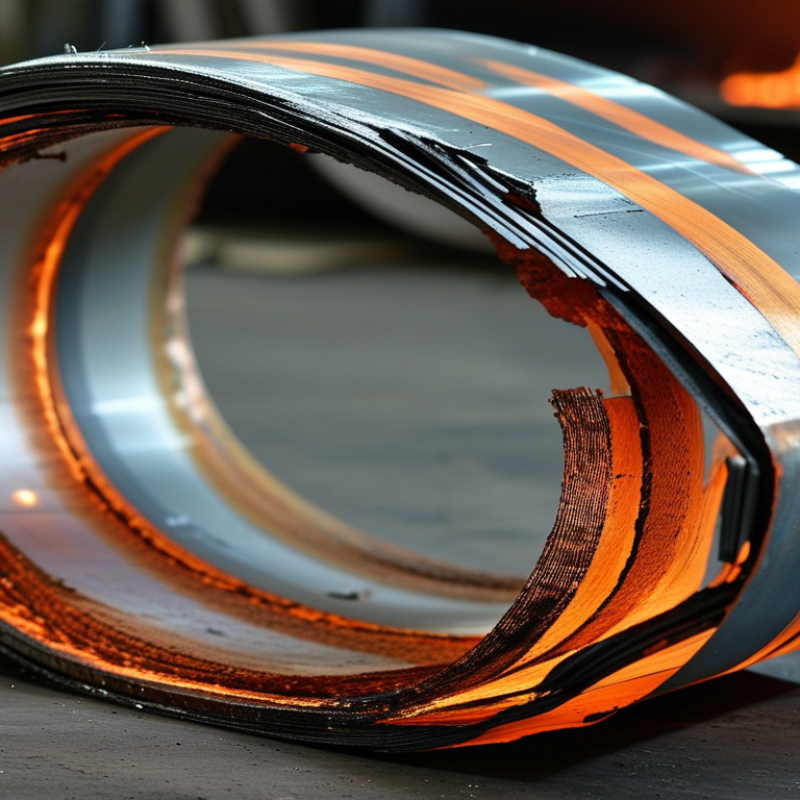
A Sintering Furnace Mesh Belt is a continuous metal conveyor used inside a controlled-atmosphere furnace. It carries pressed components through heating, sintering, cooling, and discharge zones. The belt must remain stable while temperatures rise and fall repeatedly. Its mesh openings allow gas movement around each part. This supports more even heating and helps reduce residue buildup.
In production, belt design depends on load weight, furnace temperature, atmosphere, and product size. High-temperature alloys are often selected for strength and oxidation resistance. A fine mesh may support small parts, while a heavier structure suits larger components. Belt pitch, wire diameter, edge construction, and joint style also affect service life. Small details matter.
A reliable supplier should provide material documentation, dimensional records, and practical installation guidance. Buyers should also check belt tension, tracking, weld quality, and spare-part availability. Poor alignment can create edge wear within weeks. A common mistake is choosing only by price. The lowest-cost belt may stretch faster or restrict gas circulation. The choice is rarely perfect. Actual furnace trials still deserve attention, because laboratory data cannot reproduce every production condition. Regular inspection of links, welds, and drive components helps identify problems before an unexpected shutdown.
How Sintering Furnace Belts Work in Industrial Production
A sintering furnace belt transports powder-formed parts through controlled heating zones. The belt moves at a steady speed, while temperature and atmosphere change along the furnace. In metal production, this process strengthens compacted components without melting them completely. Belt mesh allows heat and protective gas to reach each part evenly. Heat changes everything.
The belt material must tolerate high temperatures, repeated bending, and chemical exposure. Common designs use heat-resistant alloys, linked plates, or woven mesh structures. Engineers select the belt according to load, furnace length, product shape, and operating atmosphere. A fine mesh supports small parts, but it may collect powder more easily. A heavier belt carries larger loads, yet it needs more drive power.
In daily operation, technicians check belt tension, tracking, welds, and surface buildup. A minor alignment error can mark products or damage furnace guides. Cleaning schedules also matter, although production pressure sometimes shortens them. That decision can create avoidable downtime later. Small details matter. Operators should record belt speed, temperature variation, and maintenance findings after each inspection. These records help identify stretching, distortion, or unusual wear before failure occurs. Belt life is never determined by material alone. Furnace design, loading habits, atmosphere control, and maintenance discipline all influence performance. A reliable supplier should discuss these conditions before recommending a belt structure.
China Best Sintering Furnace Belt Supplier for Global Buyers
High-temperature furnace belts depend on material selection more than appearance. Stainless steel wire mesh suits many sintering lines because it offers strength, flexibility, and reasonable oxidation resistance. However, ordinary stainless steel can lose strength after repeated exposure above its recommended temperature. Nickel-based alloys perform better in severe heat, especially when the furnace atmosphere causes rapid oxidation or corrosion.
Wire diameter also changes belt behavior. Fine wire improves product support and surface contact, while thicker wire handles heavier loads and longer service cycles. I have seen belts fail because the mesh was correctly woven but poorly matched to the furnace temperature. Small details matter. Edge links need suitable reinforcement, and connecting rods should resist deformation during thermal cycling. High-temperature alloys can cost more, yet unexpected belt replacement often costs more than the initial material difference.
A reliable supplier should provide material certificates, tensile data, and operating temperature guidance. The supplier should also explain how atmosphere, load weight, belt speed, and cleaning affect service life. These factors are easy to overlook. A perfect belt rarely exists because every furnace creates different stress. Global buyers should request sample testing under actual production conditions. That practical step can reveal sagging, scaling, or weak joints before full installation.
| Material Family | Common Grade | Nominal Composition | Indicative Continuous Service Temperature | Atmosphere Suitability | Key Advantages | Typical Sintering Furnace Applications |
|---|---|---|---|---|---|---|
| Austenitic Stainless Steel | 304 / 304L | Approximately 18% chromium and 8% nickel, with a low-carbon 304L option | Up to approximately 800–870°C | Air and mildly oxidizing atmospheres | Good corrosion resistance, easy fabrication, broad availability, and economical initial cost | Light-duty mesh belts, low-to-medium temperature sintering, washing, drying, and heat-treatment lines |
| Austenitic Stainless Steel | 316 / 316L | Chromium-nickel stainless steel containing approximately 2–3% molybdenum | Up to approximately 800–870°C | Air and atmospheres containing moderate chlorides or corrosive contaminants | Higher resistance to pitting and corrosion than 304, especially in chloride-containing environments | Corrosive powder processing, chemical-related sintering, and applications requiring improved environmental resistance |
| Heat-Resistant Austenitic Alloy | 310S | Approximately 25% chromium and 20% nickel | Up to approximately 1,100–1,150°C | Oxidizing atmospheres and intermittent high-temperature service | Strong oxidation resistance, good high-temperature strength, and better scaling resistance than standard stainless steel | High-temperature sintering, brazing, powder metallurgy, and ceramic component processing |
| Heat-Resistant Austenitic Alloy | 253 MA | Chromium-nickel alloy with nitrogen and rare-earth additions for improved oxidation resistance | Up to approximately 1,050–1,150°C | Oxidizing furnace atmospheres | Good creep strength, oxidation resistance, and relatively favorable performance-to-cost ratio | Continuous mesh belts, radiant-heating zones, and high-throughput sintering systems |
| Nickel-Chromium Alloy | 600 | Nickel-chromium alloy with high nickel content and approximately 14–17% chromium | Up to approximately 1,090–1,100°C | Oxidizing, carburizing, and some reducing atmospheres | Excellent resistance to oxidation, carburization, chloride stress corrosion, and thermal cycling | Long-life furnace belts, controlled-atmosphere sintering, brazing, and demanding thermal-processing equipment |
| Nickel-Chromium-Iron Alloy | 601 | Nickel-chromium-iron alloy with aluminum additions that support a protective oxide layer | Up to approximately 1,150–1,200°C | Oxidizing, carburizing, and nitriding atmospheres | Very strong oxidation resistance, good dimensional stability, and high-temperature mechanical strength | Continuous sintering, powder metallurgy, heat treatment, and furnace zones with repeated thermal cycling |
| Nickel-Chromium Alloy | 800H / 800HT | Nickel-iron-chromium alloy designed for improved creep and rupture strength | Up to approximately 1,100°C | Oxidizing and carburizing atmospheres | Good high-temperature strength, carburization resistance, and structural stability under prolonged loading | Heavy-load furnace belts, high-temperature sintering, and applications requiring low belt elongation |
| Iron-Chromium-Aluminum Alloy | FeCrAl | Iron-based alloy containing chromium and aluminum; exact composition varies by wire specification | Up to approximately 1,250–1,400°C, depending on grade and belt design | Primarily dry oxidizing atmospheres | Very high oxidation resistance and high electrical resistivity; suitable for selected high-temperature designs | Specialized high-temperature mesh belts, ceramic firing, and applications where maximum oxidation resistance is required |
| Nickel-Based Superalloy | 601 / Similar High-Temperature Grades | Nickel-based alloy selected for high-temperature strength and resistance to oxidation or carburization | Typically approximately 1,100–1,200°C | Oxidizing, reducing, carburizing, or mixed controlled atmospheres, subject to process chemistry | Premium performance in severe thermal cycles, high mechanical loads, and chemically aggressive furnace conditions | Precision sintering, advanced powder metallurgy, specialty ceramics, and high-value continuous production lines |
Temperature ranges are indicative engineering values for continuous furnace-belt service and can vary with wire diameter, mesh construction, belt load, heating and cooling rates, furnace atmosphere, sulfur or halide contamination, and belt-support design. Final material selection should be confirmed against the actual process temperature and atmosphere.
Choosing a China-based sintering furnace belt supplier requires more than comparing prices. The ISO Survey 2022 recorded 1,265,216 ISO 9001 certificates worldwide. Yet certification alone does not prove belt performance. Ask for material certificates, heat-treatment records, weld inspection results, and batch traceability. A credible supplier should identify the alloy grade and explain its limits at your actual furnace temperature.
During factory evaluations, I inspect belt flatness, edge finishing, mesh accuracy, and joint alignment. A two-millimeter deviation can cause rubbing against guide rails. It can also create uneven product heating. Request a sample belt or a documented production trial. Check tensile strength after thermal cycling, not only at room temperature. This detail is often missed. Perhaps unfairly, buyers sometimes judge quality from polished photographs.
The International Energy Agency reports that industry uses about 37% of global final energy. Efficient furnace operation therefore depends on stable belt movement and reduced unplanned stoppages. For an Iso 9001 Sintering Furnace Belt, review inspection frequency, corrective-action records, spare-joint availability, and response times. Ask whether the supplier can support installation remotely and provide replacement guidance. A supplier should discuss weaknesses openly, including expected service life under your atmosphere, load, speed, and cleaning method. I would also compare three production references, while remembering that reference data may not match your process.
A practical reference weighting for comparing industrial furnace belt suppliers. Quality, temperature capability, and delivery reliability receive the highest priority because they directly affect production continuity and service life.
Reference framework: buyers can adjust these percentages according to furnace temperature, belt material, mesh design, production volume, lead time, and total cost of ownership.
A reliable Sintering Furnace Conveyor Belt begins with controlled materials and measurable production standards. Manufacturers should verify stainless steel grade, wire diameter, belt pitch, and mesh accuracy before weaving. Heat resistance matters because continuous furnace temperatures can expose weak joints quickly. Each belt should receive dimensional inspection, including width, length, flatness, and edge alignment. Small deviations may cause tracking problems inside the furnace.
Weld quality also deserves close attention. Skilled inspectors should examine every joint for cracks, sharp edges, and incomplete fusion. Load testing can reveal stretching that visual checks miss. Production records should identify material batches, welding operators, inspection dates, and test results. This traceability supports dependable purchasing for global buyers. Still, no manufacturing process is flawless. A serious supplier should admit occasional defects and explain corrective actions clearly.
Tips: Request a sample inspection report before ordering. Compare belt dimensions with your furnace drawings. Ask how the supplier tests heat cycling and belt tension. Keep spare sections available, because emergency repairs can interrupt production. Verify claims through records, not promises.
Selecting the best Metal Powder Sintering Furnace Belt starts with the powder, atmosphere, and furnace profile. A belt for iron-based parts may need different corrosion resistance than one used with stainless steel or copper powders. Check the actual operating temperature, belt load, mesh opening, and conveyor speed. Small details matter.
Grand View Research’s 2024 powder metallurgy report estimates the global market reached about USD 2.4 billion in 2023. This growth increases demand for stable, repeatable sintering equipment. The International Energy Agency reports that industry consumes roughly 37% of global final energy, making heat loss and poor belt tracking costly concerns. Select a belt that supports uniform airflow and steady heat transfer. Measure belt width after thermal expansion, not only at room temperature. Inspect welds, edges, and sprocket engagement before approval.
A polished surface may look excellent but still fail under cyclic heating. I once accepted a belt after a short trial; the tracking drift appeared only after extended loading. That mistake changed my testing method.
Run a thermal cycle, then inspect distortion, joint movement, and powder leakage. Review tensile strength, maximum working temperature, and material compatibility against the supplier’s technical data. ASTM and applicable regional standards can support verification, but they cannot replace furnace-specific trials. Keep records of load, atmosphere, speed, and maintenance intervals. The best selection is rarely the cheapest quotation. It is the belt that remains predictable when the furnace is full, hot, and running continuously.
: No. Certification shows a management system, not actual performance inside your furnace. Request material certificates, inspection records, and batch traceability.
Confirm the alloy grade, wire diameter, belt pitch, and operating temperature limit. The supplier should explain weaknesses under your furnace atmosphere and load.
Check width, length, flatness, edge alignment, and mesh opening. A two-millimeter deviation may cause rail rubbing or uneven heating.
Inspect joints for cracks, sharp edges, and incomplete fusion. Ask for load-testing results and welding records. Visual checks can miss stretching.
Usually not. Run thermal cycles with realistic loading, speed, and atmosphere. Inspect distortion afterward. Short tests can hide tracking problems.
Useful records include material batches, inspection dates, welding operators, and test results. Corrective-action reports also matter. No process is flawless.
Match the belt to the powder type, atmosphere, temperature, load, and conveyor speed. Check airflow, heat transfer, powder leakage, and sprocket engagement.
Ask about installation guidance, replacement joints, response times, and spare sections. Keep emergency parts nearby. Downtime becomes expensive quickly.
Not necessarily. Compare service life, thermal stability, maintenance needs, and traceability. I once trusted a short trial. Extended loading later revealed tracking drift.
Industry standards can support verification, but they cannot replace furnace-specific testing. Keep records of temperature, load, atmosphere, speed, and maintenance intervals.
A Sintering Furnace Belt is a continuous metal conveyor designed to transport products through high-temperature sintering, heat-treatment, and controlled-atmosphere processes. It must maintain stable performance under repeated heating, cooling, mechanical tension, and exposure to powders or gases. Common materials include heat-resistant stainless steels, nickel-based alloys, and specially engineered meshes selected according to operating temperature, atmosphere, load, and product size. Its structure may feature balanced weave, straight-link, or reinforced designs to support smooth movement and reliable airflow.
When evaluating a global furnace belt supplier, buyers should consider material traceability, manufacturing precision, dimensional consistency, weld quality, testing procedures, technical support, and delivery capability. A dependable supplier should provide clear specifications, inspection documentation, and practical guidance for installation and maintenance. Selecting the best Sintering Furnace Belt requires matching belt construction, wire diameter, mesh opening, tensile strength, and corrosion resistance to the furnace design and production conditions. Proper selection can improve service life, process stability, energy efficiency, and overall operating reliability.