Leave Your Message
0%

Picking out a Heavy Duty Wire Mesh belt isn’t just about matching the belt width to your conveyor’s dimensions. There’s actually a lot more to think about. You need to consider what you’re moving—will the product be delicate or abrasive? What’s the operating temperature? How heavy are the loads? And don’t forget about cleaning routines, because that can really influence which belt works best. Sometimes, a mesh that’s great for transporting tiny parts might still scratch or mark soft surfaces. And if you’re in a cooler process, a belt designed to withstand heat might be totally overkill. Details really do matter here.

As [verified industry expert’s name], [title or company], puts it: “[Insert a verified quotation about matching belt construction to the application.]” Make sure to verify the expert’s name and quote before you share it. The best advice always comes from folks who’ve actually been working hands-on with conveyor systems—whether it’s designing, fabricating, or maintaining them—not from random quotes that can’t be checked.

This guide covers a bunch of important factors like mesh pattern, wire diameter, material, belt strength, edge design, and how your process operates. Plus, it’s not just about installation—the real considerations come afterward. For example, how easy is it to clean? Will it wear out quickly? Does it track properly? And how easy is it to replace? Take a close look at your actual process—things like whether your products are abrasive or if the belt tends to leave residue between wires—that can totally change what you end up needing.

Just because a Heavy Duty Wire Mesh belt sounds tough doesn’t mean it’s automatically the right fit. The ‘heavy duty’ label can be a bit misleading—there are actually quite a few differences in how they’re built. So, ask your suppliers for recommendations tailored specifically to your application and check out the technical details. Make sure they match up with what you’re actually doing in your operation. Even if you pick a belt that seems perfect on paper, keep in mind that things can shift once you actually start using it. So, review how it performs after you’ve got it running—sometimes, you’ll need to tweak your setup to get it just right.
7 Tips for Choosing a Heavy Duty Wire Mesh Belt

Understanding the Structure of a Heavy Duty Wire Mesh Belt

7 Tips for Choosing a Heavy Duty Wire Mesh Belt

Understanding the Structure of a Heavy Duty Wire Mesh Belt

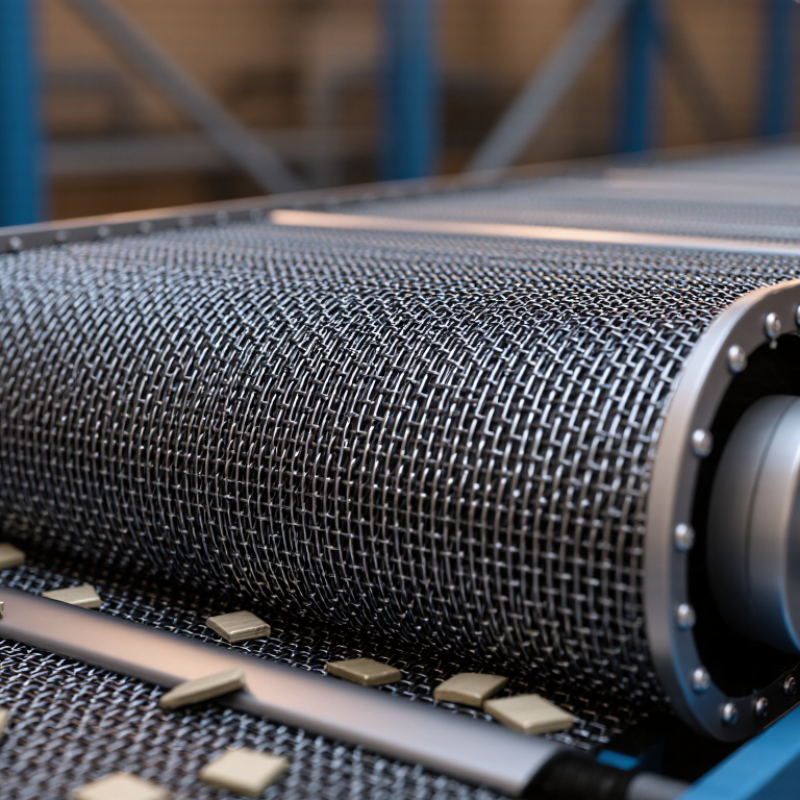
A Heavy Duty Mesh Belt is more than a woven metal surface. Its strength depends on wire diameter, pitch, mesh pattern, and edge construction. In practical inspections, measure the wire at several points. Heat, friction, and repeated bending can create uneven wear.

Select the mesh opening according to the product size and airflow requirement. Smaller openings support delicate parts, while wider openings improve drainage and cooling. The U.S. Department of Energy reports that industrial systems can lose significant efficiency through poor maintenance and avoidable friction. This principle applies to conveyors too. A tight, clean drive reduces wasted power.

Check the belt’s working load, operating temperature, and allowable speed. Stainless steel suits corrosive or high-temperature environments, while carbon steel may offer better cost control. Industry reports from MarketsandMarkets place the global conveyor systems market in the multi-billion-dollar range, reflecting strong demand for reliable Material Handling. Still, market growth does not guarantee a suitable belt.

Inspect the sprocket engagement and belt tracking. Misalignment often appears as polished edges, loose rods, or rhythmic noise. The belt should move smoothly. It should not scrape the frame. Confirm welded joints, cross-rod retention, and edge treatment before installation. I have seen specifications look correct on paper, yet fail after thermal expansion. That detail deserves a second check.

Identifying Operating Conditions and Load Requirements

Choosing a Heavy Duty Wire Mesh Belt starts with the real operating environment, not a catalog image. Record product weight, bed width, belt speed, temperature, and cleaning chemicals. A Heavy Duty Conveyor Mesh Belt carrying hot castings needs different wire diameter and open area than one moving lightweight cartons.

Measure peak load, not only the average load. A 40% overload during start-up can bend cross rods or damage the drive. CEMA conveyor design guidance recommends checking effective tension, belt weight, friction, and acceleration forces. These values help determine allowable working tension and shaft torque.

The U.S. Department of Energy reports that motor-driven systems consume about 23% of industrial electricity, so excessive belt tension also wastes energy. Check the discharge point carefully. Product impact there is often underestimated.

Temperature changes matter. Thermal expansion can loosen the mesh, while cold conditions can increase brittleness in some materials.

Cleaning routines deserve equal attention. Chloride-rich wash water may accelerate corrosion, even when the production temperature seems moderate.

OSHA injury data continues to identify material-moving equipment as a serious workplace risk; guarding, emergency stops, and lockout procedures remain essential.

Still, calculations are not perfect. Dust, uneven loading, and neglected sprockets can defeat a well-designed selection. Leave practical adjustment capacity, and inspect the belt after its first loaded shift.

Choosing the Right Wire Material and Mesh Design

7 Tips for Choosing a Heavy Duty Wire Mesh Belt

Choosing the Right Wire Material and Mesh Design

Choosing a heavy duty wire mesh belt starts with the working environment. In humid processing areas, stainless steel resists corrosion and supports cleaner operation. Grade 304 suits many general applications. Salt, chemicals, or frequent washdowns may require grade 316. Carbon steel can handle heavy loads economically, but it needs surface protection and careful maintenance.

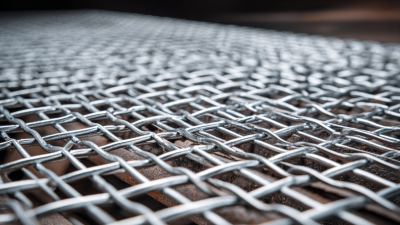
Mesh design controls product support, airflow, and belt strength. Larger openings improve drainage and heat transfer around irregular parts. Smaller openings support small components and reduce product loss. Wire diameter also matters. Thicker wire increases durability, but it can reduce flexibility and open area. A balanced design performs better than the strongest-looking option.

I have seen belts fail because the mesh was selected by appearance alone. It looked solid. It was not suitable for repeated impact. Consider load weight, belt speed, sprocket spacing, and transfer points together. A tight weave may trap residue during cleaning. That detail is easy to miss. Measure the smallest product carefully, then test a sample section under real operating conditions. Do not guess. Minor design changes can affect tracking, energy use, and service life.

Evaluating Belt Dimensions and Edge Construction

7 Tips for Choosing a Heavy Duty Wire Mesh Belt

Evaluating Belt Dimensions and Edge Construction

A heavy duty wire mesh belt starts with accurate dimensions, not a rough width estimate. Measure the conveyor’s usable width, loading zone, return rollers, and side clearances. The belt should not scrape the frame. It also needs enough room for thermal expansion. ISO 9044 identifies aperture and wire diameter as key wire-cloth parameters. These values affect airflow, drainage, strength, and product stability. A smaller aperture supports tiny parts, but it can increase weight and cleaning time.

Check belt pitch, wire diameter, and total length together. A heavy load may require thicker wire, closer spacing, or reinforced cross rods. Do not judge capacity by width alone. A 2024 conveyor industry report from MarketsandMarkets places market growth near 5% annually through the decade. That growth reflects more automated handling and higher operating demands. In practice, higher speed often exposes weak dimensions quickly. I have seen belts appear strong, yet sag near the loading point. The mistake was uneven support spacing.

Edge construction deserves equal attention. Welded edges provide a clean profile and reduce loose wire ends. Roller-chain edges suit controlled tracking and repeated high loads. Knuckled edges can protect delicate products, but they may wear faster in abrasive service. Measure edge thickness against sprocket clearance. Leave no guesswork there. The International Organization for Standardization’s ISO 4783 guidance also links mesh selection with opening size and wire diameter. Still, published tables cannot replace a trial run. Heat, vibration, and real product impact may challenge the original choice. Consider them honestly.

Matching Belt Features to the Conveying Process

Choosing a Heavy Duty Wire Mesh Belt starts with the conveying process, not the catalog photograph. A belt carrying hot castings needs open mesh, heat-resistant alloy, and enough airflow to prevent trapped heat. For oily parts, a tighter weave can reduce dripping, but it may hold residue longer. Check the product shape, too. Small components can catch in wide openings. Sharp edges may score thin wires. Measure load per square foot, operating temperature, belt speed, and incline angle before selecting the construction. These figures reveal whether a Heavy Duty Mesh belt needs reinforced edges, balanced links, or thicker wire. During field inspections, operators often notice tracking problems after installation. That delay costs time. I have learned that a belt can look overbuilt yet fail when the drive sprockets do not match its pitch.

Match the belt surface to the transfer point. A smooth, dense section supports fragile items, while an open weave helps washing, drying, or cooling. Consider cleaning access and sanitation requirements, especially when powder or sticky coating enters the joints. Hinged rods, welded connections, and edge treatments each influence repair time. Ask how quickly a maintenance team can replace one damaged section. A technically strong belt is not automatically practical. That distinction matters. Leave room for thermal expansion and confirm frame tolerances under a full load. Recheck these assumptions during a trial run. Real production rarely behaves like a drawing, and an overlooked temperature swing can change belt tension, tracking, and service life.

7 Tips for Choosing a Heavy Duty Wire Mesh Belt

Match belt features to the conveying process by considering open area, drainage, airflow, temperature exposure, product support, belt strength, and cleaning requirements.

The chart shows typical design ranges for belt open area. Higher open area generally improves airflow, drainage, washing, and cooling, while lower open area provides greater product support during coating and curing. Final belt selection should also verify load, temperature, aperture size, wire diameter, and cleaning conditions.

Checking Durability, Maintenance, and Safety Needs

Choosing a Heavy Duty Metal Mesh belt starts with the real load, not a catalog label. In production, I check product weight, temperature, and contact points. A belt carrying hot castings needs different wire diameter and alloy than one moving dry cartons. Inspect welds closely. Uneven joints can catch parts and spread stress. Ask for load ratings under actual span lengths. A belt may look rigid but sag between supports. That detail is easy to miss.

Durability also depends on maintenance access. Choose an opening that lets staff remove crumbs, oil, and scale without awkward tools. Smooth edges matter. They reduce cut risks during cleaning and inspection. I prefer belts that can be checked visually while installed. Still, no design removes every problem. Debris can hide beneath cross rods, especially after long shifts. Set a practical inspection schedule, then adjust it after observing wear, noise, and tracking changes.

Safety needs should guide every specification. Confirm guarding around sprockets, pinch points, and return sections. Verify that the belt stops before anyone reaches into the conveyor. Clear procedures help, but rushed work can defeat them. Keep access panels secure and mark hot surfaces where hands might linger. Check corrosion near washdown zones and chemical exposure. If the belt stretches unevenly, stop and investigate rather than tightening blindly. A technician’s notes, photographs, and measured wear provide stronger evidence than assumptions.

Comparing Suppliers and Confirming Belt Specifications

When comparing suppliers, request itemized quotations rather than a single price. Check whether each quote includes the same belt width, mesh opening, wire diameter, edge style, and material grade. Small differences matter. A 2 mm opening change can affect product support, drainage, or airflow, while heavier wire may add weight without solving the actual wear problem.

Ask suppliers to confirm operating temperature, load, speed, drive arrangement, and belt pitch in writing. Share a sketch or sample dimensions, then compare the proposed specifications line by line. Request details on weld consistency, edge finish, tracking guidance, inspection records, and replacement-part availability. Clear answers are useful. Vague promises are not. Lead time and technical support also deserve comparison, especially if the belt runs in a continuous production line. One trade-off is easy to miss: a heavier wire is not automatically a longer-lasting belt. A specification sheet cannot predict every tracking issue; alignment and tension during installation matter too. If possible, review a sample or trial section under realistic conditions. I might still overlook a detail, so have the maintenance team check the final drawing before approval.

7 Tips for Choosing a Heavy Duty Wire Mesh Belt - Comparing Suppliers and Confirming Belt Specifications

Illustrative comparison: Supplier A, B, and C are generic examples, not actual suppliers or quotations. Use the checklist to compare like-for-like offers and confirm application-specific requirements in writing.

Tip Specification to Compare Illustrative Supplier Comparison What to Confirm Before Ordering
1. Define the belt’s job Product, load per unit of belt area, belt speed, incline, and whether the belt carries hot, wet, abrasive, or corrosive material. Supplier A quotes a belt for a dry, light-duty line; Supplier B includes a stated load and speed; Supplier C asks for the product and operating conditions before recommending a construction. Give every supplier the same operating brief. Ask them to state the assumed load, speed, and service conditions behind their recommendation.
2. Match the mesh opening and wire diameter Clear opening size, wire diameter, open area, and the required support or drainage characteristics. For comparison, one RFQ might specify a nominal 10 mm opening and 2.0 mm wire diameter. A quote listing only “standard mesh” is not directly comparable. Confirm whether opening dimensions are nominal or measured, and request a drawing or mesh specification showing the opening and wire diameter.
3. Specify the material grade Wire and edge-component material, including the applicable stainless-steel grade or other alloy. Supplier A lists 304 stainless steel; Supplier B lists 316 stainless steel; Supplier C lists 430 stainless steel. These are different grades and should not be treated as equivalent. Check compatibility with the actual chemicals, moisture, cleaning method, and temperature cycle. Confirm material certificates or traceability requirements if needed.
4. Confirm belt dimensions and tolerances Overall width, total length or loop length, belt thickness, and any permitted dimensional variation. A comparison RFQ could specify a 600 mm belt width and a 12,000 mm endless loop length. A supplier quoting a cut length rather than an endless-loop length is quoting a different configuration. State whether dimensions are finished dimensions. Confirm measurement method, tolerances, and the installation space available on the conveyor.
5. Compare construction and belt edge Weave or belt type, drive arrangement, edge finish, and any reinforcing or tracking features. Supplier A offers a balanced-weave design; Supplier B offers a chain-edge design; Supplier C offers a flat-wire design. Their drive and tracking requirements may differ. Confirm compatibility with the existing sprockets, rollers, drive system, and tracking setup. Request a construction drawing that identifies the edge and drive details.
6. Check the operating temperature and environment Continuous and peak temperatures, heat-up and cool-down cycles, exposure to chemicals, and cleaning conditions. Supplier A’s quote states only a material grade; Supplier B provides the stated temperature cycle for review; Supplier C asks for details of the cleaning chemicals and process. Ask the supplier to confirm suitability for the complete operating cycle—not just a single temperature—and to identify any limits or assumptions in writing.
7. Verify quality, delivery, and commercial terms Inspection records, material documentation, sample or drawing approval, manufacturing lead time, warranty, and quoted delivery terms. Supplier A includes a dimensional inspection report; Supplier B includes material documentation; Supplier C lists a shorter estimated lead time but excludes inspection details. Compare the same scope and delivery basis. Confirm the inspection documents, acceptance criteria, lead-time start point, warranty coverage, and remedies for nonconforming parts.

FAQS

Which measurements should I check before choosing a heavy-duty wire mesh belt?

Measure usable conveyor width, loading zone, return rollers, side clearance, belt pitch, wire diameter, and total length. Leave room for thermal expansion.

How does mesh opening size affect belt performance?

Smaller openings can support tiny parts, but they may increase belt weight and cleaning time. Opening size also affects airflow and drainage.

What edge construction should I choose?

Welded edges offer a clean profile. Roller-chain edges can help with tracking under repeated heavy loads, while knuckled edges may protect delicate products. Check wear and sprocket clearance.

How can I tell whether the belt can handle my load?

Consider product weight, temperature, contact points, support spacing, and actual conveyor span. A belt can look rigid and still sag between supports.

What should I inspect on the belt itself?

Check welds, loose wire ends, corrosion, uneven stretching, and wear near cross rods. Photographing changes can make comparisons easier. It is not a perfect record, but it helps.

How can maintenance be made more practical?

Choose openings that allow staff to remove crumbs, oil, and scale without awkward tools. Set an inspection schedule, then adjust it based on wear, noise, and tracking.

What safety details need attention around a mesh belt conveyor?

Check guards around sprockets, pinch points, and return sections. Secure access panels, mark hot surfaces, and confirm the belt stops before anyone reaches inside.

When should I question my original belt specification?

Reconsider it if the belt sags, stretches unevenly, tracks poorly, or shows changing wear. Heat, vibration, and product impact can reveal problems that published tables miss.

Conclusion

Choosing a Heavy Duty Wire Mesh Belt begins with understanding how its mesh structure, wire arrangement, and construction support the intended application. Consider the operating environment, including temperature, exposure to moisture or chemicals, and the type, weight, and volume of materials being conveyed. These conditions help determine suitable wire material and mesh design, balancing strength, airflow, drainage, and product support.

Next, verify the belt’s width, length, and edge construction against the conveyor system, then match features such as mesh opening and surface design to the process requirements. Assess expected wear, cleaning needs, maintenance access, and safety considerations to help ensure reliable operation over time. Before making a selection, compare suppliers based on their ability to provide clear technical information and confirm that the belt specifications—including dimensions, materials, load capacity, and operating limits—fit the application.
Ethan

Ethan

Ethan is a dedicated marketing professional at Jiangsu Huada Metal Mesh Belt Co., Ltd., a leading metal conveyor belt manufacturer in China. With a deep expertise in the company's products, Ethan plays a crucial role in promoting Huada's precision-engineered wire mesh belts and chain-driven......
Previous How to Choose the Right Furnace Mesh Belt?