In the world of manufacturing, picking the right ODM or OEM Industrial Oven Beltsupplier is pretty important. I read somewhere that, according to Global Market Insights, the market for Industrial Oven Belts is set to hit around $2 billion by 2026. That’s a pretty huge number, and it makes sense—demand is growing across a bunch of industries like food processing and auto manufacturing.
Mark Thompson, who’s pretty much an expert in industrial manufacturing, always says, “The quality of your Industrial Oven Belt can directly influence your production efficiency.” That really hits home, right? It just goes to show how crucial it is to choose your ODM or OEM partners wisely. Sure, cost matters, but compromising on quality can come back to bite you big time.
A mistake many businesses make is chasing the lowest price without thinking about performance. They often overlook the long-term costs of using cheap, low-quality industrial oven belts. That can end up causing more downtime and messing with your operations. So, when you’re evaluating potential suppliers, it’s smart to look beyond just the price. Think about their product quality, the level of customer support, and whether you can count on them to deliver reliably. The right choice here can seriously boost your efficiency and help you run a more sustainable operation.
Understanding ODM and OEM in Industrial Oven Belt Manufacturing
Choosing the right ODM and OEM partners for industrial oven belt manufacturing is crucial. ODM stands for Original Design Manufacturer, while OEM means Original Equipment Manufacturer. Both play distinct roles in the production process. ODMs develop and manufacture products based on their designs, while OEMs follow the client's specifications.
Understanding these roles helps in selecting the right partner. Reports reveal that the global industrial oven market is expected to grow at a CAGR of 5.4% from 2023 to 2030. This demand will likely influence the quality of Industrial Conveyor Belt Ovens. A reliable partner can ensure adherence to industry standards and efficient production timelines.
**Tips:** Focus on partners with a robust track record. Investigate their commitment to quality assurance. Look for partners who offer customization options. A uniform design without features might not suit your production needs well. Ensuring your partner meets certification requirements will help reduce risks.
Another key consideration is communication. Clear discussions about specifications and design changes are essential. Confusion can lead to production delays. Many firms falter here, resulting in costly setbacks. Keeping lines of communication open can mitigate these issues.
Key Factors to Consider When Selecting Exporters for Industrial Oven Belts
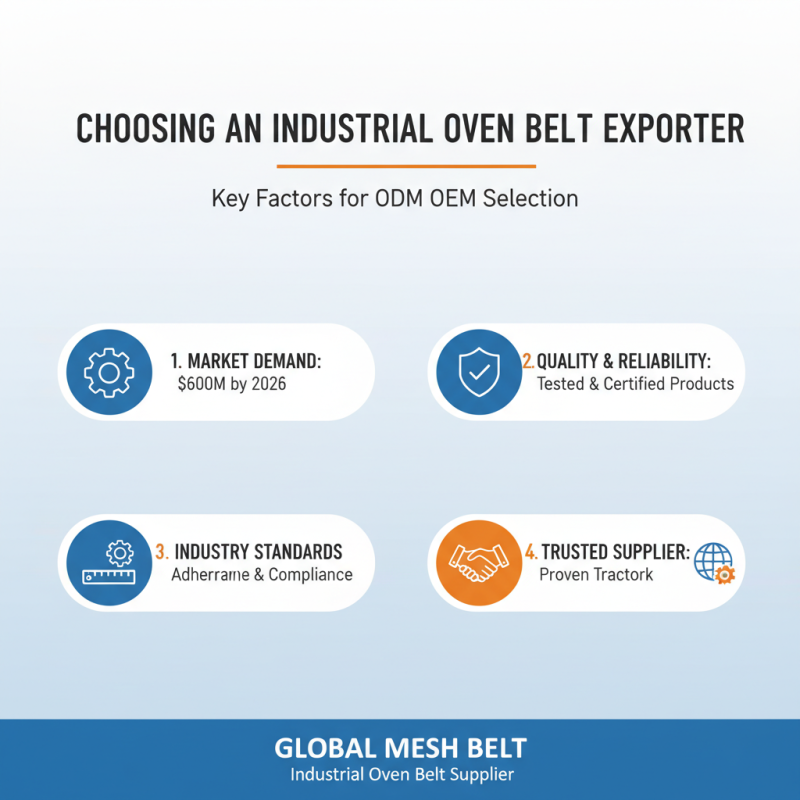
When selecting an ODM OEM Industrial Oven Belt exporter, understanding key factors is crucial. The market for industrial oven belts is projected to reach $600 million by 2026, indicating significant demand. Exporters must demonstrate quality, reliability, and adherence to industry standards. A good Industrial Oven Belt Supplier should provide tested and certified products.
Evaluating an exporter’s track record is essential. Reviews and feedback from previous clients offer valuable insights. Reports show that 70% of customers prefer suppliers with a transparent history of product performance. It’s also important to assess production capabilities. Some exporters fall short here, leading to delays and quality issues. Look for those who invest in modern equipment and efficient processes.
Consider the range of products offered as well. A limited selection can be a red flag. Data indicates that companies with diverse product lines often meet varied client needs more effectively. In contrast, an exporter with a narrow focus may not adapt well to specific requirements. Transparency in communication is another vital aspect. Clear interaction helps build trust and clarifies expectations, avoiding misunderstandings that can arise later.
Evaluating the Quality Standards of ODM OEM Industrial Oven Belts
When evaluating the quality standards of ODM OEM industrial oven belts, several key aspects must be considered. The materials used in the construction of the belts play a critical role in their performance. High-temperature resistance is essential. Reliable industrial oven belts can withstand temperatures up to 300°C, ensuring durability in demanding conditions. A recent market report highlights that only 35% of products meet this requirement consistently.
Manufacturers often overlook the importance of dimensional accuracy. Belts need precise measurements to fit properly, preventing slippage during operations. A study found that 42% of faulty belts resulted from inadequate sizing. This suggests that quality control is often insufficient, leading to unexpected downtimes.
Testing methods also matter greatly. Look for exporters that utilize rigorous testing protocols, including abrasion resistance and tensile strength evaluations. The best practices in the industry recommend regular audits and certifications. However, only about 20% of exporters maintain such standards. It's imperative to ask about these measures before making decisions. Quality assurance should be a priority, as poor choices can lead to costly setbacks.
Assessing Exporter Reputation and Track Record in the Industry
When selecting ODM and OEM industrial oven belt exporters, assessing their reputation is crucial. A positive track record often indicates reliability. According to industry reports, about 75% of quality issues arise from poor supplier choices. Verify their history in terms of client satisfaction and product consistency. Look for testimonials, case studies, and any documented experiences with previous buyers.
Tips: Conduct thorough online research. Check platforms like LinkedIn for credible reviews. Reputable exporters should have transparent communication and responsive customer service.
Scrutinize the certifications held by exporters. A lack of industry-specific certifications might raise red flags. Consider that nearly 38% of exporters fail to meet regulatory standards, which could harm your production line with quality issues. A trustworthy exporter should provide clear details about their manufacturing processes, especially regarding the Industrial Oven Conveyor's quality and performance.
Tips: Engage in conversations with current clients of potential exporters. Their insights can reveal hidden strengths or weaknesses. A proactive approach can save time and resources in the long run.
Comparing Pricing Structures Among Different ODM OEM Exporters
When looking for ODM OEM industrial oven belt exporters, pricing structures can vary widely. Some exporters offer competitive rates, while others may include hidden fees. Understanding these complexities is vital for making an informed decision. Transparent pricing allows for better budgeting and planning. You'll want to consider both the costs and the value of services provided.
Here are some tips for evaluating pricing structures: Compare quoted prices across several exporters. Keep an eye on additional costs like shipping and customs. Sometimes, a lower upfront cost might not translate to overall savings. Another key point is to clarify payment terms. Ensure you understand when payments are due to avoid cash flow issues.
It’s essential to communicate clearly. Ask for a detailed breakdown of the costs involved. Mistakes can lead to unpleasant surprises later. Do not hesitate to raise questions about areas that seem unclear. Taking the time to understand pricing will pay off in the long run. Being proactive might reveal several options suited to your unique needs.
The Importance of Customer Support and After-Sales Services
Choosing the right ODM OEM industrial oven belt exporters is crucial. However, customer support and after-sales services often go overlooked. A company's service quality can significantly impact your operations. If issues arise, a responsive support team makes all the difference.
Tips: Look for exporters with clear communication channels. A phone call or email should elicit prompt replies. Test their response time before making a commitment. This can highlight their commitment to customer satisfaction.
After-sales support should encompass technical assistance and warranty services. Knowing how long the warranty lasts is essential. Explore what the warranty covers and who handles repairs. You could face unexpected challenges later.
Tips: Ask about their repair process. Is it in-house or outsourced? Consider the downtime you might face if repairs take too long. Establish an understanding of how they handle urgent situations and what to expect during repairs. This foresight can protect your business long term.
Exploring Customization Options Offered by ODM OEM Exporters
When choosing ODM and OEM exporters for industrial oven belts, customization is critical. Many exporters provide options tailored to specific needs. For instance, you can select the materials, sizes, and designs that best suit your operational requirements. Some offer adjustable temperature ranges and load capacities. This level of customization ensures that each Industrial Conveyor Belt performs efficiently.
However, not all exporters are equal. It is essential to assess their capabilities. Some may not deliver on promised specifications. Communication issues can arise, leading to mismatched expectations. You might find that the samples do not meet your standards. Be prepared for moments of reflection on whether a particular exporter aligns with your vision.
Moreover, consider the long-term support offered by these exporters. A reliable partner should provide guidance beyond the sale. Timely maintenance and spare parts availability are equally important. Customization can come with challenges, such as longer lead times or higher costs. Balancing quality and budget is an ongoing struggle for many businesses.
FAQS
: A positive reputation suggests reliability. Research shows poor supplier choices cause most quality issues.
Look for testimonials and case studies related to client satisfaction. Verify their product consistency history.
Test their response times through phone or email. Quick replies indicate commitment to customer satisfaction.
Exporters without proper certifications may raise concerns. Nearly 38% fail to meet necessary regulatory standards.
Ask about warranty length and coverage. Understand who manages repairs to avoid future challenges.
Customization ensures products fit specific needs but may come with long lead times and higher costs.
Reflect on whether the exporter aligns with your expectations. Communication issues might need careful consideration.
Ongoing guidance and availability of spare parts are crucial for sustained operational efficiency.
Balancing quality with budget can be tough. Be prepared for potential delays or cost overruns.
Conclusion
Choosing the right ODM and OEM industrial oven belt exporters is crucial for businesses in the manufacturing sector. Understanding the distinct roles of ODM (Original Design Manufacturer) and OEM (Original Equipment Manufacturer) in the production of industrial oven belts can help companies make informed decisions. Key factors to consider when selecting exporters include evaluating their quality standards, reputation in the industry, and track record. Pricing structures can vary significantly, making it important to compare offerings from different exporters carefully. Additionally, the level of customer support, including after-sales services, plays a vital role in ensuring a satisfactory purchasing experience.
Customization options offered by ODM and OEM exporters are another essential aspect, as businesses often require specific features to meet their operational needs. By considering these factors, companies can choose the right industrial oven belt exporters that will best fit their requirements, ensuring smooth operations and efficient production processes.