Leave Your Message
0%

Choosing the right Chain Conveyor Belt begins with the material, not the machine catalogue. Product weight, temperature, moisture, and surface shape all influence belt performance. A hot casting needs different protection from a sealed food container. Sharp edges may damage standard components. Sticky products can create buildup around sprockets and guides.

A reliable selection process examines load capacity, chain pitch, belt width, speed, and frame layout. Engineers should also check sanitation needs, cleaning access, noise levels, and replacement availability. A Chain Belt Conveyor may suit heavy cartons, pallets, or bulk materials requiring stable movement. Stainless steel construction can support washdown environments, while carbon steel may offer practical value in dry areas. The correct drive motor depends on friction, incline, starting load, and operating hours.

Details matter.

Installation experience often reveals problems that specifications miss. A conveyor may carry the rated load but still struggle during frequent starts. Poor alignment can produce uneven wear, vibration, and premature chain failure. Maintenance teams should inspect sprockets, shafts, bearings, and tension regularly. Guarding and emergency stops must also match the working environment and applicable safety requirements.

No selection method is flawless. Real products vary. Production conditions change. A careful review of operating records can improve the decision. Speaking with qualified conveyor engineers and requesting test data adds confidence. The best Chain Belt Conveyor is not simply the strongest option. It should balance durability, hygiene, energy use, maintenance access, and total ownership cost. A small design compromise today may become a costly interruption later.
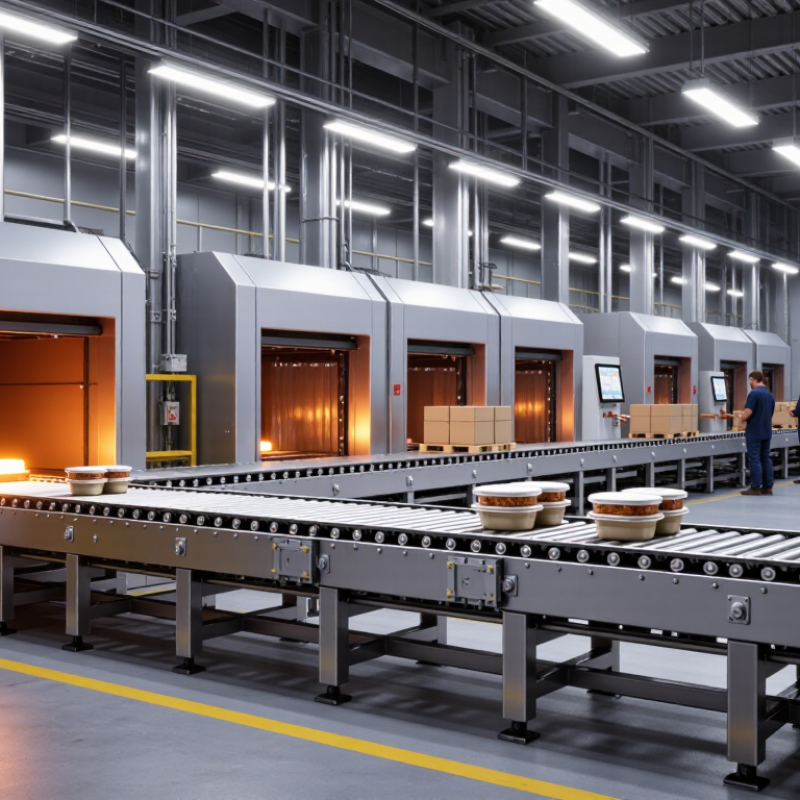
How to Choose the Right Chain Conveyor Belt?

Define the Conveyor’s Application and Operating Conditions

How to Choose the Right Chain Conveyor Belt?

Define the Conveyor’s Application and Operating Conditions

A Chain Conveyor Belt should match the product, movement pattern, and working environment. Start with the load.

Is it cartons, containers, hot parts, or loose materials? Record each item’s weight, dimensions, and surface condition. A sharp metal edge can damage a belt designed for smooth packaging.

Measure the conveyor length, width, incline, and required speed. Then check the daily duty cycle. A line running continuously for eighteen hours needs stronger components than one operating intermittently. Chain pitch, belt width, sprocket size, and allowable tension should be calculated together, not selected separately.

Temperature and moisture also matter. Heat can weaken some belt materials, while cold conditions may increase brittleness. Water, oil, dust, and cleaning chemicals can affect both the belt and its bearings. In food or washdown areas, drainage and cleanability deserve careful attention. In dusty areas, sealed components may reduce maintenance concerns.

I have seen installations fail because the product was tested only when dry. Real production was different. Wet cartons slipped, and the actual load increased. That oversight was avoidable.

Allow space for inspection and chain lubrication where required. Consider noise, operator access, emergency stops, and replacement time. A technically suitable belt can still be a poor choice if maintenance is difficult. Verify the design with operating data, but leave room for uncertain conditions. Field behavior is not always perfectly predictable.

Select the Chain Conveyor Belt Material and Construction

Choosing the right Slat Chain Conveyor Belt starts with material and construction, not appearance. Grand View Research estimated the global conveyor belt market at USD 5.85 billion in 2023, with steady growth expected through 2030. That growth increases pressure to select durable, application-specific systems.

Acetal suits moderate loads and smooth product movement. Polypropylene handles moisture and many chemicals. Stainless steel performs better under heat, abrasion, and frequent washdown. UHMW-PE wear strips reduce friction between the chain and frame. Check temperature, load weight, speed, cleaning agents, and product sensitivity before choosing.

Construction matters just as much. Match chain pitch and sprocket teeth to the load cycle. Use reinforced frames when products accumulate at transfers. Keep sprocket alignment precise. Small errors create noise, edge wear, and unexpected stoppages. In practical inspections, poor tensioning appears repeatedly. It is easy to blame the belt first.

MHI’s 2024 Annual Industry Report reported that 55% of surveyed supply-chain professionals expected to increase technology investment. Automation makes reliable conveyor construction more important. Still, a stronger belt is not always better. Excessive steel can increase mass, energy use, and maintenance effort. I have seen specifications become unnecessarily complex. Review the real operating conditions, then test the chosen material with the actual product.

How to Choose the Right Chain Conveyor Belt? - Select the Chain Conveyor Belt Material and Construction

Material / Construction Typical Applications Approx. Operating Temperature Corrosion Resistance Abrasion Resistance Load and Impact Performance Maintenance Considerations Selection Guidance
Carbon Steel
Standard Roller Chain Construction
General Material Handling, cartons, pallets, totes, and assembly lines in dry indoor environments. Approximately −10°C to 80°C, depending on lubrication and component design. Low to moderate; requires protection from moisture and corrosive chemicals. Good for normal conveying loads; performance decreases in highly abrasive conditions. High tensile strength and good shock-load capability when correctly sized. Requires regular lubrication, tension checks, alignment checks, and cleaning. A cost-effective choice for dry, non-corrosive applications with moderate operating demands.
Stainless Steel
Corrosion-Resistant Chain Construction
Food processing, beverage handling, pharmaceutical production, washdown areas, and humid environments. Commonly approximately −20°C to 120°C; exact limits depend on grade, load, and lubrication. High resistance to water, humidity, and many cleaning agents; resistance varies by stainless-steel grade. Moderate to good; may require hardened wear components for severe abrasion. Good load performance, although some stainless grades have lower strength than hardened carbon steel. Reduced lubrication needs in some applications; routine inspection remains necessary. Choose when hygiene, washdown capability, or corrosion resistance is more important than minimum purchase cost.
Nickel-Plated Steel
Protective Surface Construction
Indoor conveyors exposed to occasional humidity, light moisture, or appearance requirements. Approximately −10°C to 80°C under typical lubricated conditions. Better than untreated carbon steel, but not equivalent to solid stainless steel in continuous washdown service. Good for general service; coating wear can expose the underlying steel. Similar to the underlying steel construction, with good performance under moderate loads. Inspect plating damage and maintain lubrication, especially around joints and sprockets. Suitable when moderate corrosion protection is needed without moving to a full stainless-steel construction.
Hardened Steel
Wear-Resistant Chain and Sprocket Set
Heavy-duty conveying, pallets, metal parts, aggregates, timber, and applications with high contact stress. Approximately −10°C to 120°C, subject to Heat Treatment, lubricant, and seal conditions. Low unless supplied with a corrosion-resistant coating or used in a controlled environment. Very good resistance to pin, bushing, roller, and sprocket wear. Excellent for high tensile loads, repeated impacts, and demanding duty cycles when properly engineered. Requires effective lubrication, accurate alignment, and timely replacement of worn sprockets and chain components. Select for heavy loads and abrasive service where wear life is more important than corrosion resistance.
Plastic Modular Belt
Acetal or Polypropylene Links
Food, packaging, bottling, and products requiring low-noise conveying or frequent washdown. Acetal: commonly about −40°C to 90°C; polypropylene: commonly about 5°C to 105°C. Confirm the grade-specific limit. Very good against water and many chemicals; compatibility must be checked for solvents and strong oxidizers. Good for packaged products; generally less suitable than hardened steel for sharp, abrasive materials. Light to moderate load capacity; impact and deflection limits must be considered. Usually requires little or no chain lubrication; clean regularly and inspect modules, rods, and sprockets. Choose for quiet operation, corrosion resistance, cleanability, and product-friendly conveying.
Roller-Top Chain
Chain with Integrated Product Rollers
Accumulation, carton handling, case packing, pallet transfer, and applications requiring product movement or rotation. Typically follows the temperature limit of the chain, roller material, bearings, and lubricant. Depends on the base chain and roller material; stainless or polymer rollers improve wet-area performance. Moderate to good; roller bearings and contact surfaces should be selected for the product and duty cycle. Suitable for moderate to heavy loads when roller diameter, spacing, and chain pitch are correctly specified. Inspect roller rotation, bearing wear, chain elongation, and product-contact surfaces. Use when accumulation or controlled product transfer is required without adding a separate powered conveyor section.
Flat-Top Chain
Solid or Perforated Carrying Surface
Bottles, containers, trays, cans, cartons, and products requiring continuous surface support. Determined by chain material; polymer versions commonly operate below approximately 100°C. Polymer and stainless constructions provide good to very good resistance in wet environments. Good for packaged goods; surface selection is important for abrasive or dirty products. Moderate load capacity; use reinforced construction or steel components for heavier loads. Clean the carrying surface and inspect for damaged links, worn sprockets, and chain elongation. Best for stable products that need continuous support and smooth transfer between conveyor sections.
Open-Top or Slat-Top Chain
Drainable / High-Grip Surface
Wet processing, produce, meat and seafood handling, washing, draining, and inclined conveying. Depends on polymer or metal construction; verify temperature limits for hot water, steam, and cold products. Generally good to very good when stainless steel or chemically compatible polymers are used. Moderate; open surfaces help drainage but may collect abrasive particles if cleaning is inadequate. Moderate load capacity; high-grip features improve inclines but can increase product contact and wear. Requires frequent sanitation, inspection of hinges and rods, and removal of trapped debris. Select when drainage, sanitation, product grip, or inclined conveying is a primary requirement.
Note: Temperature ranges and performance descriptions are general engineering guidelines. Actual limits depend on chain pitch, sprocket size, speed, conveyed load, lubrication, cleaning chemicals, belt width, support design, and the exact material grade. Always verify the manufacturer's technical specifications before final selection.

Match Belt Dimensions to Product Size and Conveyor Design

How to Choose the Right Chain Conveyor Belt?

Match the belt dimensions to the product before selecting chain style or material. Measure the product’s length, width, height, and weight at its largest practical size. Add enough side clearance for stable movement, but avoid excessive gaps. A small box may tilt on a wide belt. A narrow belt may create edge contact and damage corners.

The conveyor layout also controls belt dimensions. Check the straight-run length, transfer points, sprocket diameter, incline angle, and available frame width. Product spacing affects the required belt speed and pitch. Heavy loads need stronger support under the belt, especially across long spans. In practice, designers sometimes focus on maximum load and overlook small packages. That mistake can cause jams. It deserves a second review.

Tips: Leave room for product variation, not just standard dimensions. Test the widest and heaviest item on a short conveyor section. Watch for rubbing near guides and sprockets. Keep transfer gaps as small as practical. If the belt seems oversized, verify cleaning access and maintenance space before reducing its width. A neat drawing can still hide a poor fit. Record measurements from real products, since packaging changes may affect conveyor performance.

Evaluate Load Capacity, Speed, and Drive Requirements

How to Choose the Right Chain Conveyor Belt?

A Chain Link Conveyor Belt must match the product, not only the frame size. Start with load per meter, product spacing, incline, and accumulation time. Calculate mass flow as load per meter multiplied by belt speed. Then check the chain’s allowable working load and impact resistance. CEMA’s Belt Conveyors for Bulk Materials and ISO 5048 provide recognized methods for conveyor force and power calculations. Use their principles, but confirm actual conditions with a field test.

Speed changes everything. A faster belt raises throughput, but it also increases starting torque, noise, wear, and product movement. Select the drive from effective pull, pulley radius, speed, and mechanical efficiency. Add a realistic service factor for starts, jams, cold temperatures, and uneven loading. MHI’s 2024 Annual Industry Report noted that 83% of supply-chain professionals view innovation as important. That pressure can encourage over-automation. I have seen specifications fail because the expected load was perfect, while the real load was inconsistent.

Tips: Weigh the heaviest unit. Measure the longest transfer. Record start-up current. Ask whether the conveyor runs continuously or intermittently. Leave room for uncertainty. A modest speed with stable torque may outperform a faster system with frequent stoppages. Recheck calculations after installation, because dust, lubrication, and operator habits can change the result.

Check Environmental, Safety, and Hygiene Compatibility

How to Choose the Right Chain Conveyor Belt?

Check Environmental, Safety, and Hygiene Compatibility

A chain conveyor belt must suit its surroundings, not only the product weight. In humid rooms, moisture can collect around pins, joints, and frame supports. Choose corrosion-resistant materials and provide drainage where washdown is routine. For dusty areas, inspect whether particles can enter moving parts or form abrasive layers. Temperature also matters. Heat may weaken plastic components, while cold can make some materials brittle. Measure twice.

Safety begins with the complete conveyor system. Review load, speed, incline, and starting torque before selecting the belt. Guards should cover accessible sprockets, return paths, and pinch points. Emergency stops must remain visible and reachable. A belt that moves smoothly during testing may behave differently under an uneven load. That assumption can fail. Operators need clear cleaning and lockout procedures, supported by practical training and regular inspections.

Hygiene requires more than a polished surface. For food or pharmaceutical environments, select materials suitable for the intended contact conditions and cleaning chemicals. Avoid unnecessary gaps where residue can remain after washing. Open-frame designs may improve visibility, but they can also expose nearby components to contamination. Check every transfer point. Small details matter. Document cleaning frequency, inspection findings, and replacement dates. When requirements are uncertain, compare the conveyor design with applicable local safety, sanitation, and environmental standards, then confirm the material data with a qualified engineer.

How to Choose the Right Chain Conveyor Belt?

Environmental, Safety, and Hygiene Compatibility

The chart uses representative 1–5 engineering screening ratings for common chain-belt material options. Ratings consider corrosion resistance, chemical exposure, temperature capability, cleanability, and suitability for washdown environments. Final selection should be confirmed against the conveyor load, operating temperature, cleaning chemicals, applicable food-contact requirements, and the supplier’s technical datasheet.

Compare Maintenance Needs, Service Life, and Total Cost

Choosing a Chain Mesh Conveyor Belt should begin with maintenance records, not the purchase price. In wet processing areas, trapped residue can harden around links and sprockets. That buildup increases friction, noise, and cleaning time. Check how easily operators can reach the belt, tensioning points, and return rollers. A practical design supports quick inspections and simple part replacement. I have seen one seized link stop an entire shift. That experience still influences my evaluations.

Tips: Measure cleaning minutes per cycle, lubricant use, replacement links, and unplanned stoppages. Record these figures for at least four weeks. Short records beat guesses. Compare belts by expected service life under your actual load, temperature, moisture, and speed. A heavier belt may last longer, but it can require stronger drives and more energy. A lighter belt may save energy, yet stretch sooner under shock loads.

Calculate total cost across three to five years. Include labor, spare parts, sanitation, downtime, disposal, and installation. Do not trust a perfect forecast. My estimates have missed corrosion when washdown chemicals changed. Ask qualified suppliers for test data, maintenance intervals, and failure assumptions. Then challenge those assumptions with site conditions. Document each assumption before approval.

Double Balance Belt: High-Temperature Load Solutions from China, Cited in Grand View Research & MarketsandMarkets Reports

China-made Double Balance Belts provide dependable solutions for high-temperature processing and demanding load-handling applications. Their balanced weave structure offers excellent stability, smooth operation, and reliable airflow, making them suitable for furnace lines, heat treatment, sintering, drying, and other extreme-heat environments. The high-temperature furnace belt can operate at temperatures up to 800°C when matched with suitable materials and operating conditions, while the heavy-load double-layer conveyor system supports efficient transport of dense or bulky materials.

Our product range is designed for diverse industrial needs. Abrasion-resistant models are suitable for mining environments, while corrosion-resistant 316L stainless steel versions perform reliably in marine and chemically challenging applications. Food-grade mesh options support hygienic processing, and precision belts help maintain accurate movement during automotive stamping. Low-deflection designs optimize glass tempering, while custom-pitch belts improve bulk material handling efficiency. For electronics assembly, anti-static construction helps reduce static accumulation and protect sensitive components.

To simplify production management, quick-release belt designs enable faster maintenance, replacement, and system upgrades. As an experienced China supplier and factory, we offer customized specifications, including wire diameter, mesh opening, belt width, edge style, and working length. Each Double Balance Belt is developed to deliver consistent performance, strong load capacity, and practical service life across demanding industrial applications.

FAQS

How should I begin selecting a chain conveyor belt?

Match the belt to the product and operating conditions. Measure load per meter, product spacing, incline, and accumulation time. Weigh the heaviest unit. Do not size only by frame dimensions.

How does belt speed affect conveyor performance?

Higher speed can increase throughput. It also raises starting torque, noise, wear, and product movement. A moderate speed may provide steadier operation. Fast is not always better.

How can I choose the correct drive?

Calculate effective pull using load, pulley radius, speed, and mechanical efficiency. Include extra capacity for starts, jams, cold conditions, and uneven loading. Record starting current during testing. Real conditions may disagree.

What should I consider for inconsistent loads?

Do not rely only on an ideal product weight. Loads may arrive unevenly or suddenly. Check impact resistance and allowable working load. Leave room for uncertainty. Perfect assumptions can fail.

Which environmental conditions can affect the belt?

Humidity can collect around pins, joints, and frame supports. Dust may enter moving parts or create abrasive layers. Heat can weaken plastic components. Cold may make materials brittle. Measure actual conditions twice.

What safety features should the conveyor include?

Guards should cover accessible sprockets, return paths, and pinch points. Emergency stops must stay visible and reachable. Review load, speed, incline, and starting torque together. Smooth testing is not enough. Uneven loading can change behavior.

How can I support hygiene during cleaning?

Choose materials compatible with the product and cleaning chemicals. Avoid unnecessary gaps where residue can remain. Inspect every transfer point carefully. A polished surface does not guarantee cleanliness. Small details matter.

What maintenance information should operators record?

Record cleaning frequency, inspection findings, lubrication conditions, and replacement dates. Recheck calculations after installation. Dust, lubrication, and operator habits can change performance. My original estimate may be incomplete.

Conclusion

Choosing the right Chain Conveyor Belt begins with a clear understanding of the application and operating conditions. Consider the type, size, weight, and surface of the products being transported, as well as the required conveyor layout, working temperature, and operating environment. The belt’s material and construction should provide suitable strength, flexibility, wear resistance, and protection against moisture, chemicals, or contamination. Its dimensions must match the conveyor frame, product spacing, transfer points, and available installation area.

It is also important to evaluate load capacity, conveying speed, motor power, and drive configuration to ensure stable and efficient operation. Safety and hygiene requirements should guide the selection of surfaces, components, and cleaning methods, especially in sensitive production environments. Finally, compare maintenance frequency, component accessibility, expected service life, energy use, and replacement costs. A well-matched Chain Conveyor Belt can improve reliability, reduce downtime, and deliver better long-term value.
Sophia

Sophia

Sophia is a seasoned marketing professional at Jiangsu Huada Metal Mesh Belt Co., Ltd., a leading manufacturer of metal conveyor belts in China. With a deep understanding of the industry and a passion for showcasing the company's innovative products, she plays a pivotal role in driving brand......
Previous 2026 Best Wire Mesh Net Manufacturers for Global Buyers