Choosing the right thermal Oven Belt really matters if you want your operations to run smoothly. I mean, industry reports have shown that picking the wrong belt can bump up energy bills and even slow down your production. For example, a study by Machinery Harper mentioned how many businesses tend to overlook how important belt material and design really are. These little details actually have a big impact on how long the belts last and how well the thermal oven performs.
Getting to know the specifics of Thermal Oven Belts — like their temperature tolerance and width — is pretty important. These factors can seriously affect the quality of your output. A lot of operators don’t realize that even tiny mismatches can throw off their entire process. When you pick the right belt, you get better heat distribution, which means better product quality and less waste overall.
And let’s not forget, reliability is everything in manufacturing. Studies show that over 30% of factories face downtime because of belt failures. That’s a pretty clear sign you need to pay close attention when choosing belts. Taking a little extra time to evaluate what actually suits your setup can go a long way—leading to longer-lasting equipment and smoother performance in the long run.
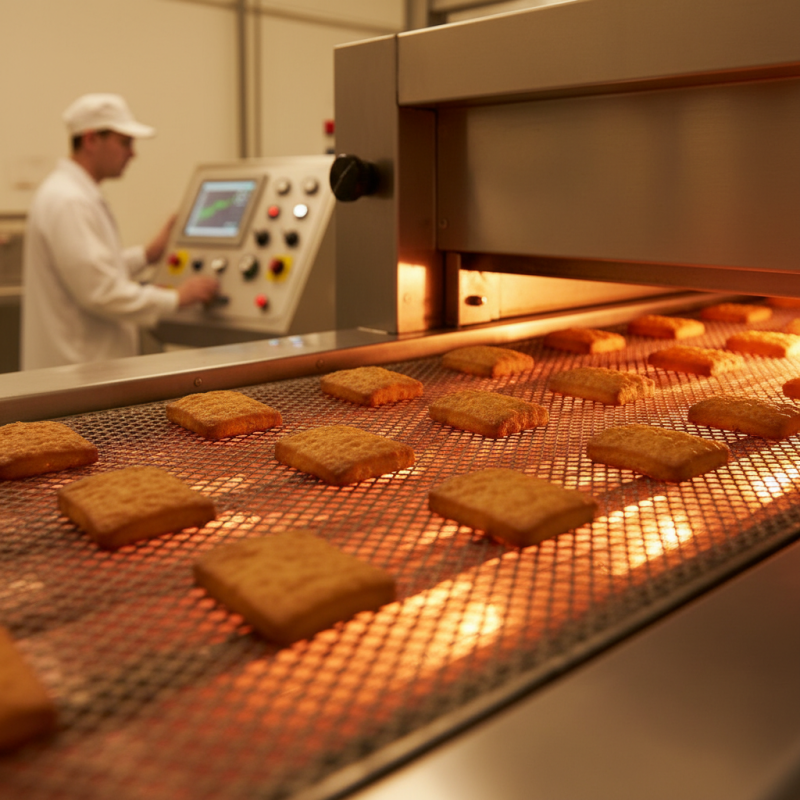
Thermal oven belts play a crucial role in many industrial applications. They transport products through the oven for various processes like drying, baking, or curing. Understanding the basic materials and designs of these belts is vital for making informed choices.
When selecting a thermal oven belt, consider the operating temperature and the specific material it will transport. Different materials can withstand different heat levels. It’s essential to match the belt to your oven's temperature range. For instance, silicone belts can handle high temperatures but may not be suitable for all materials. Remember, the wrong choice can lead to product damage or safety hazards.
Pay attention to the belt's width and length, as these dimensions affect both performance and efficiency. A belt that's too tight can cause undue stress, while a loose belt may slip. Regular inspection and maintenance are important. Look for signs of wear and tear, and be aware that even minor issues can disrupt production. Reflect on your processes to ensure continuous improvement in selecting the right thermal oven belt.
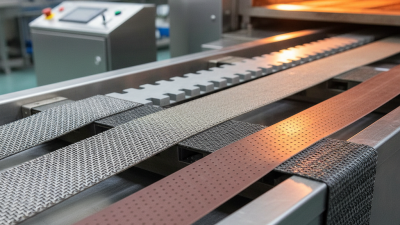
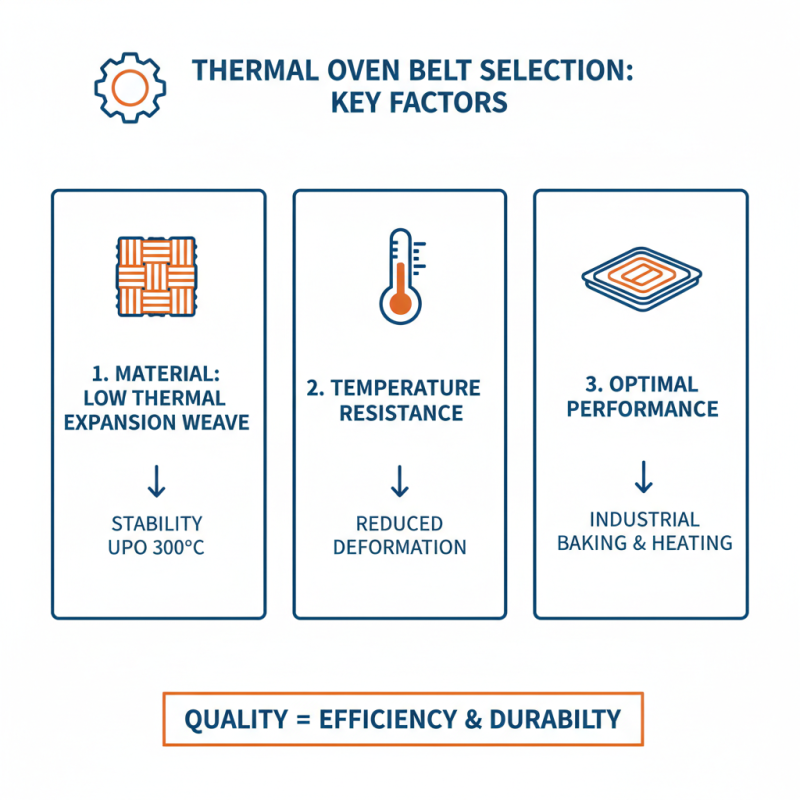
Selecting the appropriate thermal oven belt is crucial for achieving optimal performance in industrial baking and heating processes. One important factor to consider is the material composition of the belt. A quality belt should ideally have a low thermal expansion weave structure, as this ensures stability at high temperatures. According to industry reports, belts with this feature demonstrate a thermal stability of up to 300°C, significantly reducing the risk of deformation during intense heating.
Another key consideration is the belt's width and length. These dimensions must align with your specific oven design to ensure proper airflow and even cooking. Data shows that improper sizing can lead to inconsistent results, which can negatively impact production efficiency. Regularly monitoring the belt's condition is essential, as wear and tear can compromise its effectiveness. In fact, studies indicate that more than 30% of production issues stem from degraded equipment.
Finally, evaluate the belt's installation and maintenance requirements. A design that allows for easy assembly and cleaning can save time and reduce downtime. Look at the expertise of your supplier; those with proven industry knowledge can provide insights on optimizing performance. This can ultimately lead to increased productivity and a more reliable heating process.
When selecting a thermal oven belt, understanding the various types and their specific applications is crucial. The most common types include stainless steel, fiberglass, and silicone-coated belts. Stainless Steel Belts are known for durability and are often used in high-temperature environments. They are ideal for processes inThermal Power Plants, where extreme conditions are common.
Fiberglass belts offer excellent insulation properties, making them suitable for conveying delicate items. They resist heat and chemicals, which enhances their longevity. Silicone-coated belts are flexible and can easily handle varying temperatures. These belts are often used in baking and food processes, providing a non-stick surface that simplifies cleaning.
Consider the environment where the belt will operate. Will it endure high heat or harsh chemicals? Choosing the wrong type could lead to premature wear and tear. It’s important to assess your specific needs based on application, temperature resistance, and belt longevity. Reflection on past experiences may guide future choices. Evaluate the effectiveness of previous belts used in similar situations to avoid mistakes.
| Type of Thermal Oven Belt | Material | Temperature Range | Applications |
|---|---|---|---|
| Silicone Coated | Silicone | -40°C to 200°C | Baking, Confectionery |
| PTFE (Teflon) Coated | PTFE | -60°C to 260°C | Baking, Drying, Cooking |
| Mesh Belts | Stainless Steel | -20°C to 600°C | Frying, Heat Treatment |
| Fabric Belts | Nylon / Polyester | -30°C to 150°C | Conveyor Systems |
| Ceramic Coated | Ceramic | -40°C to 300°C | Baking, Pizza Ovens |
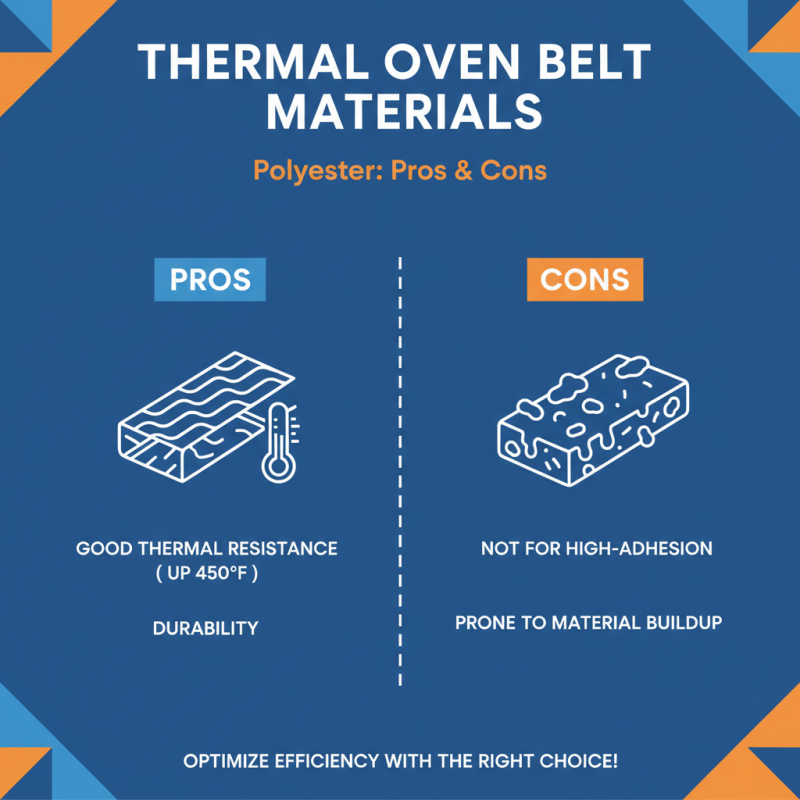
When selecting a thermal oven belt, the material choice is key. Various materials offer distinct advantages and disadvantages. Understanding these can significantly impact operational efficiency. For instance, polyester belts are widely used for their good thermal resistance and durability. Reports indicate they can withstand temperatures up to 450°F without deforming. However, they may not be suitable for high-adhesion applications as their surface can be prone to buildup.
Silicone-coated fabrics present another option. They provide excellent non-stick properties, making them ideal for high-gloss finishes. According to recent industry studies, these belts excel in applications requiring easy product release. Nonetheless, they can be more expensive and less durable compared to other materials, raising concerns about long-term costs.
Metal belts offer remarkable strength and longevity, perfect for high-temperature conditions. Studies show they can last several times longer than other materials, reducing operational interruptions. Yet, they can be heavy and inflexible, posing challenges during installation and maintenance. Each option has trade-offs, and a thorough assessment of specific needs is essential for informed choices. Evaluating these material characteristics will guide you toward the right Belt Oven solution.
Choosing the right thermal oven belt is crucial for achieving optimal performance. Sizing your thermal oven belt involves considering several key factors. The right width and length ensure even heat distribution. An ill-fitting belt can lead to uneven cooking and increased wear.
When selecting a thermal oven belt, pay attention to material strength. Strong materials can withstand high temperatures. However, they might be more rigid. Think about flexibility versus durability when making your choice.
Tips: Measure the existing belt carefully before purchasing. Small discrepancies can affect performance. Take note of your oven's specific requirements as well. Regularly check for signs of wear, as this can help prevent bigger issues down the line. Think about the type of food you cook, too; different items can create varying levels of wear on the belt.
Maintaining your thermal oven belt is crucial for its longevity and performance. A report from the International Association of Baking states that regular maintenance can increase the lifespan of your oven belt by up to 50%. This aspect is vital when using a Mesh Belt Oven, where consistent heat distribution directly impacts food quality.
Inspect your oven belt frequently. Look for signs of wear, such as fraying or discoloration. Addressing these issues early can prevent costly downtime. Lubrication is key. Apply appropriate lubricants regularly to reduce friction. This can enhance efficiency. Using a clean, dry cloth to wipe down the belt helps avoid buildup of debris or grease.
Adjust the tension on your belt as recommended by manufacturers. Too tight or too loose can lead to premature wear. It's advised to keep the belt aligned properly as misalignments can affect oven performance. Regularly check the tracking of the Mesh Belt Oven and make adjustments as necessary. Tracking issues can lead to uneven cooking and reduce the belt's lifespan.
Being proactive with maintenance is essential. Avoiding negligence will save time and resources in the long run. Implementing these practical tips yields a more reliable and efficient thermal oven belt, allowing you to focus on your culinary creations.
Dealing with oven belt issues can be frustrating. One common problem is belt slippage. This can happen due to improper tension or debris accumulation. To fix this, inspect the tension adjustment. Make sure it’s tight enough, but not overly so. Regular cleaning of the oven area ensures that dust and grime don't interfere with the belt operation.
Another issue is wear and tear. Over time, belts can show signs of damage, such as cracking or fraying. This can cause inconsistent heating and lead to product defects. Regular inspection is vital. When you notice signs of wear, replace the belt promptly. Ignoring this can lead to greater problems and costly downtimes.
Lastly, monitor the temperature settings. Too high temperatures can cause belts to warp or degrade faster. It's essential to follow the recommended operating conditions. Keeping an eye on these details will help maintain optimum performance. Take time to reflect on the equipment's condition regularly; it’s crucial for long-term reliability.
: The right thermal oven belt ensures optimal performance in baking and heating processes.
A quality belt features a low thermal expansion weave, enhancing stability at high temperatures.
Improper sizing can lead to inconsistent results and negatively affect production efficiency.
Regular maintenance, such as inspecting for wear and applying lubricants, can extend the belt's lifespan.
Check for fraying, discoloration, and other signs of wear to prevent costly downtime.
Incorrect tension can lead to premature wear on the belt, impacting overall performance.
Proper tracking ensures even cooking and can prolong the lifespan of the belt.
Being proactive helps avoid negligence, saving time and resources in the long run.
Frequent inspections are recommended to catch any wear or damage early, preventing further issues.
Yes, knowledgeable suppliers can offer valuable insights that optimize both performance and maintenance.
When choosing the right thermal oven belt, it's essential to understand the basics and the factors that influence your selection. Key considerations include the type of materials available, the specific applications for which the belt is intended, and how to size it correctly for optimal performance. Different materials have their own advantages and disadvantages, which can impact both functionality and longevity.
Proper maintenance is crucial for extending the life of your thermal oven belt. Regular checks can help identify common issues early on, ensuring that troubleshooting becomes more manageable. By keeping these factors in mind, you can select a thermal oven belt that meets your needs and promotes efficient operation in your baking or cooking processes.