In an era where efficiency and durability are paramount in industrial applications, the design of Belt Hinges has emerged as a key factor influencing operational performance. As highlighted in industry reports, the global conveyor belt market is projected to reach $8 billion by 2026, fueled by advancements in manufacturing technologies and an increasing demand for automated solutions. At JIANGSU HUADA METAL MESH BELT CO., LTD., a pioneering metal conveyor belt manufacturer in China, we specialize in delivering precision-engineered wire Mesh Belts and chain-driven systems to over 20 countries across five continents. Our ISO 9001 and CE certified production facilities ensure that our Belt Hinge designs not only meet but exceed international standards of quality and durability. This blog will explore innovative solutions for creating robust and efficient Belt Hinges, which are essential for maintaining the performance of modern conveyor systems while addressing the challenges faced by the manufacturing industry today.
In recent years, the quest for enhanced durability in hinge designs has become increasingly important across various industries, particularly in the production of flexible devices. Innovative materials play a crucial role in achieving these enhancements, directly impacting the longevity and reliability of products like foldable smartphones. Research indicates that using advanced polymers and composites can significantly improve the fatigue resistance of hinge mechanisms. For instance, testing has shown that certain thermoplastic elastomers can withstand over 200,000 cycles of bending without degradation, compared to traditional materials that may fail after just a fraction of that.
Furthermore, the integration of smart materials, such as shape-memory alloys, is paving the way towards more resilient hinge systems. These materials can return to a predetermined shape when activated by external stimuli, offering both functionality and durability. According to industry reports, devices that utilize such materials can experience up to a 30% increase in longevity, making them ideal for high-use applications like foldable devices and wearables. As we continue to push the boundaries of material science, the potential for developing even more efficient and durable hinge designs seems promising, promising a new era of innovation in product design and usability.
| Material Type | Durability Rating (1-10) | Weight (g/meter) | Cost ($/meter) | Temperature Resistance (°C) |
|---|---|---|---|---|
| Polyurethane | 9 | 350 | 5.00 | 100 |
| Polyethylene | 7 | 420 | 3.50 | 70 |
| Stainless Steel | 10 | 250 | 15.00 | 300 |
| Nylon | 8 | 390 | 4.00 | 160 |
| Rubber | 6 | 500 | 2.50 | 80 |
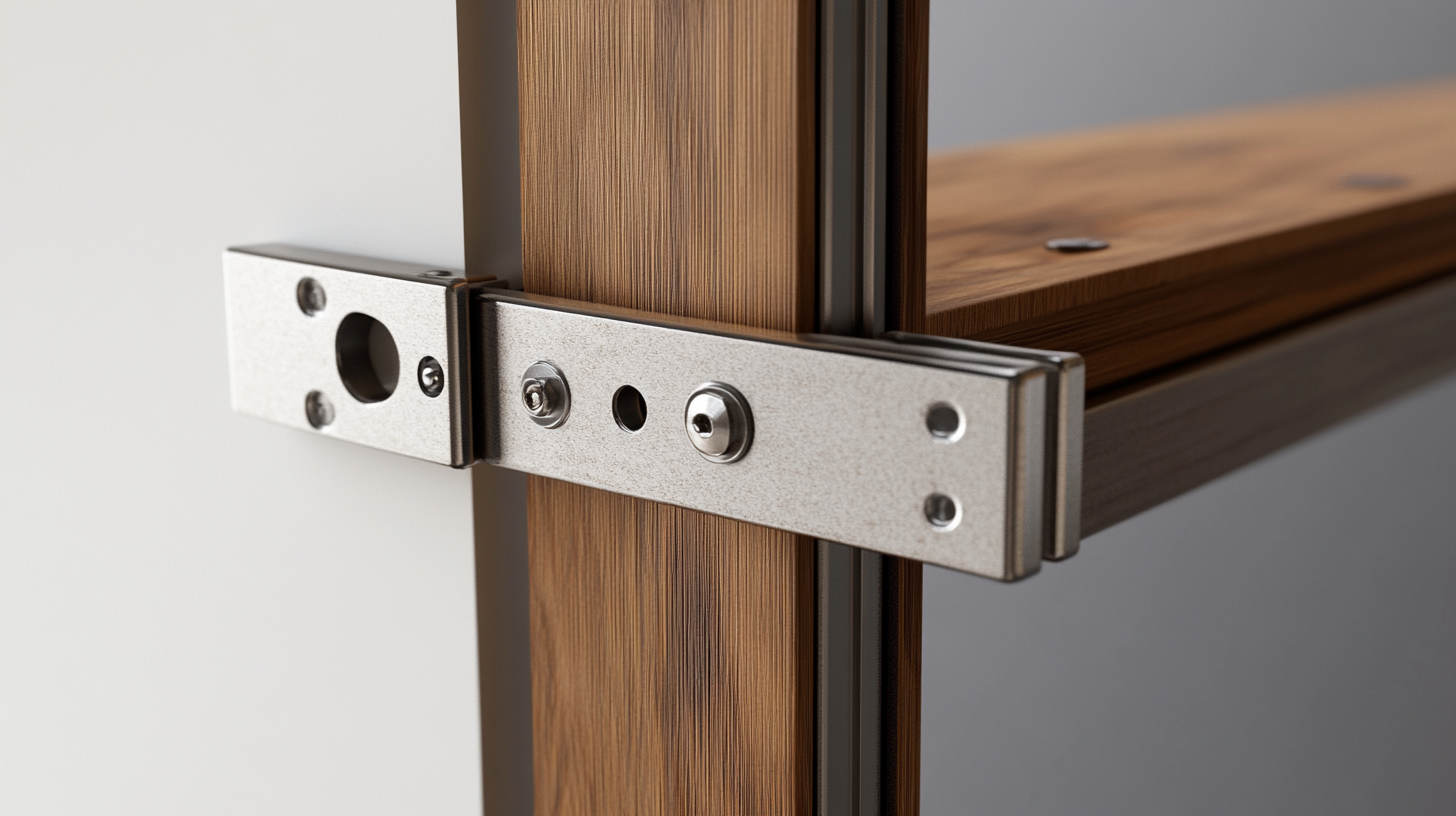
When designing belt hinges, efficiency and durability are paramount considerations. The functionality of a belt hinge hinges not only on its material quality but also on its design intricacies. One critical factor is the selection of sliding mechanisms. Using low-friction materials can enhance movement, reduce wear, and prolong the lifespan of the hinge. A well-designed sliding mechanism should accommodate the natural arc of motion, ensuring that the hinge operates smoothly under various conditions.
Another important aspect to consider is the load distribution across the hinge. An even distribution helps prevent undue stress on any single part, which can lead to premature failure. Incorporating reinforcements at stress points can further enhance durability. Additionally, the alignment and tolerance levels between the belt and hinge are crucial for efficient functionality; even minimal misalignments can lead to performance issues and increased wear over time. Therefore, focusing on these design considerations can significantly improve the effectiveness and longevity of belt hinge systems.
In the manufacturing of durable and efficient belt hinge designs, precision and quality are paramount. With the global demand for high-performance hinges increasing, manufacturers are turning to advanced techniques to ensure that their products meet rigorous industry standards. According to a recent report from the International Journal of Advanced Manufacturing Technology, production accuracy can directly influence operational efficiency, with as much as 30% of manufacturing costs attributed to reworking subpar components. This highlights the importance of utilizing advanced machining processes and high-quality materials to enhance the longevity and effectiveness of belt hinges.
To achieve this level of precision, manufacturers are adopting Computer Numerical Control (CNC) machining and 3D printing technologies. These methods not only reduce production errors but also allow for intricate designs that traditional techniques may not accommodate. Furthermore, the integration of automated quality control systems can ensure that every hinge meets the desired specifications, reducing wastage and improving overall productivity.
Tip: Investing in employee training on these advanced manufacturing techniques can significantly improve quality control and operational efficiency. Additionally, consider collaborating with material scientists to explore innovative composites that can enhance the strength and durability of hinge designs, ensuring they withstand rigorous use in various applications.
This chart illustrates the importance level of various solutions for achieving durable and efficient belt hinge designs. The data reflects a scale of 1 to 10, highlighting critical aspects such as precision machining, quality assurance, material selection, design optimization, and innovative manufacturing techniques.
The global market for belt hinge exports has shown remarkable growth in recent years, driven by an increasing demand across various industries, including automotive, construction, and furniture manufacturing. According to a recent market analysis report by Market Research Future, the belt hinge export market is projected to reach USD 1.5 billion by 2025, with a compound annual growth rate (CAGR) of 5.8% from 2020 to 2025. This growth is largely attributed to technological advancements in manufacturing processes and the rising trend of automation in industrial applications.
Furthermore, regions like North America and Europe are leading the way in belt hinge exports, accounting for over 60% of the global market share. The demand in these regions is fueled by stringent regulations on product durability and efficiency, compelling manufacturers to invest in high-quality materials and innovative designs. The Asia-Pacific region is also emerging as a significant player, with a growing manufacturing base and increasing export capacity, expected to contribute substantially to the overall market dynamics by 2025. This data highlights the importance of adapting belt hinge designs to meet not only current market demands but also future opportunities in the evolving global landscape.
In the realm of industrial design, belt hinges have proven to be an essential component, exhibiting durability and efficiency in a variety of applications. Real-world case studies highlight their effectiveness across sectors such as manufacturing, logistics, and even technology. For example, when integrated into rugged laptops—designed to withstand harsh environments—belt hinges facilitate seamless operation and longevity. These hinges ensure that the devices maintain structural integrity, even in challenging conditions, thereby enhancing user productivity and reliability.
Moreover, the implementation of digital twins in warehouse management showcases another innovative use of belt hinges. By simulating physical systems, these digital models allow for real-time optimization, reducing operational costs and improving overall efficiency. Belt hinges serve as a critical structural element in such systems, supporting dynamic movements and heavy loads, which are vital for automated processes. The ability to combine robust hinge designs with advanced technology paves the way for smarter, more efficient industrial applications that meet the demands of today's fast-paced environments.
Sustainability is increasingly becoming a critical focus in the manufacturing sector, particularly in the production of belt hinges. The global shift towards eco-friendly practices has prompted many companies to reassess their supply chains and raw material sources. According to a 2022 report by the International Institute of Sustainable Development, industries incorporating recycled materials into their products can reduce carbon footprints by up to 40%. This underscores the importance of utilizing biodegradable or recycled materials in belt hinge production to minimize environmental impact.
In addition to material sourcing, innovative manufacturing techniques play a pivotal role in enhancing sustainability. Reports indicate that adopting energy-efficient machinery can cut energy consumption by up to 30%. By modernizing production processes, manufacturers can not only optimize efficiency but also contribute to a greener future. Furthermore, implementing circular economy practices—where belt hinges are designed for disassembly and reuse—can significantly extend the life cycle of products, aligning with global sustainability goals. The integration of these practices not only meets the growing consumer demand for sustainable products but can also lead to substantial cost savings in the long run.
: Innovative materials are crucial in enhancing the durability of hinge designs, significantly impacting the longevity and reliability of products like foldable smartphones.
Thermoplastic elastomers can withstand over 200,000 cycles of bending without degradation, whereas traditional materials may fail after only a fraction of that.
Smart materials, such as shape-memory alloys, can return to a predetermined shape when activated, offering improved functionality and up to a 30% increase in longevity for hinge systems.
Key considerations include the selection of low-friction sliding mechanisms, even load distribution, reinforcements at stress points, and proper alignment and tolerance levels between the belt and hinge.
Incorporating recycled materials and energy-efficient manufacturing techniques can reduce carbon footprints and energy consumption, contributing to a more sustainable production process.
Using recycled materials can reduce carbon footprints by up to 40%, minimizing the environmental impact of belt hinge production.
By implementing circular economy practices, such as designing belt hinges for disassembly and reuse, manufacturers can significantly extend the life cycle of their products.
Even load distribution helps prevent undue stress on any single part, reducing the risk of premature failure in hinge mechanisms.
Low-friction materials enhance movement, reduce wear, and prolong the lifespan of the hinge, contributing to its overall efficiency.
Modernizing production processes with energy-efficient machinery can cut energy consumption by up to 30%, optimizing efficiency while also supporting sustainability goals.