Picking the right Steel Wire Mesh supplier really matters. It can make a big difference in how well the product performs, how fast you can get it installed, and what your long-term project costs end up being. But a good supplier isn't just about offering low prices—they should really understand the ins and outs: wire diameter, aperture size, weave style, material grade, surface treatments, and the conditions it's going to face. These little details are crucial, especially when the mesh needs to handle pressure, moisture, heat, or lots of handling over time.
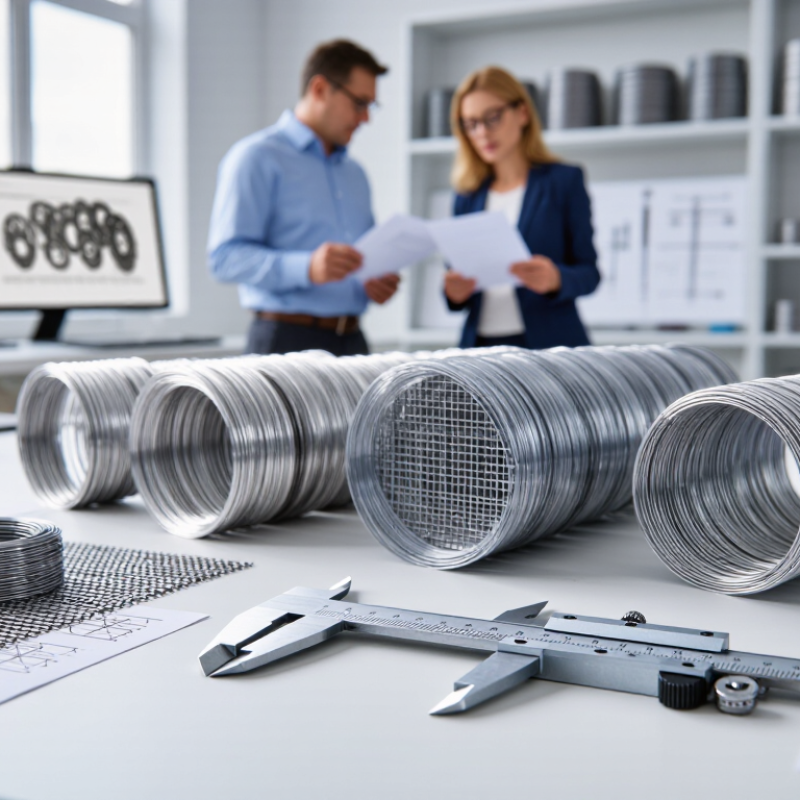
When you're evaluating potential suppliers, start with the proof—ask for certificates, dimensional reports, tensile test results, and details about coatings. Take a good look at sample pieces if you can. Use a caliper to measure the wire thickness, double-check the openings, and inspect the weld points to see if everything's consistent. A reputable supplier will be upfront about their quality-control process and can easily explain it. They should also give you traceable batch info and realistic timelines for delivery. If their answers are vague, that could spell trouble down the line.
Experience definitely counts, but don’t take it at face value—always verify. Sure, a supplier might have years of experience in construction, filtration, agriculture, or industry, but that doesn’t automatically mean they’ll get your order right every time. Even seasoned buyers can miss issues like packaging damage, tolerance limits, or fluctuations in raw material quality. It’s worth keeping in mind.
Good suppliers are proactive—they communicate early before small problems turn into big, costly ones. Make sure they confirm details like drawings, packing instructions, inspection methods, and shipment plans in writing. Their factory might not be the biggest, but what really counts is how reliable their process is. Comparing a few different suppliers, trying out a small order, and seeing how they handle any changes in your specifications can give you a better feel. The cheapest option isn’t always the best—look for someone with solid technical know-how, consistent production quality, honest communication, and transparent standards. In the end, some decisions still require a bit of judgment, but backing it up with solid evidence makes the choice way safer.
Choosing the right Steel Wire Mesh supplier starts with defining the application clearly. Will the mesh support concrete, filter particles, protect equipment, or form a screened enclosure? Each purpose demands different wire diameters, opening sizes, and strength levels.Wire Mesh Steel used for a vibrating screen may need greater fatigue resistance than mesh used for light guarding. State the load, temperature, moisture, and contact conditions.
Measure the working environment, not only the drawing. Note whether the mesh faces salt spray, chemicals, abrasion, or repeated impact. Stainless steel, galvanized steel, or another finish may suit different conditions. Ask for information about tensile strength, weld quality, dimensional tolerance, and coating thickness. Reliable suppliers should provide inspection records, material certificates, and clear test methods. Their answers should be specific.
Small details matter. A 2-millimeter opening error can affect filtration performance. A weak weld can fail during installation. Request samples and inspect them under practical conditions, such as bending a corner or checking an aperture with calipers. I have seen specifications look complete while missing the actual cleaning process. That oversight can become expensive. Reconsider assumptions when field conditions differ from laboratory data. A capable supplier will discuss those uncertainties openly and adjust the mesh design without hiding limitations.
How to Choose the Right Steel Wire Mesh Supplier?
Choosing a supplier begins with matching the mesh type to the working condition. Steel Woven Wire Mesh may suit filtration, guarding, screening, or architectural use. Plain weave offers stable openings and smooth surfaces. Twill weave handles finer filtration with stronger support. For heavy loads, consider welded mesh or a denser woven pattern. The choice should reflect load, temperature, abrasion, and exposure to moisture.
Material selection affects service life. Stainless steel resists corrosion in humid or chemical environments. Galvanized steel can provide economical outdoor protection. Carbon steel may work well indoors when strength matters more than corrosion resistance. Ask for the exact alloy or coating grade. Do not accept “high quality” as a material description. It says very little. Check wire diameter, opening size, sheet dimensions, roll length, and allowable tolerances. A small aperture error can disrupt filtration or create an unsafe gap.
Manufacturing standards reveal how consistently the mesh is made. Request inspection records, material certificates, and batch traceability. Compare the supplier’s process with applicable ASTM, EN, or ISO requirements. Confirm how they measure aperture, wire diameter, tensile strength, and coating thickness. A responsible supplier should explain sampling methods clearly. Review packaging, too. Crushed edges and damp wrapping can damage a perfect product. In practice, the first sample can mislead, so inspect several pieces from different batches. No checklist is perfect. Ask practical questions, record the answers, and test the mesh under realistic conditions before placing a large order.
Compare mesh types, materials, sizes, and manufacturing standards before requesting a quotation.
How to read the chart: Fine filtration mesh typically uses small openings and precise woven construction, while welded panels usually provide larger openings and higher rigidity. The ranges shown are common purchasing ranges in millimeters, not fixed limits for every supplier.
Material selection: Stainless steel 304 is widely used for general corrosion resistance, stainless steel 316 is preferred for chloride or marine environments, and galvanized or plain carbon steel is commonly selected for cost-sensitive structural applications.
Standards to verify: Ask suppliers which requirements apply to your order, such as ASTM A580/A580M for stainless steel wire, ASTM A641/A641M for zinc-coated carbon steel wire, ASTM A1064/A1064M for welded wire products, or ISO 4783 for industrial wire-screen specifications.
Choosing a steel wire mesh supplier starts with verifiable experience, not polished photographs. Ask how many years the factory has produced welded or Woven Mesh. Request recent project records, production volumes, and examples using your required wire diameter. A supplier should explain material grades, welding methods, tolerances, and surface treatments clearly.Vague answers deserve caution.
Certifications provide evidence, but they are not proof of every shipment. The ISO Survey 2023 recorded more than one million ISO 9001 certificates worldwide, showing how common quality systems have become. Still, certificate scope matters. Check the issuing body, validity date, covered facility, and included products. Review documented inspection plans, calibration records, traceability codes, and corrective-action reports. Standards such as ASTM A580/A580M can help define stainless steel wire requirements, while project specifications should control mesh opening and dimensional tolerances.
Visit the production site when possible. Watch operators measure openings with gauges, inspect weld intersections, and separate nonconforming rolls. Ask for a sample inspection report before placing a large order. Independent laboratory testing can verify tensile strength, coating mass, chemical composition, and corrosion performance. The 2024 Deloitte Global Chief Procurement Officer Survey highlights continuing concern about supplier risk and resilience. That concern is practical: a low price means little if replacement material arrives late. I would not rely on a certificate alone. Audits can miss shift-level problems, and even experienced suppliers may need closer control during rapid expansion.
A capable supplier should convert your drawing into measurable specifications. Ask about wire diameter, aperture tolerance, mesh width, edge treatment, and roll length. For Stainless Steel Wire & Mesh, request a pre-production sample and written approval record. Small changes matter. A 0.1 mm aperture difference can affect filtration performance. The supplier should also explain whether customization is made by weaving, welding, or cutting. Their technical team must understand your working temperature, load, and corrosion exposure.
Testing separates a reliable supplier from a persuasive one. Request batch-based reports covering tensile strength, wire diameter, aperture size, and material grade. ASTM A580 and ISO 9001-related quality procedures can provide useful reference points, but certificates alone are not enough. Check heat numbers and laboratory signatures. A supplier may pass a sample test yet fail during mass production. That risk is easy to underestimate. Independent verification is worthwhile for critical orders.
Packaging and delivery deserve equal attention. Rolls need moisture-resistant wrapping, protected edges, strong cores, and clear batch labels. Flat panels require separators and rigid corner protection. UNCTAD’s Review of Maritime Transport reports that over 80% of global merchandise trade by volume moves by sea, so seaworthy packaging is essential. Ask for production milestones, loading photos, carton dimensions, and contingency plans. Delivery promises should include realistic lead times, not optimistic guesses. Mistakes happen. Good suppliers show how they correct them.
How to Choose the Right Steel Wire Mesh Supplier?
Assess Pricing, Minimum Orders, Lead Times, and Payment Terms
A low unit price can hide expensive problems. Ask for a detailed quotation showing mesh size, wire diameter, material grade, finish, packaging, and delivery costs. Compare equivalent specifications, not attractive numbers. A supplier offering a slightly higher price may provide tighter tolerances, clearer inspection records, and stronger batch traceability. Request recent test reports and sample pieces. Hold them beside your drawings. Small differences become obvious.
Minimum order quantities deserve equal attention. Large orders may reduce pricing, but they can trap cash in unused stock. Ask whether the supplier can produce a trial batch or mixed-size shipment. Confirm production capacity before accepting a promised lead time. Clarify when the clock starts: purchase order approval, deposit receipt, or drawing confirmation. Include packaging and port handling in the schedule. Delays happen. A written update process helps.
Payment terms reveal operational reliability. Discuss the deposit, balance timing, inspection point, and documents required for release. Avoid vague promises such as “payment after shipment.” Tie each payment to a verifiable milestone. For a new supplier, a smaller first order may offer better control than aggressive negotiation. I once focused too heavily on price and overlooked packing quality. The savings disappeared after damaged rolls needed replacement. That mistake still shapes how I compare suppliers.
Choosing a steel wire mesh supplier requires more than comparing prices. Review physical samples under realistic conditions. Check aperture size, wire diameter, edge quality, and weld consistency. For 316 Stainless Steel Wire Mesh, request material certificates and corrosion-test records. ASTM A580/A580M provides useful requirements for stainless steel wire. Still, paperwork cannot replace inspection.
I once accepted a bright sample too quickly. The production batch later showed uneven crimping. That mistake changed my review process. Ask for samples from current production, not only showroom pieces. Measure several openings with a calibrated gauge. Small details matter. Confirm tolerances in writing. The NACE IMPACT study estimated global corrosion costs at about 3.4% of global gross domestic product. This supports careful alloy verification, especially in marine or chemical environments.
Customer feedback should reveal delivery reliability, claim handling, and dimensional consistency. Request references from projects with similar mesh specifications. Look for repeated comments, not one impressive testimonial. A warranty should state coverage, duration, exclusions, and response times. After-sales support must include replacement procedures, technical guidance, and traceable batch records. The World Steel Association reported roughly 1.88 billion tonnes of crude steel production in 2023, showing the scale of the supply chain. Scale alone proves little. A supplier may still overlook a small order. Test their responsiveness before signing: send technical questions, request revised drawings, and observe how clearly they respond. Mistakes happen; evasive communication is the warning sign.
Describe the mesh’s job clearly. It may support concrete, filter particles, guard equipment, or enclose an area. State the expected load, temperature, moisture, abrasion, and impact. A vibrating screen needs strong fatigue resistance. A light guard may need less strength. Do not rely only on drawings. Field conditions can differ.
Woven mesh suits filtration, screening, guarding, and some architectural uses. Plain weave provides stable openings and a smooth surface. Twill weave supports finer filtration. Welded mesh may suit heavier loads. Select the structure according to pressure, abrasion, temperature, and moisture. The first choice is not always right.
Stainless steel resists humid and chemical environments. Galvanized steel can offer economical outdoor protection. Carbon steel may suit dry indoor areas. Ask for the exact alloy or coating grade. “High quality” is too vague. Material certificates provide stronger evidence. Salt spray changes the decision quickly.
Confirm wire diameter, opening size, sheet dimensions, roll length, and edge condition. Check allowable tolerances in writing. A two-millimeter opening error can affect filtration. Measure several openings with a calibrated gauge. One opening is not enough. Small errors become expensive.
Request material certificates, inspection records, batch traceability, and clear test methods. Confirm how the supplier measures apertures, wire diameter, tensile strength, and coating thickness. Ask about weld quality and dimensional tolerance. The answers should be specific. Paperwork cannot replace physical inspection.
Request samples from current production. Inspect several pieces from different batches. Measure openings and wire diameter. Check edge quality, crimping, weld consistency, and coating coverage. Bend one corner carefully. Look for movement or broken welds. I once trusted a bright sample too quickly. That was a mistake.
Seek references from projects using similar mesh specifications. Review comments about delivery, consistency, and claim handling. Repeated feedback matters more than one impressive testimonial. Ask whether replacement procedures worked. A supplier may perform well on large orders but overlook small ones. Test responsiveness before committing.
The warranty should state coverage, duration, exclusions, and response times. After-sales support should explain replacements, technical guidance, and batch records. Ask how damaged or incorrect mesh will be handled. Send technical questions before signing. Clear replies build confidence. Evasive replies deserve another review.
Choosing the right Steel Wire Mesh supplier begins with a clear understanding of your application, operating environment, load requirements, corrosion resistance needs, and expected service life. Compare available mesh types, materials, wire diameters, opening sizes, surface treatments, and manufacturing standards to ensure the products match your technical specifications. A reliable supplier should demonstrate relevant industry experience, recognized certifications, consistent quality control, and the ability to provide traceable production records.
You should also evaluate the supplier’s customization options, testing procedures, packaging methods, and delivery capacity. Before placing an order, review pricing, minimum order quantities, production lead times, shipping arrangements, and payment terms. Request samples whenever possible and consider feedback from previous customers to assess product consistency and service reliability. Clear warranty policies and responsive after-sales support are also important, as they can help resolve quality concerns and maintain a stable long-term supply relationship.