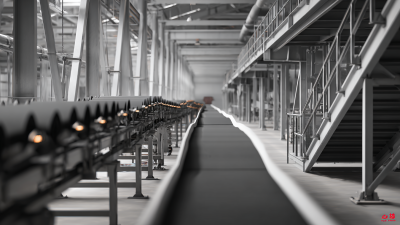
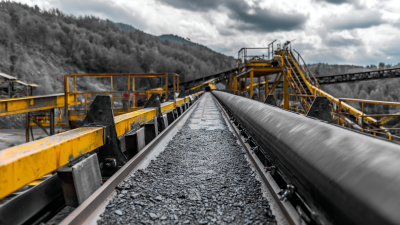
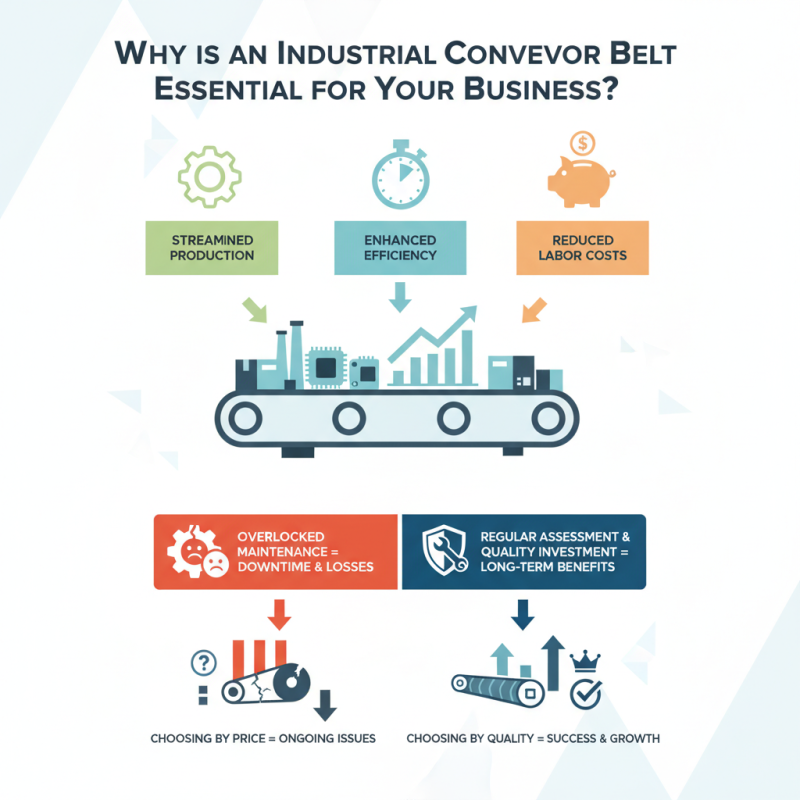
In today’s competitive world, having an Industrial Conveyor Belt can really make or break your business. It’s what keeps production running smoothly, boosts efficiency, and even helps cut down labor costs. But honestly, how often do we stop to think about just how big of an impact it truly has? Sadly, many companies overlook regular maintenance, which can lead to unexpected downtime and some serious losses.
An Industrial Conveyor Belt isn’t just some random piece of machinery; it’s kind of the backbone of many industrial operations. Imagine a busy factory where products slide along a conveyor like clockwork—that’s what keeps things moving faster and more efficiently. Picking the right system can mean the difference between growing success and hitting a wall. But here’s the thing: not all conveyor systems are built the same. Checking and maintaining them regularly is crucial if you want them to keep performing at their best.
A lot of businesses get caught up in choosing a belt just because it’s cheaper, without thinking about quality. Trust me, that’s a mistake that can cause more problems down the line. Spending a little extra on a dependable industrial conveyor belt can pay off big time in the long run. So, yeah—knowing how important this equipment really is can make all the difference if you want your business to thrive.
Understanding the Role of Industrial Conveyor Belts in Manufacturing
Industrial Conveyor Belts play a vital role in manufacturing. They transport materials efficiently across production lines. This increases productivity and saves time. In many factories, moving heavy items manually is risky and slow. Conveyor belts automate this process, allowing workers to focus on more complex tasks.
Tips: Regular maintenance of your conveyor system is vital. Check for wear and tear often. Ensure that alignment is correct to avoid operational issues.
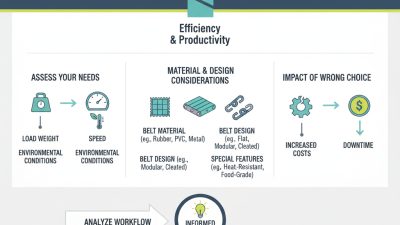
These belts are versatile. They can handle various materials, from raw goods to finished products. However, not all conveyor belts are the same. The choice depends on the type of materials you process. It’s essential to assess your needs carefully. Make sure the construction matches your specific application to avoid future dissatisfaction.
Tips: Invest in proper training for staff. Understanding how to operate conveyor belts safely is crucial. This minimizes accidents and enhances productivity. Keep an eye on safety protocols for everyone’s benefit.
Key Benefits of Implementing Conveyor Belt Systems in Industries
In industries today, the role of an Industrial Conveyor Mesh Beltcannot be underestimated. Implementing Conveyor Belt Systems can dramatically improve efficiency. According to recent reports, companies utilizing conveyor systems saw productivity increase byup to 30%. This is significant for industries, where every second counts.
Conveyor belts reduce manual handling. They streamline the production process and minimize workplace injuries. A study highlighted that around 25%of workplace injuries are linked to handling materials. By using an industrial conveyor Mesh Belt, companies can decrease these risks. Additionally, workflows become smoother.
However, transitioning to conveyor systems is not without challenges. Initial costs can be high. Maintenance is also an ongoing concern that requires attention. Regular checks are mandatory to ensure optimal functionality. Without proper upkeep, the very systems designed for efficiency can slow down operations. So, while the benefits are clear, businesses must also be vigilant about potential drawbacks.
Types of Industrial Conveyor Belts and Their Applications
When considering industrial conveyor belts, understanding their types and applications is crucial. Various conveyor belts cater to different industries such as manufacturing, mining, and food processing. Rubber belts are popular in handling heavy materials. They are strong and durable. In contrast, fabric belts are ideal for lighter loads, offering flexibility and smooth operation.
Metal belts serve unique needs. They can withstand high temperatures, making them perfect for bakery or metal processing. Plastic belts, often used in food industries, are easy to clean. They resist corrosion and reduce contamination risks. Each type has its strengths and weaknesses to consider.
Tips: Always evaluate the specific requirements of your operations. For instance, consider weight, temperature, and environmental factors. Choosing the wrong belt can lead to downtime. Regular maintenance is also vital. Inspect belts for wear and tear. This practice helps detect issues early and prolongs the belt's lifespan.
How Conveyor Belts Improve Efficiency and Productivity
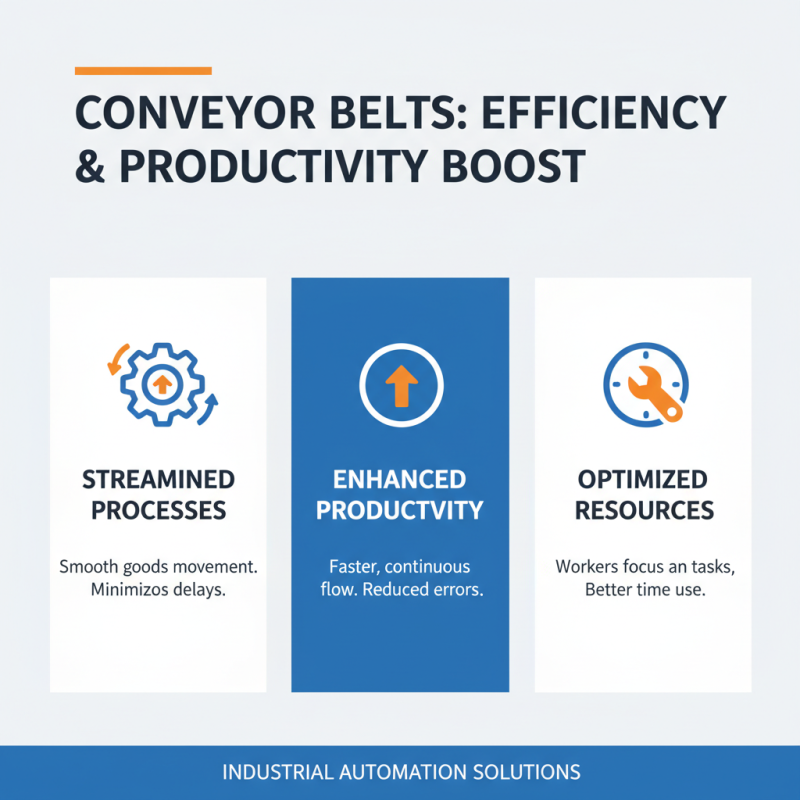
In many industries, an industrial conveyor belt is a vital component. It streamlines processes and enhances productivity. Goods can move more smoothly from one stage to another. This minimizes delays and reduces the risk of errors. When items travel along a conveyor belt, workers can focus on other tasks. This leads to better use of time and resources.
Conveyor belts also improve safety in the workplace. They reduce manual handling of heavy items, lowering the chances of injury. Workers can easily monitor the items moving along the belt. Adjustments can be made quickly, ensuring everything runs smoothly. An Industrial Conveyor Belt Oven helps maintain the quality of products. Items can be heated uniformly, which is crucial for food or materials sensitive to temperature.
Efficiency is not just about speed; it's about quality. If a conveyor system malfunctions, the entire production line can suffer. Regular maintenance is essential, but many overlook this. This can lead to unexpected breakdowns. A careful balance between efficiency and reliability is necessary for long-term success.
Maintenance Tips for Long-lasting Conveyor Belt Performance
Maintaining an industrial conveyor belt is vital for efficiency. Regular checks can prevent significant downtime. Inspect the belt for wear and tear. Look for fraying edges or cracks. These small issues can lead to bigger problems.
Lubrication is another key aspect. A well-lubricated belt operates smoother. Use appropriate oils to avoid slip-ups. However, too much lubricant can attract dust. This can hinder performance. Be mindful of the balance.
Cleaning is often overlooked. Dust and debris can accumulate and cause friction. A thorough cleaning routine can extend the belt's life. But, be cautious with cleaning agents. Harsh chemicals can damage the belt material. Take your time to choose the right methods. Reflect on these practices regularly to ensure optimal function.
Choosing the Right Conveyor Belt for Your Business Needs
Choosing the right conveyor belt can significantly impact efficiency in your operations. According to a 2022 report by the Conveyor Equipment Manufacturers Association, companies that optimize their conveyor systems, including the use of suitable Industrial Oven Belt, can enhance productivity by up to 30%. This highlights the importance of selecting a belt that aligns with specific business needs.
Consider material type, belt width, and load capacity. A mismatch could lead to frequent breakdowns or slowdowns in production. For instance, using an incorrect Industrial Oven Belt can cause damage to products due to incorrect temperature resistance levels. This situation might not only affect the quality but also leads to financial losses.
Additionally, maintenance is crucial. Regular checks help in early detection of wear and tear. A recent study revealed that companies failing to maintain conveyor systems can incur downtime costs exceeding $200,000 annually. Investing time in choosing the right conveyor belt pays off. A well-chosen Industrial Oven Belt can prevent unnecessary disruptions and improve overall workflow.
Future Trends in Conveyor Belt Technology and Automation
The landscape of conveyor belt technology is rapidly evolving. Automation is becoming central to manufacturing efficiency. Companies are integrating smart sensors into their conveyor systems, allowing real-time monitoring and data collection. Increased efficiency and reduced downtime are clear benefits. However, the implementation has its challenges. Firms must invest in training for staff to manage these new systems.
Sustainability is another emerging trend. Manufacturers are focusing on eco-friendly materials for conveyor belts. This shift addresses environmental concerns but may increase initial costs. Companies must balance long-term benefits with upfront expenses. An Industrial Oven Belt Supplier can play a crucial role in this transition; they can provide solutions that align with sustainable practices while meeting production needs.
As businesses adapt, customization is key. Different industries require specific belt designs. Flexibility is essential for meeting diverse challenges. While standard solutions are convenient, they may not always fit unique workflows. Continuous innovation in conveyor belt technology is necessary to stay competitive. Moving forward, businesses must prioritize adaptability and efficiency in their operations.
FAQS
: They efficiently transport materials across production lines, saving time and increasing productivity.
Regular maintenance helps avoid operational issues and ensures optimal functionality.
No, different conveyor belts cater to varied materials and applications, influencing their performance.
By minimizing manual handling, they lower the risk of injuries linked to transporting materials.
Initial costs can be high, and ongoing maintenance requires attention to maintain efficiency.
They can transport raw goods, finished products, heavy materials, and lighter loads depending on the belt type.
Selecting an unsuitable belt can lead to downtime and impact overall productivity.
Metal belts can withstand high temperatures, while rubber belts are more durable for heavy loads.
Understanding safe operation is vital to minimize accidents and enhance overall productivity.
Regular checks for wear and tear should be conducted to prolong the belts' lifespan.
Conclusion
An Industrial Conveyor Belt is a pivotal component in modern manufacturing processes, streamlining operations and enhancing productivity across various sectors. These systems facilitate the efficient movement of goods, reducing manual handling and minimizing the risk of errors. By understanding the different types of industrial conveyor belts and their specific applications, businesses can select the most suitable option to meet their operational needs.
Implementing conveyor belt systems not only improves workflow efficiency but also significantly boosts overall productivity. Maintenance is crucial for ensuring long-lasting performance, and businesses should follow best practices to keep their conveyor belts in optimal condition. As technology advances, future trends in conveyor belts and automation promise even greater improvements, making them an essential asset for any forward-thinking enterprise.