Leave Your Message
An Oven Conveyor Belt isn't just a moving surface inside a hot chamber. It's what helps control product speed, spacing, heat exposure, and, ultimately, texture. In a bakery, that belt might carry dough through zones hotter than 200°C—all while standing up to oil, crumbs, moisture, and repeated washdowns. And small design choices? They matter. Even a slight tracking error can lead to uneven browning or product contact issues.
The broader conveyor industry gives a good hint at why this equipment deserves a closer look. Mordor Intelligence's Conveyor System Market report expects continued growth through 2029, largely driven by food processing automation and demand for more consistent production. Grand View Research also names food manufacturing as a major conveyor application—especially where throughput and hygienic handling need to work together. Now, neither report isolates the Oven Conveyor Belt market, and that's an important limitation. Even so, they show the pressure shaping modern oven design: faster output, fewer stoppages, and more repeatable results.
Food-plant engineer Dr. Thomas J. Imholte once stressed a principle that still applies to thermal Processing Equipment: “Sanitation must be designed into equipment, not added afterward.” Practical, right? A well-built belt should have minimal dirt traps, hold stable tension, and let you inspect it without tearing everything apart. It also needs to match the product, oven temperature, belt speed, and cleaning method. But the answer isn't always tidy. Sometimes a cheaper belt looks great at first, then racks up higher maintenance costs down the road. This article breaks down what an Oven Conveyor Belt is, how it moves heat and products, and which technical details are worth evaluating carefully.
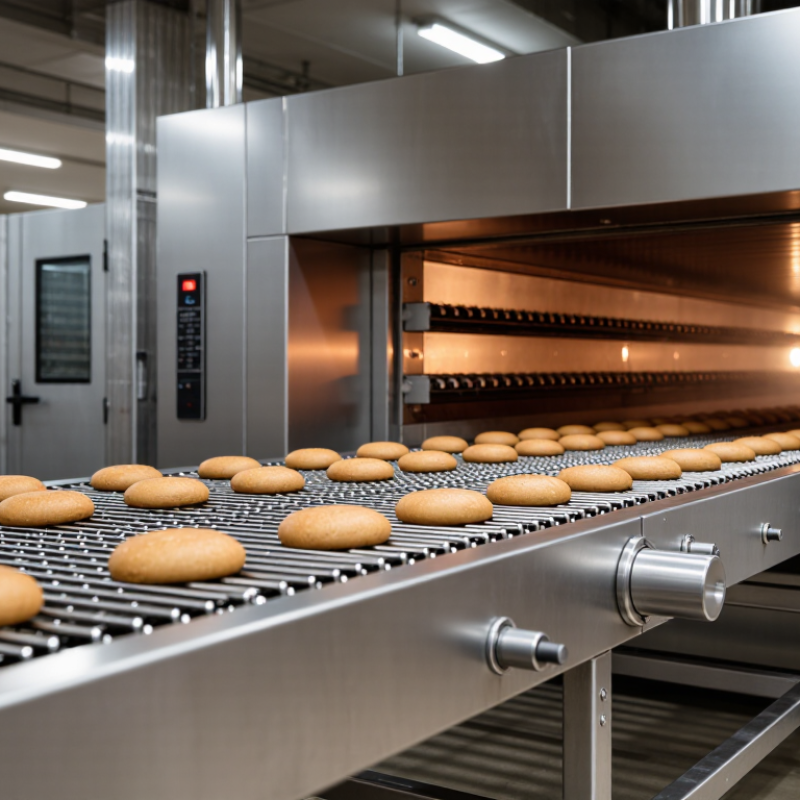
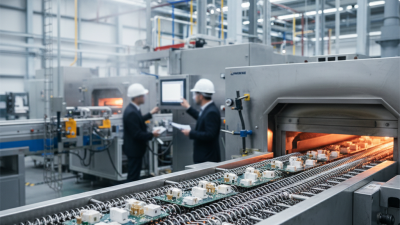
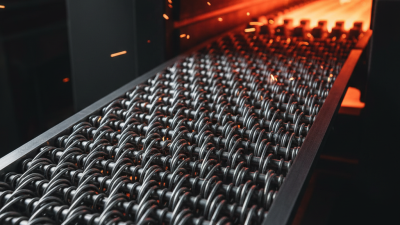
An oven conveyor belt is a continuous transport surface that moves products through a heated chamber. It supports steady baking, drying, curing, or reheating at controlled temperatures. Not merely a belt. Its structure usually includes heat-resistant Metal Mesh or linked plates, drive sprockets, guide rails, bearings, and a tensioning system. Some designs also use perforated surfaces to improve airflow around each product.
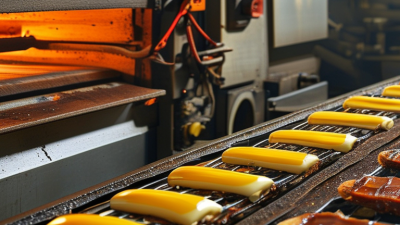
A Continuous Oven Conveyor Belt connects loading, heating, cooling, and unloading stages in one production flow. As the belt advances, products receive more consistent heat exposure than they would in separate batch ovens. Belt speed, chamber temperature, airflow, and product spacing must work together. A small speed change can affect moisture, color, and internal texture. In practical operations, buildup on the belt can create uneven contact or leave marks. Maintenance records, temperature checks, and visual inspections help identify these problems early. Still, no setup is perfect; product size and moisture can vary more than expected.
Tips: Match the belt material to the oven temperature and product weight. Check tension when the belt is cold and stopped. Keep guides clean, and inspect joints for wear. Avoid overcrowding, because blocked airflow may produce pale or underprocessed areas. A short trial run often reveals alignment issues before full production begins.
| Data Dimension | Description | Typical Industrial Information |
|---|---|---|
| Definition | An oven conveyor belt is a continuous moving surface that transports products through a heated chamber. | Used for continuous baking, cooking, drying, curing, toasting, or Heat Treatment. |
| Primary Industrial Role | Moves products through controlled heating zones at a consistent speed. | Supports repeatable production, reduced manual handling, and continuous material flow. |
| Main Structural Parts | Belt, drive pulley, tail pulley, support bed, tensioning system, frame, motor, and temperature-control enclosure. | The assembly is designed to maintain stable belt tracking and reliable movement under heat. |
| Operating Principle | A motor rotates the drive pulley, which moves the belt and carries products through the oven. | Heating may be provided by convection, infrared radiation, direct gas combustion, or combinations of these methods. |
| Common Belt Materials | Food-grade stainless steel, carbon steel, nickel-based alloys, or heat-resistant polymer constructions. | Material selection depends on temperature, corrosion exposure, product contact, cleaning requirements, and mechanical load. |
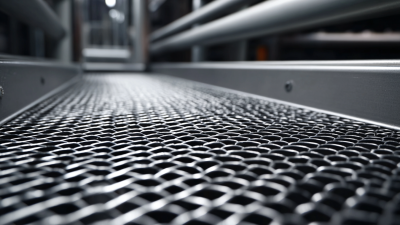
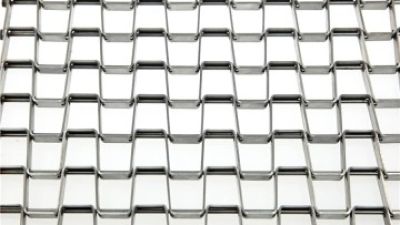
| Belt Designs | Wire mesh, balanced weave, rod network, solid plate, slat, and perforated belt designs. | Open mesh improves air circulation; solid surfaces support small, soft, or liquid-containing products. |
| Temperature Range | Operating temperature varies according to the oven process and belt material. | Many industrial food processes operate approximately from 120°C to 300°C; specialized heat-treatment systems may operate considerably higher. |
| Speed Control | Belt speed determines the residence time, or how long a product remains inside the heated chamber. | Variable-speed drives allow operators to adjust throughput and heating exposure for different products. |
| Heating Zones | Longer ovens may be divided into independently controlled temperature or airflow sections. | Multiple zones help manage product entry, moisture removal, browning, curing, and final temperature stabilization. |
| Typical Applications | Continuous processing of food, packaging materials, coatings, electronic components, and metal parts. | Examples include baking, snack drying, paint curing, adhesive curing, powder coating, and heat treatment. |
| Product Loading | Products are placed on the belt manually or by an automatic feeder at a controlled spacing. | Consistent spacing helps maintain uniform airflow, heat transfer, and processing time. |
| Key Performance Factors | Belt width, load capacity, mesh opening, speed, temperature uniformity, and tracking accuracy. | Correct selection improves product quality, energy efficiency, belt service life, and production consistency. |
| Cleaning and Hygiene | Belts used in food processing must allow effective removal of crumbs, grease, residues, and allergens. | Open designs, accessible components, corrosion-resistant materials, and validated sanitation procedures support hygienic operation. |
| Routine Maintenance | Inspection normally includes belt tension, tracking, welds, sprockets, bearings, drive components, and buildup. | Regular maintenance helps prevent belt drift, product contamination, unexpected shutdowns, and premature wear. |
| Main Advantages | Continuous operation, consistent processing, scalable throughput, and reduced direct labor. | The system is well suited to high-volume production where stable product quality is required. |
| Important Limitations | Performance can be affected by uneven loading, incorrect speed, poor airflow, belt distortion, or inadequate maintenance. | The belt and oven must be selected as one integrated system to achieve safe and uniform processing. |
Selecting the right flat wire belt begins with the product, process, and operating environment. For food handling, a Food-Grade Flat Wire Belt made from 316L stainless steel with FDA compliance supports clean, reliable conveying, while a Hygienic Flat Wire Belt with recognized hygienic-design certification simplifies sanitation. Bakery and confectionery lines can benefit from a Non-Stick Flat Wire Belt, and packaging operations may require a Custom-Width Flat Wire Mesh to match equipment layouts and product dimensions.
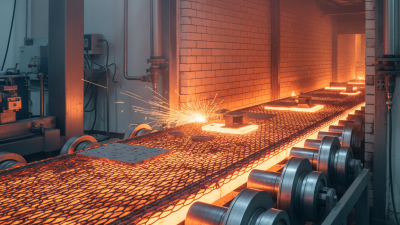
Temperature, load, and material compatibility are equally important. A High-Temperature Flat Wire Furnace Belt rated for operation up to 800°C is suited to controlled heating and thermal processing. Marine or washdown environments call for a Corrosion-Resistant Flat Wire Belt made from 316Ti stainless steel. For demanding forming and transfer applications, a Heavy-Duty Flat Wire Belt for metal stamping offers increased strength and stability. Electronics assembly may require an Anti-Static Flat Wire Belt to help control electrostatic buildup, while a Low-Profile Flat Wire Conveyor supports the gentle handling of small parts in limited spaces.
Performance also depends on tracking accuracy and belt construction. A Precision Alignment Flat Wire Conveyor System can improve product positioning and reduce uneven wear across long or fast-running lines. When comparing options, evaluate wire spacing, belt width, tensile capacity, surface finish, temperature range, cleaning requirements, and drive compatibility to ensure the selected design matches the application.
A wider belt provides more usable baking area. However, edge airflow may become uneven. More space is not always better.
Dwell time controls how long products receive heat. Longer exposure can improve color, moisture loss, and internal texture. It also lowers hourly output.
Multiply the number of loaded rows by belt speed. For example, two rows moving at 300 millimeters per minute provide a practical estimate. Theoretical capacity is often too optimistic.
Measure belt speed, product weight, core temperature, and moisture loss. Start with the slowest recipe. Record real results.
Crowded products can block heat and airflow. Centers may stay pale while surfaces brown. Consistent gaps usually produce steadier results.
Verify displayed temperatures with independent measurements near the product path. Adjust upper and lower heat separately when surfaces darken early. Check vents for blockages.
Inspect products from the front, middle, and rear belt sections. Check color, weight loss, surface dryness, and internal temperature. One section may behave differently.
Leave about 10% capacity for seasonal changes and recipe variation. This margin may prevent unstable output. It is not simply wasted space.
Automation improves control, but it cannot correct crowded loading or poor spacing. An operator’s handwritten log may reveal patterns hidden by dashboards. The first calculation might be wrong. That can be useful.
An Oven Conveyor Belt is a continuous transport surface used to move products through heated processing zones at controlled speeds, typically from 0.5 to 20 meters per minute. Its structure may include a heat-resistant belt, support frame, drive system, rollers, and adjustable guides. As products travel through the oven, they receive heat through convection, radiation, and conduction. Multiple zones operating around 100–300°C can provide gradual heating, cooking, baking, drying, or curing while improving product consistency.
Belt width, line speed, and dwell time determine how much product the oven can process. Wider belts increase capacity, while slower speeds provide longer exposure to heat. Belt materials are selected according to the operating environment, with specialized metal or engineered materials designed for applications ranging from approximately 500 to 2,000°F. Operators maintain uniform results by adjusting temperature, airflow, belt speed, and zone settings. Proper coordination of these factors helps prevent uneven browning, underprocessing, overheating, and product damage while supporting efficient industrial production.