Leave Your Message
0%

Look, picking a conveyor belt manufacturer isn't just about comparing price tags—that's only half the story. You've got to think about belt width, how the carcass is built, cover grade, and the actual conditions it'll be working in. A belt that handles hot clinker is going to need something totally different than one hauling grain or packaged goods. And here's the thing: even small spec gaps can come back to bite you in the form of costly downtime.

So, if you're shopping around for Conveyor Belts, this guide covers ten Chinese manufacturers worth a look—and what you should check before you even reach out. We're comparing them on things like product range, how they actually manufacture, quality documentation, custom options, and after-sales support. Don't just take their word for it though: ask for technical data sheets, sample test reports, production details, and get warranty terms in writing. And most importantly? Make sure the belt they're quoting actually fits your material, speed, loading, and temperature. Because yes, the details really matter.

Look, claims are worth taking with a grain of salt. Just because someone has a slick brochure doesn't mean they actually deliver, right? And what's publicly available can be stale or missing pieces. So when you can, double-check certifications directly with whoever issued them, and ask for recent references from projects similar to yours. Okay, so people might search for “Conveyor Belt Belt” — and sure, that phrase shows up. But when you're actually asking for quotes, try to use the proper technical names instead. It sounds nitpicky, but it really cuts down on misunderstandings. This overview is just a starting point, not a full factory audit or any kind of guarantee. Use it to narrow things down, then confirm every spec with the supplier yourself. A little caution goes a long way.
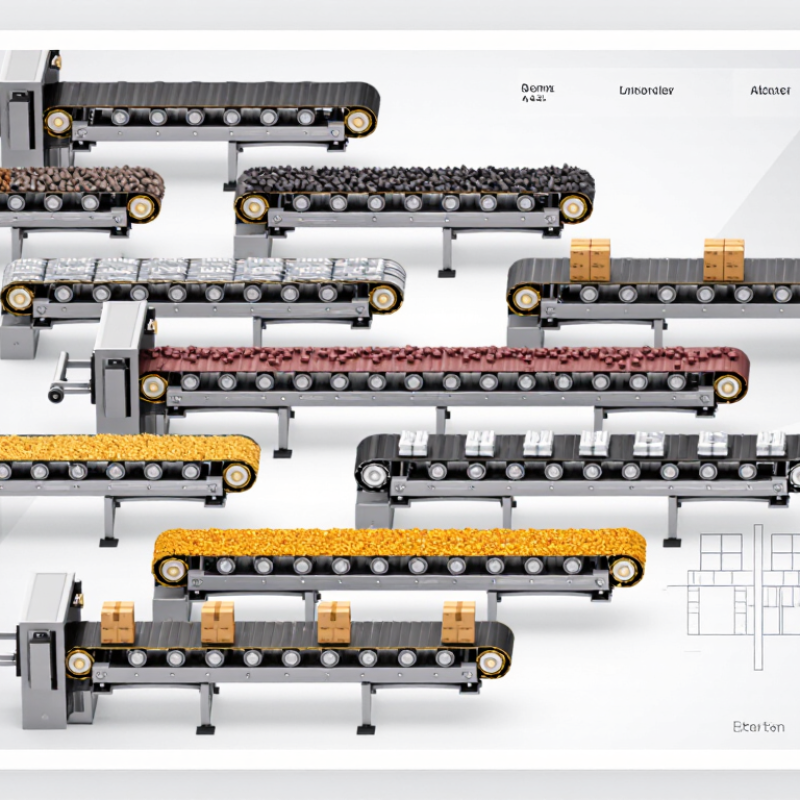
Who Are the Top 10 Conveyor Belt Manufacturers in China?

What Conveyor Belt Manufacturers Produce and How Their Products Work

Conveyor belt manufacturers produce more than a moving strip of material. They make belts with different reinforcement, cover compounds, widths, and surface profiles for specific handling conditions. Common options include fabric-reinforced rubber belts, steel-cord belts, and lightweight polymer belts. Each serves different loads and environments.

The belt is a layered surface. Fabric plies or steel cords carry tension, while the outer covers help resist abrasion, heat, moisture, or oil. The right choice depends on the material being conveyed and the route’s length and incline. Details matter. A rough aggregate can wear a cover quickly; a hot load may require a heat-resistant compound. No single construction fits every line.

During operation, a drive pulley pulls the belt around the conveyor, while idlers support it and help maintain its path. At loading points, impact beds can reduce damage from falling material. Correct tension and alignment matter too. I have seen a neat specification fail to capture messy site conditions. A Belt Conveyor Belt Specification should state load, speed, belt width, operating temperature, and splice method, then be checked against actual installation needs.

How China’s Conveyor Belt Manufacturing Industry Is Structured

China’s conveyor belt industry includes large integrated producers, specialized belt makers, and smaller contract manufacturers. Integrated facilities may handle rubber compounding, calendering, fabric treatment, vulcanization, and testing under one roof. Specialized plants often focus on specific needs, such as heat-resistant, oil-resistant, or light-duty belts. Upstream suppliers provide rubber, textile reinforcement, steel cord, and Processing Equipment. These layers connect through distributors and engineering firms that help match belt designs to mines, ports, factories, and warehouses. The boundaries are not always neat; some manufacturers outsource certain steps while retaining final quality checks.

Tips: Ask which production stages happen in-house. Request test data for the intended load, temperature, and operating environment. Check sample edges, splice quality, and documentation consistency. A polished brochure is not proof of reliable performance.

When comparing suppliers, buyers should examine more than belt width or tensile rating. Ask how the manufacturer controls batch consistency and handles failures in service. Site audits can clarify equipment condition, storage practices, and inspection routines. Third-party testing may help confirm performance claims, though test conditions should match real use. A lower-cost belt can still fit a straightforward application, but poor alignment between belt specification and operating conditions can shorten service life. Industry structure matters because the supplier coordinating materials, production, and after-sales support may influence outcomes as much as the belt’s stated specifications.

China’s Conveyor Belt Industry: Selected Standard Belt Widths
These nominal widths, from 300 mm to 2,400 mm, illustrate the range of belt sizes used across industrial applications. They are product specifications—not market shares or a ranking of manufacturers. Reference: GB/T 7984-2013, Rubber Conveyor Belt.

Key Factors for Evaluating Chinese Conveyor Belt Manufacturers

Choosing among conveyor belt manufacturers in China requires more than comparing quoted prices. Start with the belt’s working conditions: conveyed material, temperature, impact, belt speed, and operating hours. Ask how the manufacturer selects carcass construction, cover grade, and splice method for those conditions. Details matter. A technically sound answer should explain trade-offs, not simply promise a longer service life.

Review evidence that matches your application. Request relevant test reports, material specifications, inspection records, and sample results, then check dates and test scope. Ask whether production batches are traceable and how defects are handled. If possible, inspect a belt sample for cover consistency, edge finish, and fabric alignment. A polished brochure is not proof. Factory visits or a third-party inspection can clarify whether documented procedures appear in routine production.

Assess communication and after-sales support, too. Confirm drawing approval, delivery milestones, packaging, and the process for resolving quality concerns. Ask for references from comparable industries, while recognizing that one customer’s conditions may differ from yours. No factory is perfect. A missing record need not end the discussion, but the supplier should explain the gap and offer a practical corrective action. Compare total operating costs, including downtime and replacement frequency, rather than choosing the lowest initial quote.

Profiles of 10 Leading Conveyor Belt Manufacturers in China

Profiles of ten leading conveyor belt manufacturers in China should compare real capabilities, not just catalogue breadth. One may specialize in mining belts; another serves ports and bulk terminals. A third focuses on heat-resistant products, while a fourth supplies oil-resistant grades. Other profiles may highlight abrasion control, custom widths, fabric reinforcement, steel-cord construction, food-handling applications, or fast technical support. These distinctions matter because a belt used under a dusty transfer chute faces different demands from one carrying hot material. No shortlist is perfect.

Tips: Ask for belt construction details, test reports, and references for similar operating conditions. For Sus 304 316l Conveyor Belt Eye-Flex Belt searches, confirm the requested material and belt design directly; the phrase alone does not establish suitability. Check splice methods, minimum order quantities, sample availability, and delivery estimates before comparing prices. A clear profile should explain where a manufacturer’s strengths end, too.

Treat “top ten” as a starting point, not a verified ranking. Product ranges and production capacity can change, and public descriptions may omit practical limits. Request current specifications, inspect sample documentation, and compare stated performance against your site conditions. If details remain unclear, ask for clarification.

Industries and Applications Served by These Manufacturers

Chinese conveyor manufacturers serve mining, steelmaking, cement, ports, agriculture, food processing, and parcel distribution. In mines and quarries, heavy-duty belts carry ore and aggregate from crushers to stockpiles. The World Steel Association’s World Steel in Figures 2024 reports 1,888.2 million tonnes of crude steel production in 2023, reflecting the scale of material movement across industrial supply chains. At ports, conveyors move bulk cargo between storage areas and ships. UNCTAD’s Review of Maritime Transport 2024 reports that seaborne trade reached 12.3 billion tonnes in 2023.

Applications differ sharply by operating conditions. Food lines may need smooth, cleanable belts and easy access around transfer points. Warehouses often prioritize steady parcel flow, accurate routing, and compact layouts.

A Conveyor Belt Conveyor handling wet mineral feed needs different belt covers and tracking controls from one moving dry grain. Dust matters. So do washdown routines, loading impact, temperature, and belt speed.

Manufacturers commonly adapt frame strength, belt width, drive capacity, and safety guards to the site. Buyers should check whether the proposed design matches actual material size, moisture, and daily throughput. Published market figures show industry scale, not the right specification for every plant. Even a well-built system can disappoint if transfer points are poorly placed or maintenance access is overlooked. That detail is easy to miss.

How to Choose a Conveyor Belt Manufacturer in China

Choosing a conveyor belt manufacturer in China starts with the operating conditions, not the catalogue. Record material type, lump size, belt speed, incline, temperature, and daily running hours. The IEA’s Coal 2024 report estimates global coal demand reached 8.77 billion tonnes in 2024, highlighting the scale of continuous bulk handling. But mining is not every application. A food, cement, or parcel line needs different cover and carcass properties.

Ask for belt construction details, test results, and traceability for the actual production batch. ISO 14890:2013 specifies requirements for rubber- or plastic-covered textile conveyor belts used in general applications. For an Ss Conveyor Belt project, compare tensile strength, cover thickness, abrasion performance, and splice method against your operating needs. Small details matter. Request a sample and inspect its edges, cover finish, and ply bonding; one sample alone cannot prove consistent production.

Check whether the manufacturer can explain its test methods and provide dated reports, rather than only a certificate image. Ask how it handles dimensional checks, batch records, and replacement-part lead times. A factory visit or live production audit can clarify capacity, though a tidy showroom proves little. I would also request references for similar conveying conditions. It takes more time, and I might still miss something, but clear specifications make supplier comparisons less dependent on sales claims.

Who Are the Top 10 Conveyor Belt Manufacturers in China? - How to Choose a Conveyor Belt Manufacturer in China

No. Selection Criterion What to Check Evidence to Request Why It Matters
1 Application and belt construction Confirm whether the application calls for a textile-reinforced, steel-cord, solid-woven, or other belt construction. A written technical proposal that identifies the belt construction and explains how it suits the conveyor layout and operating conditions. The appropriate construction depends on factors such as conveyor length, loading, pulley arrangement, and operating environment.
2 Conformity with relevant standards Check the standards applicable to the belt type and intended use. ISO 14890 covers textile- and steel-cord-conveyor-belt requirements for general use; ISO 15236 covers steel-cord conveyor belts. Current test reports or conformity documents that identify the exact belt type, tested properties, standard, and issuing laboratory. A standard reference is useful only when it matches the product and the test evidence can be traced to that product.
3 Cover rubber and operating conditions Specify the conveyed material, temperature range, exposure to oil or chemicals, and any required abrasion, flame, or ozone resistance. A product datasheet stating the cover grade and applicable test results, plus written confirmation of any operating limits. Different cover compounds are designed for different service conditions; a general-purpose description alone does not establish suitability.
4 Strength and dimensions Compare required belt width, tensile strength, thickness, length, and tolerance with the conveyor design and purchase specification. A dimensioned quotation and product specification showing units, tolerances, construction, and the basis of the stated strength. Clear, consistent specifications help prevent mismatches between the belt, conveyor, and installation requirements.
5 Quality-control and testing process Ask how incoming materials, production stages, and finished belts are inspected and recorded. A quality-control plan, sample inspection records, calibration information, and traceable test reports for the quoted product. Documented checks make product consistency easier to assess than unsupported quality claims.
6 Factory and supplier verification Verify the legal business entity and confirm whether the seller is the manufacturer, a trading company, or both. Business registration details, the factory address, a live or third-party factory audit, and confirmation that the audited site will produce the order. Supplier identity and production location should be clear before placing an order or arranging an inspection.
7 Production capacity and lead time Check whether the supplier can meet the required quantity, belt dimensions, delivery schedule, and any phased-shipment plan. A production schedule with stated assumptions, order milestones, and written confirmation of the capacity allocated to the order. Capacity claims are most useful when linked to a specific order quantity and delivery commitment.
8 Jointing and installation support Confirm the recommended jointing method, required tools, installation instructions, and availability of technical assistance. Written jointing instructions, training or service terms, and details of any required consumables or qualified personnel. Jointing requirements affect installation planning and should be compatible with the belt construction and site capabilities.
9 Warranty and after-sales service Review warranty duration, covered defects, exclusions, claim procedure, and response arrangements. A written warranty and service policy that states what documentation is needed to assess a claim. Written terms make responsibilities clearer than verbal assurances and help buyers plan for service needs.
10 Total delivered cost and trade terms Compare the quoted belt specification, packaging, shipping, insurance, duties, payment terms, and delivery basis. A line-item quotation using an agreed Incoterms® rule and named place, with currency, validity period, and payment schedule. A comparable landed-cost estimate requires the same technical scope and clearly stated delivery responsibilities.

How to use this table: It is a supplier-selection checklist, not a verified ranking of individual manufacturers. Compare suppliers against the same application requirements and request product-specific, independently verifiable evidence before making a decision.

Designing Reliable Bottle-Washing Conveyors with 316L Stainless Steel Wire Ring Belts

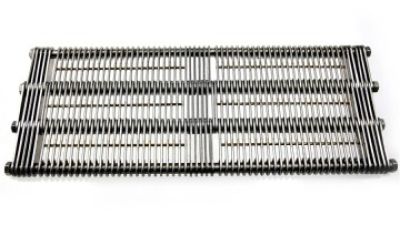
Reliable bottle-washing conveyors start with the right belt material and an open, hygienic design. A 316L stainless steel Wire Ring Belt resists corrosion from frequent washdown and helps withstand moisture and cleaning agents used in beverage production. Its open mesh allows water and cleaning solution to reach bottle surfaces while draining quickly, supporting effective rinsing and drying. Smooth, well-finished connections and a belt sized to the conveyor help reduce snagging and simplify routine inspection.

For a CIP-ready beverage conveyor, consider ring geometry, wire diameter, belt width, and the required operating temperature and load. High-pressure washdown systems benefit from a durable construction that maintains stable tracking while allowing residue to clear from the mesh. Custom-diameter belts can be specified for spiral rinsers, and quick-drain designs can help limit standing water after washing. Food-grade options are available for bottle and can cleaning; request material and compliance documentation from suppliers to confirm suitability for your process.

Low-maintenance wire ring belts can support efficient brewery bottling and beverage packaging lines by reducing cleaning interruptions and providing consistent product movement. Where appropriate, compare 316L with 304 stainless steel based on exposure to cleaning chemicals and operating conditions. A reliable supplier should be able to provide dimensions, application guidance, and documentation for the selected belt and conveyor setup.

FAQS

What types of conveyor belt manufacturers operate in China?

The industry includes integrated producers, specialized belt makers, and smaller contract manufacturers. Their roles can overlap.

Which production stages might an integrated factory handle?

It may process rubber, treat fabric, calender materials, vulcanize belts, and perform testing at one site. Not every factory does everything.

What should I ask about production processes?

Ask which stages happen in-house and which are outsourced. Confirm who performs final quality checks.

How can I assess whether a belt suits my operating conditions?

Share details about the conveyed material, temperature, impact, belt speed, and operating hours. Ask how those factors affect carcass, cover, and splice choices.

Which documents and tests are useful when comparing suppliers?

Request material specifications, inspection records, sample results, and test reports relevant to your application. Check each report’s date and test scope.

What can a belt sample reveal?

Inspect the cover for consistency, the edges for a clean finish, and the fabric for alignment. Small details matter.

Are factory visits or third-party inspections worthwhile?

They can show equipment condition, storage practices, and inspection routines. A visit is useful, but it cannot reveal everything.

Should I choose the lowest quoted price?

Not necessarily. Compare downtime and replacement frequency with the initial cost; a cheaper belt may suit simple conditions.

How can I judge a supplier’s communication and support?

Confirm drawing approval, delivery milestones, packaging, and the process for resolving quality concerns. If records are missing, ask for a clear explanation and corrective action. One reference may not match your conditions.

Conclusion

This article explains what Conveyor Belt manufacturers produce, how different belt designs move materials, and how China’s manufacturing industry is organized. It outlines key factors for assessing suppliers, including product range, material quality, production capacity, customization, testing, and after-sales support. The article also profiles ten leading manufacturers without focusing on brand names, highlighting the kinds of capabilities buyers may consider when comparing options.

It also reviews the industries and applications served by Chinese manufacturers, from general Material Handling to demanding production and transport environments. The final section offers practical guidance for choosing a suitable supplier, emphasizing the importance of matching belt specifications to operating conditions, confirming quality and delivery requirements, and communicating clearly about technical needs.
Sophia

Sophia

Sophia is a seasoned marketing professional at Jiangsu Huada Metal Mesh Belt Co., Ltd., a leading manufacturer of metal conveyor belts in China. With a deep understanding of the industry and a passion for showcasing the company's innovative products, she plays a pivotal role in driving brand......
Previous Why Choose a Food Conveyor Belt for Global Production?