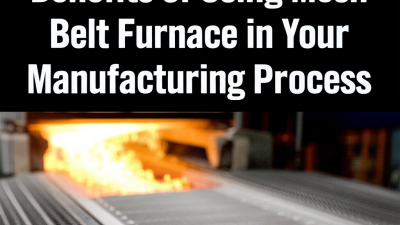
Picking out the top 10 Mesh Belt Furnace manufacturers in 2026 isn't just about comparing prices from catalogs — there's a lot more to it. You really need to find a supplier who gets the ins and outs of Continuous Heat Treatment, controlled atmospheres, belt loading, and consistent production. What I’ve written here digs deeper than slick marketing pitches; it looks at real engineering factors. I’ve considered brands like Ipsen, Abbott Furnace, SECO/WARWICK, Cieffe, Lindberg/MPH, and other well-known names that serve industrial folks.
Honestly, the best way to see how a furnace performs is to look at its actual operation. A good Mesh Belt Furnace should keep temps steady across the entire working zone, protect the surfaces of the products, and run smoothly enough for predictable output. When evaluating, engineers should check things like belt width, the heating elements, cooling sections, atmosphere controls, temperature uniformity, energy use, and how easy it is to access maintenance points. And don’t forget about service — a fancy-looking furnace won’t do much good if spare parts arrive late or if remote support isn't up to the mark.
Sometimes, those little details tell you the most. Look for clear testing procedures, documented standards for accepting the equipment, the quality of operator training, and traceable records of quality checks. Talking to previous customers can be super helpful, especially if they share real-world insights about daily production — not just showroom demos. But keep in mind, no comparison is perfect. Public specs often leave out details like downtime, regional service limitations, or long-term operating costs. So, it’s wise to verify everything directly with the manufacturer and actual users.
This guide is meant to give procurement teams a sensible starting point for 2026. I’ve tried to focus on evidence, practical experience, and being transparent about what’s known — and what’s not. Remember, performance really depends on your specific application, so don’t forget that—even if it’s easy to overlook amidst all the specs and data.
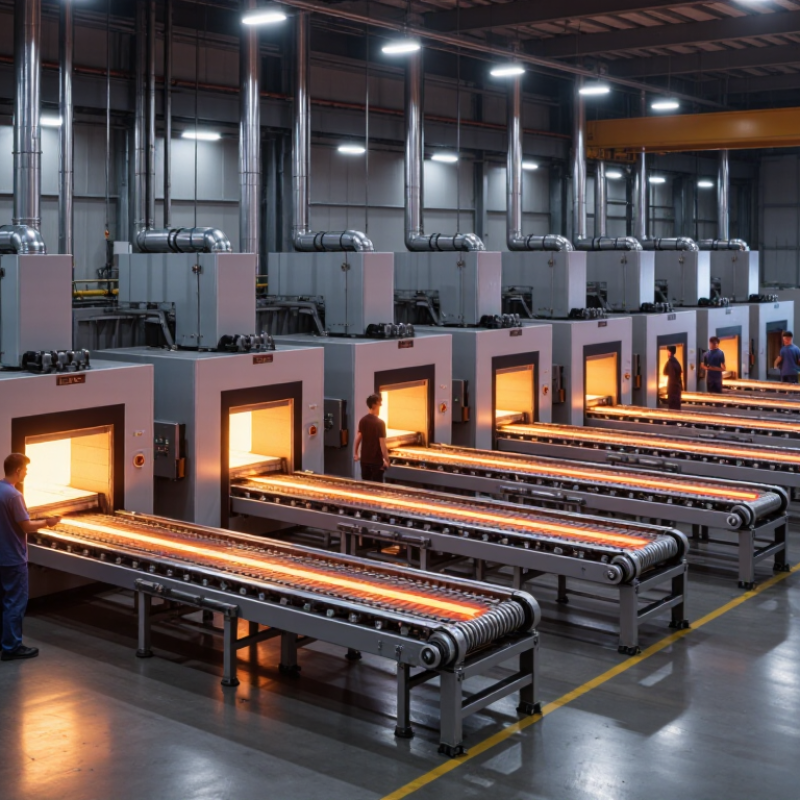
A mesh belt furnace is a continuous heat-treatment system for parts such as fasteners, bearings, and stamped components. Its Furnace Mesh Belt carries products through preheating, heating, soaking, and cooling zones. Burners or electric elements maintain separate temperatures in each zone. Controlled gas, often nitrogen-based, can reduce oxidation and surface discoloration. The belt speed determines residence time, while thermocouples verify the actual temperature near the workpieces.
The U.S. Department of Energy estimates that process heating consumes about 22% of manufacturing energy in the United States. The IEA’s Energy Efficiency 2023 report also identifies industry as responsible for roughly 37% of global final energy demand. These figures explain why belt speed, insulation, atmosphere control, and exhaust recovery deserve careful attention. A practical example is a small steel part entering at room temperature, glowing orange inside the soak zone, then cooling before collection. In practice, temperature profiles are never perfectly flat. That matters.
Operators should compare measured core temperature with controller readings, not trust the display alone. Loading patterns also affect airflow and heat transfer. A crowded belt may produce uneven hardness, even when the furnace appears stable. Maintenance experience shows that worn belts, blocked burners, and leaking doors quietly increase energy use. The process is efficient, but not automatically. That is worth questioning.
Mesh belt furnaces use a continuous Metal Conveyor belt to transport parts through controlled heating, soaking, cooling, and sometimes atmosphere-treatment zones. The chart shows representative midpoint temperatures for common industrial processes. Actual operating temperatures depend on the material, part geometry, atmosphere, belt speed, and required metallurgical result.
Temperature values are representative industrial ranges converted to approximate midpoint values in degrees Celsius.
When evaluating mesh belt furnace manufacturers in 2026, examine practical experience before impressive brochures. Ask how long their systems have operated in comparable production environments. Request photographs, maintenance records, and measurable results from similar heat-treatment lines. A manufacturer with real field experience should explain belt wear, temperature recovery, and atmosphere control clearly.
Engineering capability matters at every stage. Review heating-zone uniformity, belt loading, cooling performance, exhaust design, and control accuracy. Ask for temperature mapping data under actual production conditions, not only empty-chamber tests. Check whether the furnace supports your parts, cycle time, materials, and required atmosphere. Small details matter. Belt tension, sealing quality, and spare-part availability can affect daily output.
Reliable manufacturers provide traceable documentation, safety certifications, commissioning procedures, and operator training. Evaluate their response time for technical questions and service visits. Speak with current users if possible, and compare energy consumption over several production cycles. A lower purchase price may hide expensive downtime. No evaluation is perfect. Supplier claims can sound precise while leaving assumptions unstated. I would record every promised tolerance, delivery date, and service condition in writing. It is also wise to inspect a working installation, even when the factory visit adds time and travel costs.
Top 10 Mesh Belt Furnace Manufacturers in 2026
The Top 10 Mesh Belt Furnace Manufacturers in 2026 should be judged by measurable performance, not advertising claims. A reliable supplier should show temperature uniformity, belt life, atmosphere stability, and documented production results. Grand View Research valued the global industrial furnace market at about USD 13.9 billion in 2023, with steady growth expected through 2030. This expansion reflects stronger demand for heat treatment, sintering, and continuous production systems.
In factory evaluations, I would inspect a Mesh Belt Conveyor Furnace during real loading conditions. Watch the belt near the furnace entrance. Does it drift, sag, or collect scale? Ask for thermal mapping records across the working zone. Check nitrogen or hydrogen consumption, cooling capacity, spare-part availability, and control-system traceability. The best manufacturers usually provide clear acceptance tests and service response times. Still, rankings can mislead. A technically excellent furnace may perform poorly when operators receive limited training.
Tips: Compare total operating cost, not only purchase price. Request sample parts, energy data, and warranty exclusions. Confirm whether the system handles your actual wire, fastener, or powder load. Small details matter. A clean furnace chamber, stable belt tension, and accessible sensors can prevent expensive downtime. Consider independent inspection before final payment.
| No. | Evaluation Dimension | Typical Industry Data | Why It Matters | Recommended Selection Benchmark |
|---|---|---|---|---|
| 1 | Maximum Operating Temperature | Approximately 600–1,200 °C, depending on furnace design and heating elements | Determines which materials and heat-treatment processes can be handled | Select a rated temperature at least 50–100 °C above the required process temperature |
| 2 | Atmosphere Control | Air, nitrogen, hydrogen, endothermic gas, exothermic gas, or controlled mixed atmospheres | Protects parts from oxidation, decarburization, or contamination | Use sealed zones, gas-flow monitoring, and oxygen-level control for sensitive parts |
| 3 | Heating-Zone Configuration | Common systems use multiple independently controlled heating zones | Improves temperature uniformity and supports staged heating cycles | Choose separate control for preheating, heating, soaking, and cooling sections |
| 4 | Temperature Uniformity | Industrial specifications commonly target approximately ±5–10 °C in the working zone | Consistent temperature directly affects hardness, strength, and dimensional stability | Request a temperature-uniformity survey under actual production conditions |
| 5 | Belt Material | Heat-resistant stainless-steel mesh, commonly selected according to temperature, load, and atmosphere | Belt selection affects service life, product marks, maintenance, and throughput | Match alloy, wire diameter, mesh opening, and belt strength to the process |
| 6 | Conveyor Speed | Variable-speed drives are commonly used to adjust residence time and production rate | Residence time controls heating, soaking, cooling, and final material properties | Specify the required speed range rather than only a nominal speed |
| 7 | Production Capacity | Capacity varies widely with belt width, product mass, cycle time, and process temperature | A larger furnace is not automatically more productive if loading density is low | Compare capacity in kilograms per hour using the actual workpiece and loading pattern |
| 8 | Cooling Arrangement | Natural cooling, forced-air cooling, or controlled-atmosphere cooling may be used | Cooling rate influences hardness, microstructure, distortion, and surface quality | Choose cooling capacity based on product mass, alloy, and required cooling profile |
| 9 | Control and Data Logging | PLC or industrial controller with thermocouples, alarms, recipes, and production data recording | Traceability supports quality control, audits, and process optimization | Prioritize recipe management, alarm history, remote diagnostics, and exportable data |
| 10 | Energy and Maintenance Features | Insulated furnace walls, efficient heating elements, accessible belt assemblies, and replaceable wear parts | These features reduce operating costs and minimize unplanned downtime | Evaluate energy consumption per production unit, spare-parts availability, and service response |
Note: Actual performance depends on furnace size, product geometry, loading density, atmosphere, belt specification, and heat-treatment cycle.
Mesh belt furnaces are evolving from simple heat-treatment lines into measurable production systems. Grand View Research projects the global industrial furnace market to grow at roughly 4.7% annually through 2030. That growth increases pressure on manufacturers to improve thermal uniformity, throughput, and operating data. The strongest systems typically use multi-zone electric heating, sealed atmospheres, and variable-speed mesh conveyors. These features help control carburizing, sintering, brazing, and annealing conditions across different load sizes.
Energy performance deserves closer attention. The International Energy Agency reports that industry consumes about 37% of global final energy. Therefore, insulation quality and heat recovery are not minor specifications. Look for ceramic fiber modules, insulated entry and exit curtains, and cooling sections that recycle useful heat.
Oxygen probes, dew-point sensors, and closed-loop gas controls also provide stronger process stability. In practical use, a furnace may appear efficient while leaking heat around doors, seals, or transfer points. That detail is easy to miss.
The best manufacturers in 2026 should offer traceable controls, recipe management, and accessible maintenance areas. A reliable PLC system can record belt speed, temperature deviation, gas flow, and alarm history. Remote diagnostics may reduce downtime, but cybersecurity and operator training still require attention.
Belt material matters too. Heat-resistant stainless alloys can extend service life, although incorrect loading may cause sagging or distortion.
Some comparisons focus too heavily on maximum temperature. That is incomplete. Real value depends on repeatability, recovery time, spare-part availability, and verified performance under the customer’s actual workload.
Leading mesh belt furnace manufacturers serve diverse industrial needs, from automotive components to powder metallurgy. Their systems support continuous sintering, brazing, annealing, and controlled-atmosphere heat treatment.
Automotive suppliers use them for gears, bushings, fasteners, and brake components. Electronics producers process contacts, ceramic parts, and conductive powders. Battery-material plants increasingly require stable thermal profiles for electrode powders and supporting components.
Demand is expanding. The International Energy Agency reported nearly 14 million electric car sales in 2023, increasing pressure on battery supply chains and thermal-processing capacity.
The World Steel Association recorded about 1.89 billion tonnes of crude steel production in 2023. That volume reflects the wider need for reliable downstream treatment. A Sintering Furnace Mesh Belt can deliver continuous production, repeatable temperature control, and reduced manual handling. However, performance depends on belt alloy, furnace atmosphere, loading density, and cooling design.
Medical-device and aerospace suppliers often require tighter traceability and uniformity. Food-processing equipment makers may also use heat-treated stainless components. In practice, furnace selection should follow the material, not the catalogue. A neat specification sheet can still mislead. Real production trials reveal belt distortion, seal leakage, and uneven heating. Manufacturers with strong process engineering usually provide atmosphere testing, thermal mapping, maintenance guidance, and application-specific commissioning. These details matter more than headline temperature ratings.
Choosing the right Continuous Mesh Belt Furnace manufacturer requires more than comparing prices. Examine their experience with your materials, production volume, and required heating atmosphere. A supplier familiar with your process can identify risks before installation.
Ask for furnace test data, including temperature uniformity, belt loading, heating speed, and energy use. Request a trial run with sample parts. Watch how the parts move through each zone. A reliable manufacturer should explain tolerances clearly, even when the answer is inconvenient. Avoid promises that sound perfect. They often are.
Review the control system, safety features, spare-part availability, and maintenance access. Check whether technicians provide installation training and practical troubleshooting guidance. Speak with current users about response times, unplanned downtime, and long-term belt performance. One weakness may be acceptable; repeated complaints are not. I would also inspect the factory if possible. Photos can hide crowded work areas or weak quality checks.
Tips: Compare at least three technical proposals. Ask for written efficiency figures. Confirm the warranty in detail. Test the furnace with real parts. Keep a record of every promised specification. If the manufacturer avoids direct answers, pause before signing.
Review practical experience in similar production environments. Request operating photos, maintenance records, and verified performance data. Brochures are not enough.
Different materials and workloads create different risks. Experienced suppliers can explain belt wear, temperature recovery, and atmosphere control with specific examples.
Ask for temperature mapping under production conditions. Check belt loading, heating speed, cooling performance, exhaust design, and control accuracy.
Yes. Request a trial run using your actual parts and cycle requirements. Watch their movement through every heating and cooling zone.
Inspect insulation, entry curtains, exit curtains, seals, and heat-recovery systems. Ask for written energy figures from several production cycles.
Useful systems record belt speed, temperature deviations, gas flow, and alarm history. Oxygen and dew-point sensors can support atmosphere consistency.
Check belt material, belt tension, access panels, spare-part availability, and service response times. Incorrect loading may still cause sagging or distortion.
Request safety certifications, traceable records, commissioning steps, operator training, warranty terms, and written service conditions. Details matter later.
Compare at least three technical proposals. Record every promised tolerance, delivery date, energy figure, and support condition.
Yes. Cheap equipment may bring higher downtime, difficult repairs, or weak technical support. No checklist catches everything. Inspect a working installation if possible.
This article presents a practical guide to the 10 Best Mesh Belt Furnace Manufacturers in 2026. It explains what a Mesh Belt Furnace is, how its continuous conveyor-based heating process works, and why factors such as temperature uniformity, production capacity, energy efficiency, automation, material compatibility, maintenance, safety, and after-sales support are essential when evaluating manufacturers. The overview also compares the core technologies and product features commonly available in modern systems, including atmosphere control, multi-zone heating, cooling integration, monitoring functions, and customized configurations.
The article further examines how leading manufacturers serve industries such as heat treatment, fastener production, powder metallurgy, automotive components, aerospace parts, and other industrial applications. Finally, it offers a structured approach to selecting the right supplier by matching furnace design, throughput, process requirements, budget, facility conditions, service capabilities, and long-term expansion plans. This summary is intended to help buyers make informed decisions and identify equipment that supports stable quality, efficient operation, and reliable production performance.