Leave Your Message
0%

Picking the right wire Mesh Conveyor Belt isn't just about looks—it really impacts how smoothly things run, the quality of your products, maintenance costs, and overall safety at work. For buyers around the world, a pretty catalog photo isn’t enough. They need solid specs they can trust, consistent manufacturing quality, and reliable support once everything's installed.

In this guide, we’ll look at ten solid options, each suited for different conveyor setups. We’ll cover stuff like the belt material, wire diameter, size of the openings, edge finish, load capacity, and the temperatures they can handle. For instance, stainless Steel Belts are a go-to for many food processing and heat-treatment lines. On the other hand, high-carbon steel might give you more bang for your buck in more controlled environments. Some belts work better with sprocket-driven systems, while others rely on friction or slide bed designs—so compatibility is key.

Honestly, the little details sometimes make all the difference. A sprocket that doesn’t match well can cause uneven tracking. A weld that’s too rough might damage delicate packaging. And if the opening is too narrow, it could restrict airflow during cooling. We’ve based our comparison on manufacturer info, real-world experience, maintenance needs, and available technical docs. It’s also smart to ask for samples, drawings, certifications, and references from actual installations before placing big orders.

Keep in mind, no single ranking fits all situations. A belt that works perfectly in a bakery might not cut it in a chemical drying line, so it’s important to consider specific needs. Delivery times, spare parts, good communication, and regional service can also make a huge difference in the overall value. Specs can look great on paper, but factory testing still counts. The ten options we’ve included are a practical starting point for engineers, distributors, and procurement folks who are after reliable conveyor belt solutions in different markets around the world.
10 Best Wire Mesh Conveyor Belts for Global Buyers?

What Is a Wire Mesh Conveyor Belt?

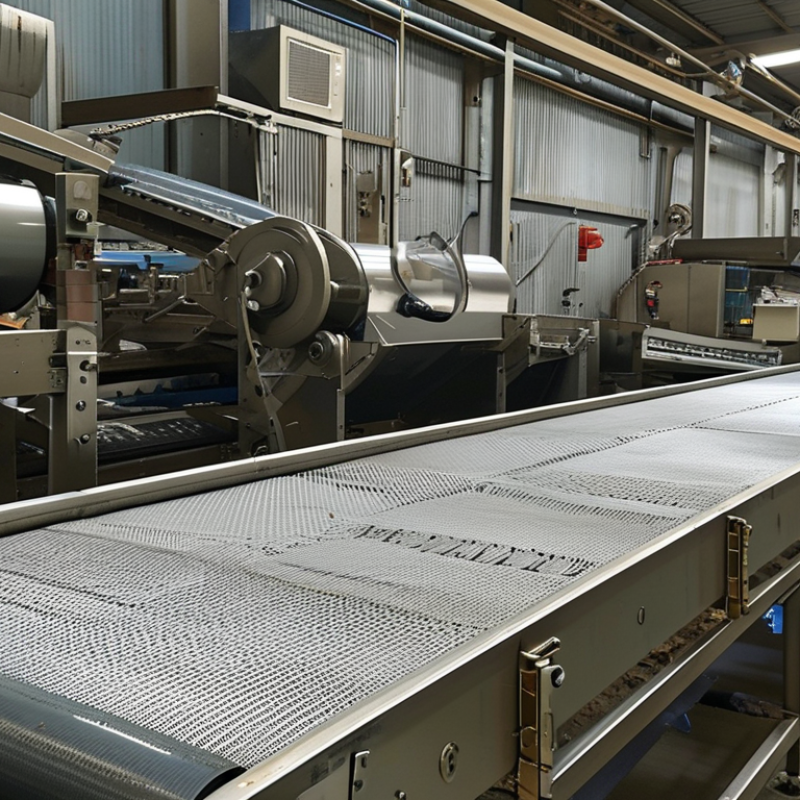
A wire mesh conveyor belt is a continuous belt woven from stainless steel or other heat-resistant metal wires. Its open structure lets air, water, and light pass through the conveying surface. This makes it useful for baking, washing, drying, cooling, coating, and heat treatment.

Unlike solid belts, mesh belts expose products more evenly to airflow and temperature. Mesh count, wire diameter, pitch, and belt width directly affect performance. A fine mesh supports small parts, while a coarse mesh improves drainage and airflow. Stainless steel construction also resists corrosion, but it is not automatically suitable for every chemical environment. According to Grand View Research, the global conveyor belt market was valued at about USD 4.9 billion in 2023. Its forecast does not separate wire mesh belts, so buyers should avoid treating the figure as a product-specific guarantee.

Tips: Check the smallest product size first. Measure operating temperature, load weight, belt speed, and cleaning chemicals. Ask for a sample section when possible. A belt can look strong but still stretch under repeated heat cycles. I have seen specifications overlook edge support, which later caused tracking problems. That detail deserves more attention.

For global purchasing, request material certificates, mesh drawings, joint details, and test records. Confirm whether the belt uses balanced weave, chain-edge, or rod-reinforced construction. Food applications also require documented hygiene controls and traceable materials. The best belt is not always the heaviest one. It must match the process.

How Wire Mesh Conveyor Belts Are Designed and Classified

How Wire Mesh Conveyor Belts Are Designed and Classified

Wire mesh conveyor belts begin with the product, not the belt catalog. Engineers select wire diameter, mesh opening, pitch, and weave pattern around load, heat, airflow, and cleaning needs. Balanced weaves suit general conveying, while compound balanced weaves provide smaller openings and improved surface stability. Rod-reinforced designs handle heavier loads with less belt distortion.

Classification also depends on drive method. Friction-driven belts use a coated drum and require controlled tension. Sprocket-driven belts use positive engagement, reducing slippage during steep inclines or wet processing. Edge construction matters too. Welded edges improve retention, while linked edges can simplify repairs. Stainless steel, carbon steel, and heat-resistant alloys serve different temperature and corrosion conditions.

Small details matter.

A 2024 MarketsandMarkets report valued the global conveyor system market at about USD 10.6 billion in 2023, with continued growth expected through 2028. This expansion increases demand for more efficient, washable, and application-specific belt designs. However, market growth does not guarantee correct selection. A belt with excessive open area may damage delicate products, while an overly dense mesh can restrict airflow and raise drying costs. ISO 9001-based quality systems can support traceability, but they cannot replace site testing. In practice, engineers should verify belt tension, sprocket alignment, product contact, and thermal expansion under real operating conditions. The first specification is rarely perfect.

Key Factors for Comparing the 10 Best Belt Types

10 Best Wire Mesh Conveyor Belts for Global Buyers?

Choosing among the ten best wire mesh conveyor belt types requires more than comparing price. I compare mesh opening, wire diameter, belt pitch, load capacity, and operating temperature. These details affect airflow, product support, cleaning time, and service life. A fine mesh suits small baked goods, while a wider opening improves cooling and washing. Some balanced-weave belts handle heat well, but their tighter structure may trap crumbs. That trade-off is easy to miss.

Surface finish matters too. Stainless steel resists corrosion in humid production areas and supports regular sanitation. Carbon steel can reduce initial cost, but it needs stronger protection against moisture. I also check edge construction, sprocket compatibility, belt tracking, and available replacement parts. During plant inspections, uneven loading often causes more damage than normal wear. Belt selection alone cannot fix poor conveyor alignment. I have seen specifications look perfect on paper, yet fail after installation because the frame was slightly twisted.

Tips: Request a sample section before ordering. Test it with your actual product, speed, temperature, and cleaning method. Measure belt tension after several operating cycles. Ask for material certificates, dimensional tolerances, load data, and maintenance guidance. Do not ignore noise. A belt that runs quietly may still need better tracking, while a noisy belt may reveal misalignment. Allow room for error; real production conditions are rarely as clean as a catalog drawing.

10 Best Wire Mesh Conveyor Belts for Global Buyers?

Key Factors for Comparing the 10 Best Belt Types

Open area affects airflow, drainage, cleaning efficiency, and product contact. The values shown are representative midpoints for commonly specified belt constructions; actual performance varies with wire diameter, pitch, material, belt width, and edge design. Buyers should also compare load capacity, operating temperature, corrosion resistance, belt tracking, cleanability, and total cost of ownership.

The 10 Best Wire Mesh Conveyor Belts for Global Buyers

The 10 Best Wire Mesh Conveyor Belts for Global Buyers

Choosing among the ten best wire mesh conveyor belts depends on load, temperature, product shape, and cleaning needs. Balanced weave belts suit general food, chemical, and heat-treatment lines. Compound balanced weave belts reduce product marking during long conveying runs. Flat-flex belts offer open surfaces and simple sprocket engagement. Chain-edge belts handle wider loads and stronger pulling forces. Rod-reinforced belts improve stability when heavy parts create impact. Ladder belts provide excellent airflow for cooling and drying. Spiral belts support compact layouts and continuous production. Perforated belts help drain liquids or remove small particles. High-temperature alloy belts serve ovens and furnaces. Coated mesh belts can protect delicate products from direct metal contact.

In practical purchasing, inspect wire diameter, pitch, belt width, edge construction, and allowable working tension. A belt that looks strong may still stretch under repeated heat cycles. Ask for material certificates, dimensional tolerances, and load-testing records. Stainless steel is often selected for corrosion resistance, but the correct grade depends on chemicals and temperature. For food applications, cleanability and open-area design matter as much as tensile strength. Global buyers should also confirm packaging, spare parts, installation guidance, and export documentation.

I have seen buyers focus too heavily on price. That choice can create tracking problems later. One overlooked issue is sprocket alignment. Even a well-made belt may wear quickly when the conveyor frame is uneven. Trial testing with the real product is safer than relying only on catalog figures. The “best” belt is rarely universal, and some selection decisions need reconsideration after production begins.

Which Industries Use Each Conveyor Belt Type?

Wire mesh conveyor belts serve very different industries, depending on heat, load, hygiene, and product shape. In food processing, balanced-weave and compound-balance belts support ovens, fryers, and freezing tunnels. Flat-wire belts suit bakeries because their open surface improves airflow and releases crumbs. Spiral belts help meat, seafood, and prepared-food facilities save floor space. Perforated belts are useful for washing, draining, and coating operations.

Automotive and metalworking plants often select heavy-duty rod network belts or chain-edge belts. They carry stamped parts, castings, and sharp components through cleaning or heat-treatment lines. Ladder belts work well for larger parts that need firm support. In chemical and ceramic production, high-temperature balanced-weave belts handle kilns and drying chambers. According to Grand View Research, the global conveyor belt market was valued at about 5.7 billion dollars in 2023. Its projected growth reflects wider automation across manufacturing and logistics.

Pharmaceutical and electronics facilities usually prefer fine-mesh, low-profile, or plastic-linked mesh designs. These belts reduce product loss and support controlled handling. Recycling plants may require reinforced compound-balance belts for abrasive materials. The right choice is not always obvious. I have seen buyers focus on tensile strength while overlooking cleaning time and belt tracking. That mistake becomes expensive. MarketsandMarkets identifies food and beverage, automotive, and logistics as major conveyor-system users, but regional conditions still change belt selection. Humidity, washdown frequency, and thermal cycling can matter more than headline capacity.

10 Best Wire Mesh Conveyor Belts for Global Buyers — Which Industries Use Each Conveyor Belt Type?
No. Wire Mesh Conveyor Belt Type Typical Construction Common Opening Range Typical Temperature Capability Best-Fit Industries and Uses Main Advantages Key Buying Considerations
1 Balanced Weave Belt Alternating right- and left-hand spiral wires joined by straight cross rods. Approximately 2–20 mm Up to about 500–600°C with suitable stainless steel construction Food baking, snack production, freezing, washing, drying, and general heat treatment. Good flexibility, stable tracking, broad opening options, and reliable airflow. Specify wire diameter, pitch, belt width, edge style, and the required belt-support arrangement.
2 Double Balanced Weave Belt Balanced weave with paired spiral wires or a tighter mesh pattern for improved stability. Approximately 1–12 mm Up to about 600°C in appropriate heat-resistant alloys Bakery ovens, metal heat treatment, brazing, annealing, and applications requiring small openings. Improved lateral stability, reduced product loss, and better support for smaller parts. Smaller openings increase belt weight and may require stronger sprockets or drive components.
3 Compound Balanced Weave Belt Multiple spiral wires are combined with cross rods to create a dense, smooth conveying surface. Approximately 0.5–8 mm Up to about 600°C, depending on wire alloy and operating atmosphere Small baked goods, confectionery, heat treatment, powder handling, and delicate product conveying. Excellent surface uniformity, high strength, and reduced marking of small products. Higher initial cost and greater cleaning effort may apply because of the dense mesh.
4 Flat Wire Belt Flat metal strips are linked with connecting rods, producing a broad, smooth conveying surface. Approximately 5–40% open area, depending on pitch Up to about 400–500°C with suitable metal selection Food processing, frying, breading, coating, washing, and applications needing good product support. Strong support for soft or irregular products, good load capacity, and relatively easy cleaning. Confirm strip thickness, edge finish, drainage needs, and the minimum sprocket diameter.
5 Rod Network Belt Straight rods are connected by links, tubes, or welded cross members to form an open conveying surface. Approximately 5–50 mm Up to about 500°C with stainless steel or heat-resistant steel Ovens, cooling tunnels, washing lines, glass handling, and heavy-duty industrial conveying. High strength-to-weight ratio, strong airflow, and good drainage performance. Large openings may not support small products; rod spacing and joint design are critical.
6 Chain-Edge Wire Mesh Belt Wire mesh is connected to roller chains or side chains for positive drive and controlled tracking. Approximately 3–30 mm Up to about 500°C, subject to chain material and lubrication limits Heavy-load heat treatment, forging, casting, washing, pallet handling, and long conveyor systems. Positive sprocket drive, strong tracking, and suitability for high-tension or long-span conveyors. Chain alignment, lubrication, sprocket compatibility, and thermal expansion must be checked carefully.
7 Spiral Weave Belt Single or multiple spiral wires are joined with cross rods, often forming a flexible open mesh. Approximately 2–25 mm Up to about 450–550°C with suitable stainless steel construction Drying, proofing, cooling, bakery processing, fruit and vegetable handling, and light industrial lines. Flexible, economical, and available in many mesh densities and belt widths. Very open designs can have lower support for small products and may need additional belt guidance.
8 Ladder Belt Parallel longitudinal rods are joined by transverse rods or hooks, creating ladder-like openings. Approximately 5–50 mm Up to about 450–550°C, depending on material and process conditions Cooling, drying, blanching, washing, fruit and vegetable processing, and large-product conveying. Excellent drainage and airflow, simple construction, and easy visual inspection. Not ideal for very small or soft products unless the opening size is carefully selected.
9 Perforated Plate-Mesh Belt Perforated metal plates or narrow perforated strips are joined to form a semi-closed surface. Typical holes from 2–15 mm Up to about 400–500°C with suitable metal selection Food coating, frying, screening, small-part handling, and processes requiring controlled product contact. Good product support, predictable drainage, and reduced risk of small items falling through. It provides less airflow than highly open mesh; check cleaning access and hole geometry.
10 High-Temperature Alloy Mesh Belt Balanced, compound, or rod-based mesh manufactured from heat-resistant stainless or nickel-alloy wire. Approximately 1–20 mm About 800–1,100°C in suitable furnace conditions; alloy selection is process-specific Continuous furnaces, sintering, brazing, hardening, powder metallurgy, and ceramic processing. Maintains strength and oxidation resistance under demanding thermal cycles. Confirm peak temperature, atmosphere, heating rate, belt load, sag limits, and alloy compatibility before ordering.
Specifications are typical engineering ranges rather than universal limits. Actual performance depends on wire material, wire diameter, mesh pitch, belt width, load distribution, conveyor length, support design, temperature cycle, atmosphere, cleaning chemicals, and drive configuration.

How to Select, Install, and Maintain the Right Belt

Selecting a wire mesh conveyor belt starts with the product, not the catalog image. Check load weight, temperature, moisture, particle size, and required belt speed. Fine powders may need tighter openings, while large parts require stronger mesh support. Choose stainless steel for humid or washdown areas, and confirm the wire grade with the supplier. Ask for tensile data, temperature limits, and inspection records. Do not rely on appearance alone.

Installation needs careful alignment. Measure the conveyor frame before ordering, including shaft diameter and belt length. Keep the belt centered during the first slow test run. A small tracking error can create edge wear within hours. Set sprockets or rollers evenly, then adjust tension gradually. Excessive tension is a common mistake. It can damage joints, shafts, and bearings. Leave enough clearance for thermal expansion, especially near ovens or heated chambers.

Maintenance works best when it is simple and documented. Inspect links, welds, edges, and drive components at scheduled intervals. Remove product buildup before it hardens around the mesh. Watch for unusual noise, vibration, or drifting. These signs often appear before visible failure. Use cleaning chemicals compatible with the belt material, and follow the equipment maker’s safety instructions. Keep spare connectors and a measured belt sample on site. Real operating conditions can differ from the original calculation, so review belt performance after the first production month.

FAQS

: How are wire mesh conveyor belts designed?

: Engineers begin with the product and operating conditions. They consider load, heat, airflow, cleaning, and product support. Wire diameter and mesh opening are adjusted accordingly. The first specification is rarely perfect.

What does mesh opening affect?

Fine mesh supports small products and prevents them from falling through. Wider openings improve cooling, washing, and airflow. However, excessive open area may damage delicate products. A dense mesh can restrict airflow.

Which weave pattern should be selected?

Balanced weaves suit many general conveying applications. Compound balanced weaves offer smaller openings and stronger surface stability. Rod-reinforced designs support heavier loads with less distortion. Trade-offs remain.

What is the difference between friction-driven and sprocket-driven belts?

Friction-driven belts use a coated drum and controlled tension. They may slip when tension or moisture conditions change. Sprocket-driven belts engage positively with the belt structure. They reduce slippage during wet processing or steep inclines.

Which materials are commonly used?

Stainless steel suits humid areas and repeated sanitation. Carbon steel may lower initial costs but needs moisture protection. Heat-resistant alloys serve demanding temperature conditions. Material selection should match the actual environment.

Why do belt edges matter?

Welded edges help retain products on the belt. Linked edges can make certain repairs easier. Edge construction also affects durability and maintenance access. Small details matter.

How should a belt be tested before ordering?

Request a sample section before final approval. Run it with the actual product, speed, temperature, and cleaning method. Check product contact, airflow, tracking, and belt tension. A catalog drawing cannot reveal every site problem.

What installation issues can shorten belt life?

Poor alignment can create uneven loading and abnormal wear. Sprocket misalignment may cause tracking problems and noise. A twisted conveyor frame can defeat an excellent belt specification. I would inspect the frame twice.

Conclusion

A Wire Mesh Conveyor Belt is a durable conveying solution made from linked metal wires, offering excellent airflow, drainage, heat resistance, and product visibility. This article explains how these belts are designed and classified according to mesh pattern, wire shape, material, surface finish, opening size, and connection method. It also introduces ten practical belt types, comparing their load capacity, flexibility, temperature tolerance, cleaning performance, speed range, and suitability for different production conditions. These comparisons help global buyers understand which structure best matches their products, equipment, and operating environment.

The article also connects each belt type with common applications in food processing, baking, freezing, drying, metal treatment, electronics, chemical production, and general material handling. In addition, it provides practical guidance on selecting the correct belt, checking dimensions, installing supports and drive components, adjusting tension, and carrying out routine cleaning and inspection. By considering product characteristics, working temperature, sanitation requirements, maintenance resources, and regional operating standards, buyers can choose a reliable Wire Mesh Conveyor Belt that improves efficiency, service life, and overall production stability.
Aria

Aria

Aria is a dedicated marketing professional at Jiangsu Huada Metal Mesh Belt Co., Ltd., a pioneering manufacturer of metal conveyor belts in China. With a deep expertise in the industry, Aria is committed to showcasing the precision-engineered wire mesh belts and chain-driven systems that the......
Previous Top 10 Oven Mesh Belt Suppliers You Should Know?