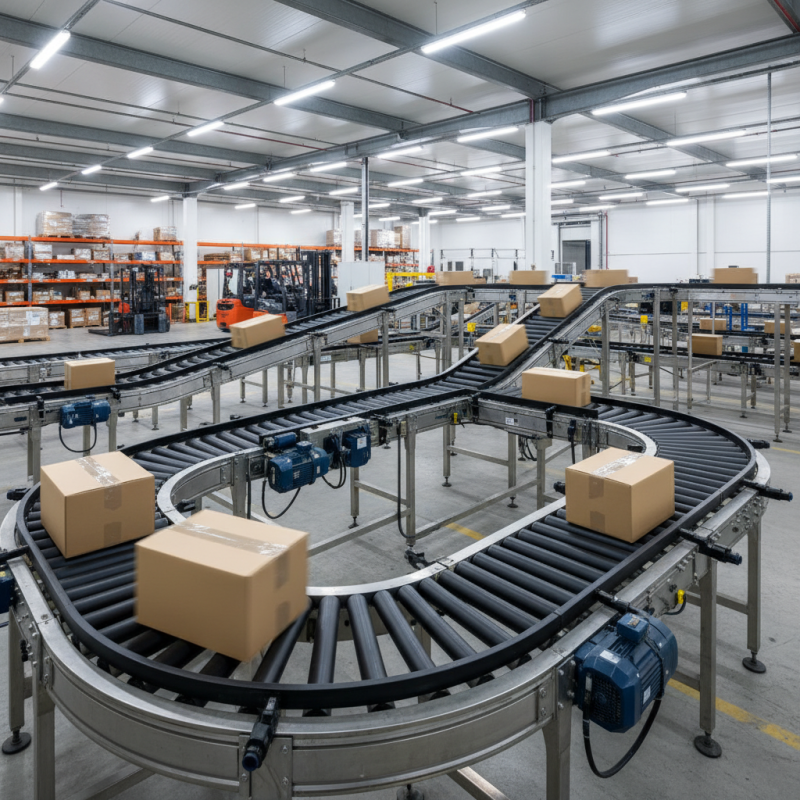
Transport Belts might not be something you think about every day, but trust me, they’re pretty much the backbone of modern manufacturing and logistics. Their main job? Moving stuff around quickly and smoothly from one place to another. Brands like Hytrol and Dorner have really pushed the envelope with different belt designs that help companies get things done faster. You can see just how effective these belts are when you walk into a busy warehouse — they make it happen, transferring goods in the blink of an eye.
Most of these belts run on a system of pulleys and motors, which keeps everything moving predictably and without much fuss. But, honestly, nothing's perfect. Sometimes, belts start to wear out or go out of alignment, which can cause annoying delays. That’s why it’s super important for companies to give their Conveyor Belt Transport systems a regular check-up. Small issues, if ignored, can turn into bigger headaches pretty quickly.
All in all, transport belts are a real game-changer in day-to-day operations. They cut down on manual labor and help get things done faster. Still, there’s always room for improvement. By understanding how these belts work, businesses can make smarter choices when it comes to their systems. Plus, keeping an eye on their operation and maintenance can really make a difference in keeping things running smoothly.
What is a Transport Belt?
A transport belt is a mechanical system designed to move materials from one place to another. These belts are crucial in various industries, including manufacturing and logistics. They are often used to transport goods efficiently across distances. According to a recent industry report, the global transport belt market is projected to grow at a CAGR of 4.5% through 2026. This shows their rising importance in automated processes.
The core idea behind a transport belt is simple. Materials are loaded onto the belt that runs continuously, powered by a motor. The belt's surface can be smooth or textured, depending on its application. Specific types like modular belts allow for adjustments in width and length. However, a common issue is wear and tear. Over time, belts can stretch or fray, leading to disruptions. Addressing maintenance is critical, although sometimes overlooked.
In many cases, businesses may underestimate the need for proper training on belt operation. Personnel should understand not only how to use belts but also how to troubleshoot common problems. Misalignment of the belt can cause significant delays and safety hazards. Regular inspection and adjustments can prevent such issues. It's a constant balancing act between efficiency and maintenance.
Basic Components of a Transport Belt
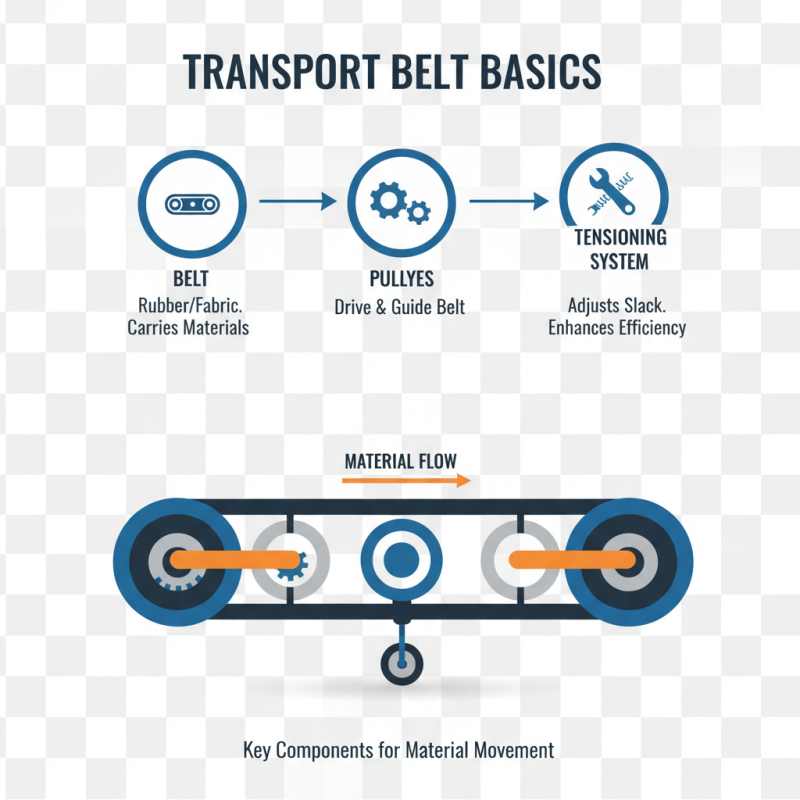
Transport belts, often used in various industries, are integral for material movement. Understanding their basic components can enhance efficiency. A transport belt typically consists of a belt, pulleys, and an adjustable tensioning system. The belt, usually made from rubber or fabric, carries materials. The choice of belt material affects durability and performance.
Pulleys play a key role in the belt system. They are positioned at either end of the belt to facilitate its motion. According to industry reports, over 70% of manufacturing operations use transport belts for optimization. These components work together in harmony. Adjusting the tension of the belt is crucial. If tension is too low or too high, it may reduce efficiency.
Regular maintenance is essential. Wear and tear on the belt or pulleys can halt operations. In practice, companies often overlook belt inspections. Such neglect can lead to unexpected downtimes, costing time and money. A recent study revealed that unplanned maintenance can increase operational costs by up to 30%. Recognizing the importance of each component can lead to better reliability. However, companies must also reflect on their maintenance practices for improvement.
Types of Transport Belts and Their Uses
Transport belts are essential tools in various industries. They streamline operations by allowing materials to move efficiently from one place to another. Different types of transport belts serve unique purposes.
One common type is the flat belt. This design is often used in manufacturing settings. It carries items smoothly over a flat surface.
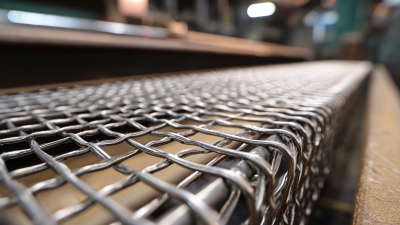
Another type is the modular belt. These belts are made of interlocking pieces. They are versatile and easy to clean. Additionally, specialized belts like the Fly Ash Transport Belt 600°C handle extreme conditions.
These belts are designed to transport materials at high temperatures, making them ideal for specific applications.
Using the right transport belt can greatly impact efficiency. However, choosing a belt that fits your needs is crucial. Sometimes, the wrong choice can lead to wear and tear or even system failure. Reflecting on these choices is vital for optimizing operations.
Each type of transport belt has its advantages and limitations. Understanding these can make a difference in productivity.
How Transport Belts Function Mechanically
Transport Belts are essential components in many industries. They move items efficiently from one point to another. These belts are often made from materials like rubber or plastic. They can endure heavy loads, making them versatile in various applications.
Mechanically, transport belts function by utilizing a simple yet effective design. A motor usually powers them, turning a series of pulleys. The belt loops around these pulleys, creating a continuous motion. Friction is crucial here; it allows the belt to grip items well. Sometimes, the belt's surface includes texture to enhance grip. This design is efficient but not flawless. Regular maintenance is necessary to prevent wear and tear.
While transport belts are effective, they can face challenges. If not properly aligned, they may slip or misplace items. Over time, the belt can stretch, leading to inefficiencies. Monitoring the load is also vital; overloading can damage the belt or the system. These weaknesses remind us to continually assess our equipment. Understanding transport belts involves recognizing both their strengths and potential flaws.
Applications of Transport Belts in Various Industries
Transport belts play a crucial role across various industries. In manufacturing, they streamline assembly lines. Studies show that about 35% of manufacturing processes use these systems. They enhance efficiency by transporting materials seamlessly. This reduces manual handling and cuts labor costs. However, improper setup can lead to bottlenecks.
In the food and beverage sector, transport belts ensure hygiene and speed. They move products quickly from one stage to another. According to industry reports, over 50% of food processing plants utilize these systems. However, maintenance is key. A worn-out belt can lead to contamination. Transport Chains must be regularly inspected to avoid downtime.
The logistics industry also benefits significantly. Transport belts facilitate the movement of goods in warehouses. They improve the speed of distribution. Reports indicate that 40% of logistics firms are increasing investments in automation, including transport systems. Yet, adaptability is a concern. Not all products fit standard belts, which can result in inefficiencies.
What is a Transport Belt and How Does it Work? - Applications of Transport Belts in Various Industries
| Industry | Application | Belt Type | Material | Load Capacity (kg/m) |
| Manufacturing | Assembly Line Transport | Modular Belt | Plastic | 150 |
| Food Processing | Product Sorting | Flat Belt | Stainless Steel | 200 |
| Parcel Handling | Package Distribution | Roller Bed | Rubber | 300 |
| Mining | Bulk Material Transport | Conveyor Belt | Steel Cord | 1000 |
| Construction | Material Handling | Heavy-Duty Belt | Polyester | 500 |
Advantages of Using Transport Belts for Material Handling
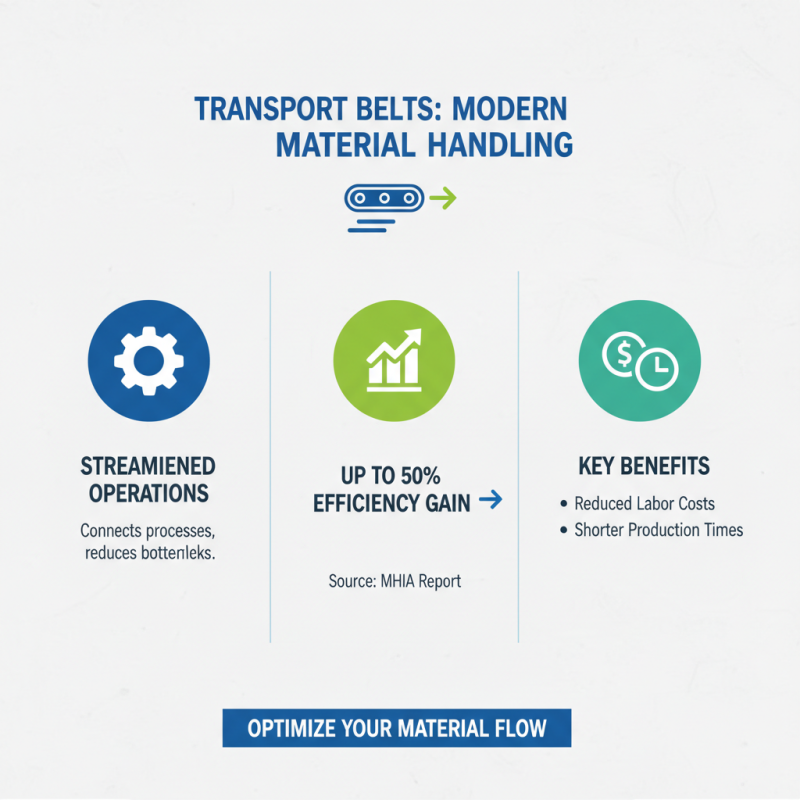
Transport belts are essential in modern material handling systems. They streamline operations across various industries. A report by the Material Handling Industry of America (MHIA) highlights that using transport systems can increase efficiency by up to 50%. This efficiency translates into reduced labor costs and shorter production times.
One key advantage of transport belts is their ability to handle diverse materials. They can convey small parts or heavy loads. Adapting to different weights is crucial in factories. However, maintenance of these systems can be challenging. A survey showed that 25% of companies reported issues related to belt wear and tear. Regular checks can prevent unexpected downtimes, but not all businesses prioritize this.
Another benefit is improved workplace safety. Transport systems minimize manual handling. The Occupational Safety and Health Administration (OSHA) states that reducing manual lifting can decrease workplace injuries by over 30%. However, focusing solely on automation may overlook employee training needs. Training is vital for workers to operate these systems safely and efficiently. Balancing technology with human oversight is essential for optimal results.
Maintenance Tips for Ensuring Transport Belt Longevity
Transport belts play a crucial role in various industries. They move materials efficiently from one point to another. However, maintaining them is essential for their longevity. Regular inspections can reveal signs of wear or damage. Look for fraying edges or cracks. These issues, if ignored, can lead to serious performance problems.
Proper alignment is another key aspect. Misalignment can cause uneven wear and reduce the life of the belt. It can also create noise during operations. Adjusting the tension is important too. A belt that is too loose may slip, while one that is too tight can lead to premature failures. Finding the right balance is often a trial-and-error process.
Lubrication should not be overlooked. Applying the right lubricant helps reduce friction. However, over-lubrication can attract dirt and grime, which can negatively impact performance. Keeping the working environment clean is equally important. A cluttered workspace increases the likelihood of debris damaging the belt. Regular cleaning schedules can prevent build-up and ensure smooth operation.
Understanding the Importance of Chain Drive Belts in Mechanical Systems and Their Applications
Chain drive belts play a crucial role in various mechanical systems, providing reliable power transmission across a range of applications. From heavy material handling to automotive assembly lines, the selection of the right chain drive belt is essential for achieving optimal performance and durability. For instance, high-torque chain drive belts designed for heavy-duty tasks ensure that large loads can be moved efficiently. Meanwhile, precision-engineered chain drive conveyor systems offer seamless operation, reducing downtime and enhancing overall productivity.
The versatility of chain drive belts is further emphasized by their specialized designs tailored to different environments. Corrosion-resistant chain drive belts made from 316L stainless steel are ideal for applications exposed to harsh conditions, while low-maintenance options with self-lubricating links simplify upkeep, making them perfect for continuous use. Additionally, food-grade chain drive belts certified by health standards ensure safety in food processing facilities, reinforcing the importance of using the appropriate materials for specific industries. With options like extreme temperature chain drive belts designed to withstand extreme conditions, there is a solution for virtually every mechanical need.
FAQS
: This product aims to improve daily productivity and organization. Users can easily manage tasks and schedules.
Begin by setting up an account. Follow the prompts to personalize your experience and add tasks.
Many users find it intuitive. However, some features may require additional learning or exploration.
Yes, the product is compatible with various devices. Seamless synchronization helps maintain continuity.
Users can consult the help section. If problems persist, reaching out to support is recommended.
Be aware of possible subscription fees. Check details to avoid unexpected charges in the future.
Feedback can be submitted through a dedicated section. Constructive criticism is often encouraged for improvements.
Yes, users have options to adjust notification settings. However, be mindful of potential distractions it may create.
A mobile app is often available for ease of access. Usage patterns might vary based on individual preferences.
Some users may struggle with initial setup. Regular use may also reveal areas that need improvement or adjustment.
Conclusion
A Transport Belt is an essential component in material handling systems, designed to facilitate the efficient movement of goods and materials across various industrial settings. Comprised of several basic components such as the belt itself, pulleys, and various support structures, Transport Belts come in different types tailored for specific functions—ranging from simple conveyors to complex automated systems. Their mechanical operation leverages friction and motion to ensure materials are transported reliably and swiftly.
In various industries, Transport Belts play a critical role in enhancing productivity, reducing manual labor, and streamlining operations. The advantages of utilizing these systems include improved safety and efficiency in handling materials. However, regular maintenance is crucial for ensuring the longevity and optimal performance of Transport Belts, involving checks on belt tension, alignment, and wear. By understanding these aspects, businesses can effectively implement Transport Belts to meet their material handling needs.