






Choosing the Right Belt Mesh Design for Solar Furnaces: Engineering Considerations & Alloy Selection
Solar cell processing, photovoltaic wafer firing, metallization sintering, and high-temperature solar thermal treatment demand precise thermal profiles, zero contamination, and vibration-free transport. Inside solar sintering furnaces and continuous fast-firing systems, high-temperature Wire Mesh Belts serve as the critical conveyor medium, bearing delicate silicon wafers or thermal substrates through extreme heating and rapid cooling zones.
Selecting an improper Belt Mesh design causes thermal distortion, edge curl, localized pitch elongation, vibration-induced wafer breakage, and premature belt failure. Process engineers must evaluate weave geometries, alloy metallurgy, pitch ratios, and drive mechanics to select a mesh belt engineered for high-temperature stability and smooth mechanical tracking.
This technical guide analyzes the key criteria for selecting the optimal conveyor belt mesh design for solar furnaces, helping manufacturing facilities maximize belt longevity and product yield.
1. Thermal Profile Challenges in Solar Sintering & Firing Operations
Solar cell fast-firing furnaces subject conveyor belts to steep thermal gradients, cycling from ambient pre-heating zones up to peak temperatures exceeding 800°C to 1000°C within seconds, followed by controlled air-blast cooling. This thermal dynamic introduces severe mechanical challenges:
- • Thermal Shock & Oxidation: Frequent, rapid temperature transitions accelerate intergranular corrosion and surface scale formation, which can flake off and contaminate delicate wafer surfaces.
- • Thermal Elongation & Creep Deformation: Continuous tensile stress under elevated temperatures causes structural stretching (creep). If unmanaged, the belt sags, causing uneven thermal contact and tracking drift.
- • Micro-Vibrations: Inconsistent pitch or rough mesh joints create micro-chatter along the slider bed, leading to micro-cracks or misalignment in brittle silicon wafers during metallization.
2. Evaluating Core Weave Geometries for Solar Conveyors
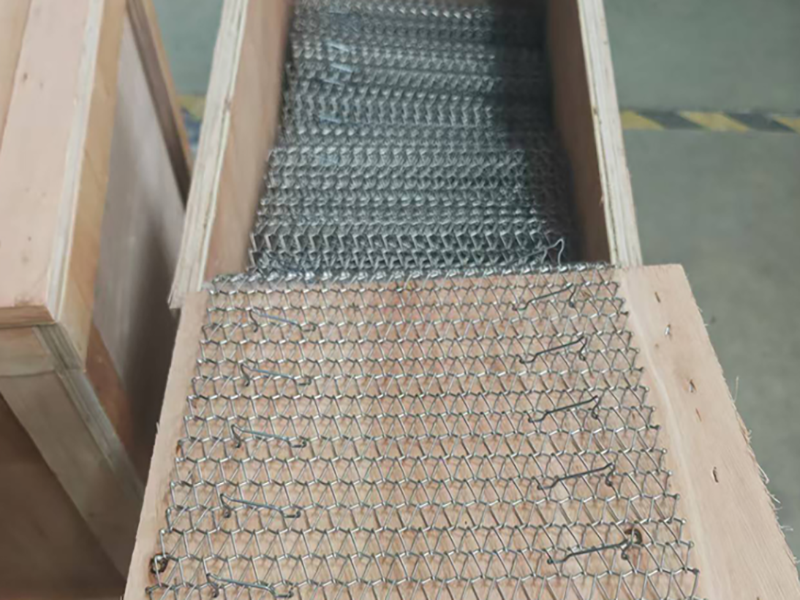
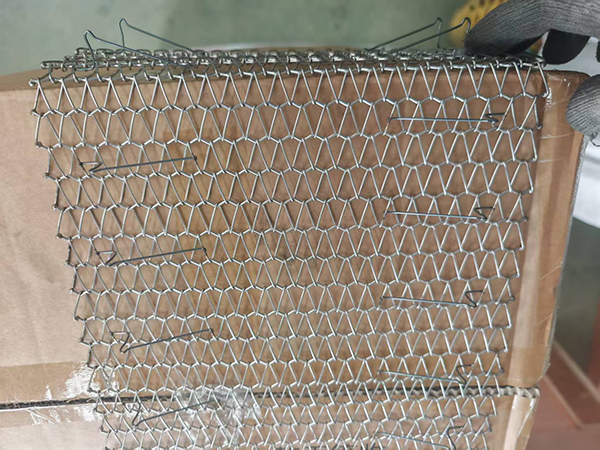
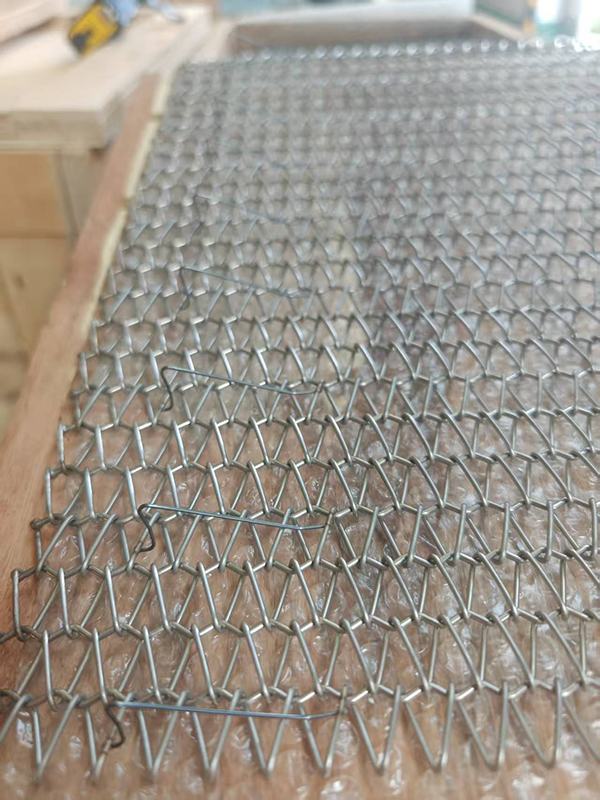
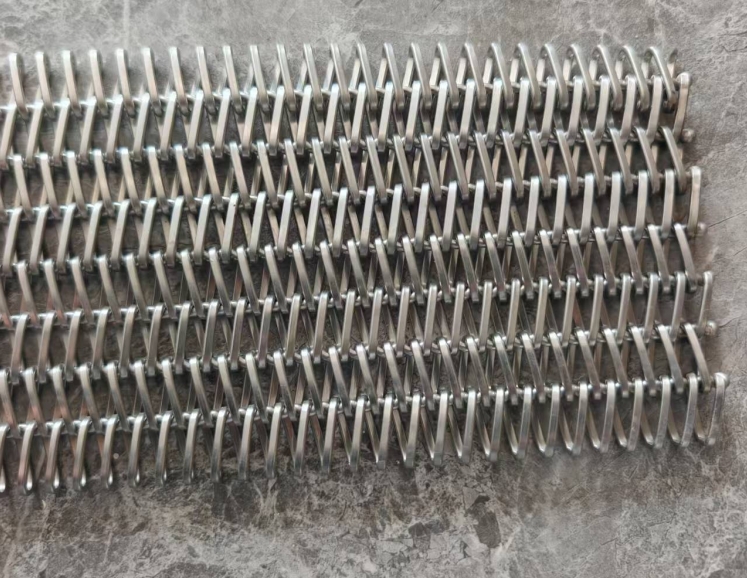
The structural pattern of the mesh determines load capacity, thermal distribution, surface flatness, and belt tracking accuracy. Three primary weave designs dominate solar furnace applications:
| Mesh Weave Type | Structural Characteristics | Key Operational Advantage | Solar Furnace Suitability |
|---|---|---|---|
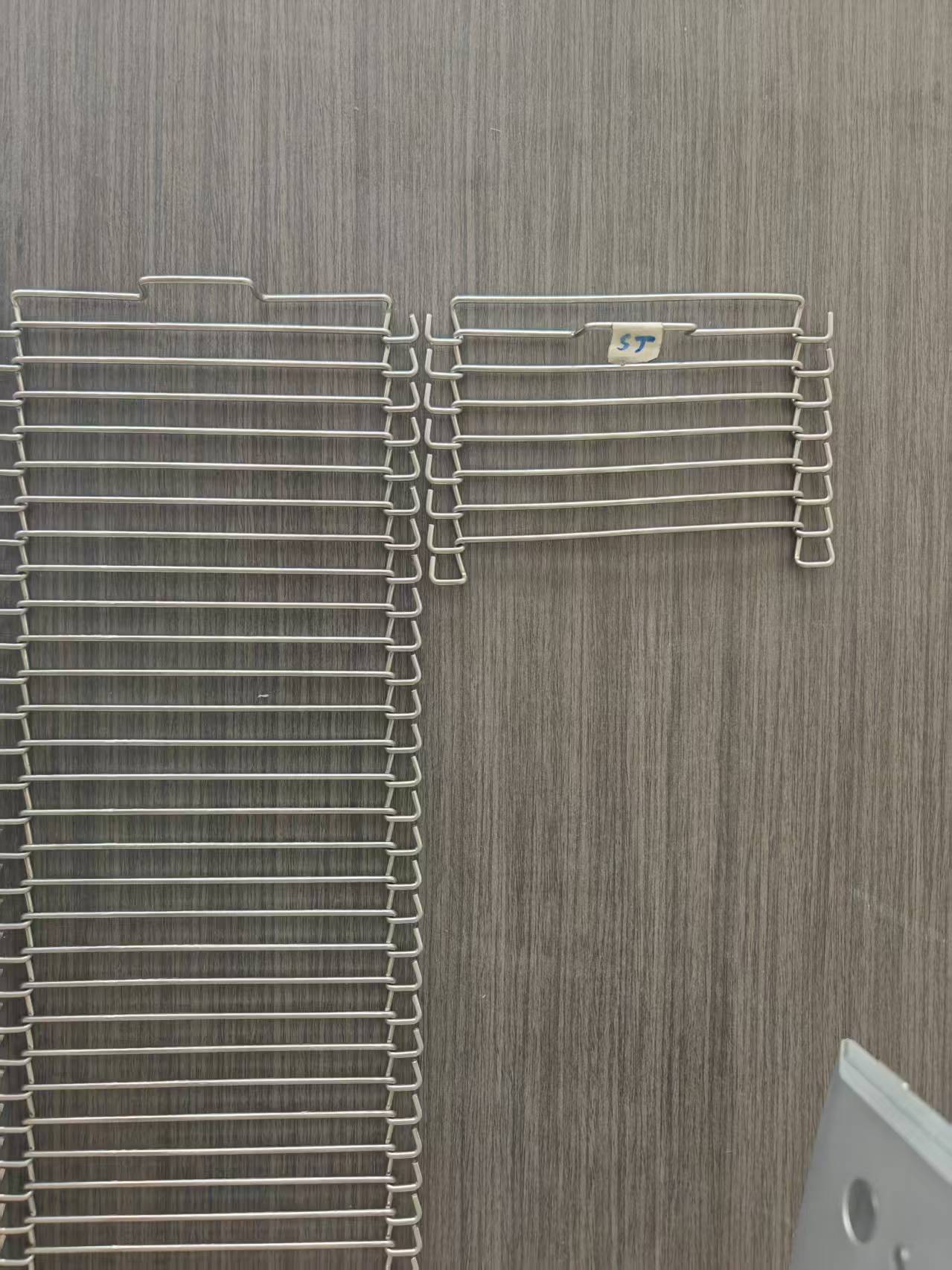
| Balanced Weave (Compound Spiral) | Alternating left- and right-hand spirals joined by straight cross-rods. | Neutral tracking forces, high tensile strength, excellent pitch stability. | Optimal choice for continuous wafer drying and sintering lines. |
| Double Balanced / Dense Weave | Interlocking pairs of spirals offering a tighter, smoother surface area. | Maximum surface support, preventing thin wafer edge dipping. | Ideal for lightweight, ultra-thin silicon substrates requiring flat support. |
| Rod-Reinforced Weave | Transverse rods inserted through spiral intersections for extra rigidity. | Resists high-load sagging and longitudinal stretching at elevated heat. | Suited for heavy-duty solar thermal processing and high-mass carrier trays. |
3. High-Temperature Alloy Metallurgy
Material selection dictates a mesh belt's resistance to thermal fatigue, hot corrosion, and structural elongation. Choosing the right alloy ensures long service life without flaking particle contaminants onto wafers:
A. Nickel-Chromium Alloys (Inconel 600 / 601)
Inconel 601 features high nickel and chromium content supplemented by aluminum addition. It forms a tightly adherent micro-oxide layer that resists spalling even during severe thermal cycling up to 1150°C. This makes it the premier material choice for solar wafer sintering furnaces where surface cleanliness is mandatory.
B. High-Temperature Stainless Steels (SUS 314 / AISI 310S)
Austenitic stainless steels like 314 and 310S offer exceptional oxidation resistance up to 1000°C due to elevated chromium and nickel concentrations. They provide high creep strength and structural stability at a competitive cost point for pre-heating and drying zones.
4. Precision Engineering Parameters: Pitch, Wire Gauge, and Edges
Key Engineering Specifications for Solar Mesh Belts
• Pitch Consistency: Spiral pitch and cross-rod spacing must be manufactured to sub-millimeter tolerances. Precise pitch uniformity eliminates belt surging and guarantees smooth engagement with drive sprockets.
• Flat Wire vs. Round Wire Spirals: Flat wire spirals offer a wider contact surface, distributing wafer weight evenly and reducing point-contact friction, whereas round wire spirals permit higher radiant heat flow through the mesh open area.
• Welded Knuckled Edges: Edge finishing prevents unraveling under thermal stress. Welded and knuckled edges smooth out lateral friction against furnace side guides, eliminating metal debris generation inside clean furnace zones.
5. Optimizing Drive Systems and Mechanical Tracking
Even the highest quality mesh belt requires a properly matched drive setup. Friction drive drums or positive-drive sprockets must align precisely with the belt weave. For solar processing lines requiring exact belt positioning and zero side-slip, positive sprocket drives engaging reinforced side-chains offer positive engagement, eliminating slippage caused by thermal expansion.
Engineering teams searching for custom weave geometries, high-temperature alloy belts, and specialized mesh conveyors can consult technical resources and product specs at Huada Metal Mesh Belt. Custom-manufactured wire mesh belts engineered specifically for high-temperature furnace atmospheres reduce downtime, maintain uniform heat transfer, and protect production yield.
Conclusion
Selecting the right belt mesh design for solar furnaces requires balancing high-temperature alloy metallurgy, structural weave stability, precise pitch manufacturing, and proper drive mechanics. By matching the weave pattern and material grade to your furnace temperature profile and wafer transport requirements, solar cell manufacturers can achieve consistent thermal processing, eliminate contamination risks, and significantly extend belt operational life.
Discover high-performance furnace mesh belts and high-temperature conveyor solutions at Huada Metal Mesh Belt Official Website.