






How Heat Resistant Are Solar Sintering Furnace Belts?
In the photovoltaic (PV) manufacturing industry, the efficiency of a solar cell is heavily dictated by the precision of its thermal processing. At the heart of this process is the solar cell sintering furnace, which fires the silver and aluminum pastes onto silicon wafers to form the necessary electrical contacts.
Because this firing process requires rapid temperature ramps and extreme thermal spikes, the conveyor belt carrying the wafers must exhibit extraordinary heat resistance. But exactly how heat resistant do these belts need to be, and how do they maintain structural integrity under such punishing conditions? Let us dive into the metallurgy and engineering behind solar Sintering Furnace Belts.
1. The Thermal Profile of Solar Sintering
To understand the required heat resistance, we must first look at the operation inside a solar sintering furnace. The furnace is divided into multiple zones, starting with a drying phase and culminating in the critical firing zone.
Peak Firing Temperatures: The actual sintering of the metallization paste occurs rapidly, with peak temperatures typically reaching between 750℃ and 900℃ (and occasionally up to 950℃).
Thermal Shock Dynamics: Unlike standard industrial baking or heat-treating ovens where temperatures remain static, solar sintering involves rapid heating and cooling cycles. A conveyor belt must pass through these intense thermal gradients thousands of times without warping, stretching, or scaling.
2. Advanced Metallurgy: The Secret to High Heat Resistance
Standard carbon steel or basic stainless steel cannot survive the oxidizing, high-temperature environment of a solar furnace; they would oxidize rapidly, lose tensile strength, and contaminate the silicon wafers. Therefore, specialized solar Mesh Belts rely on advanced superalloys:
- Nichrome (Nickel-Chromium) Alloys: Belts engineered with high nickel and chromium content (such as Nicr 80/20) offer superior oxidation resistance. At high temperatures, the chromium forms a protective oxide layer that prevents further degradation of the metal core.
- Inconel and Fe-Cr-Al Alloys: For advanced high-throughput lines, alloys containing aluminum and iron are often deployed. These materials form an alumina (Al2O3) scale on the surface, providing exceptional resistance to thermal fatigue and preventing carbon or metal ions from migrating onto the sensitive PV wafers.
3. Beyond Melting Points: Critical Engineering Factors
True heat resistance isn't just about not melting; it is about maintaining mechanical properties at elevated temperatures. High-quality sintering belts are designed to overcome three main high-temperature challenges:
High Creep Resistance
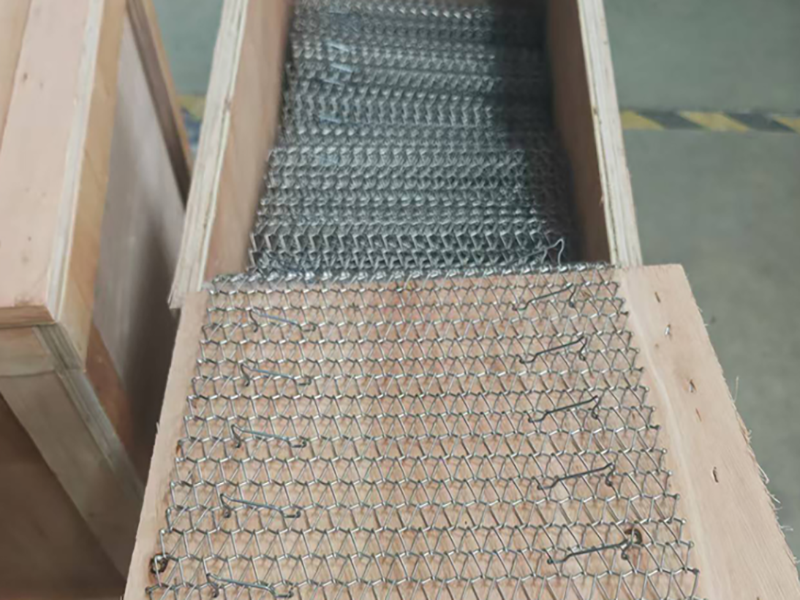
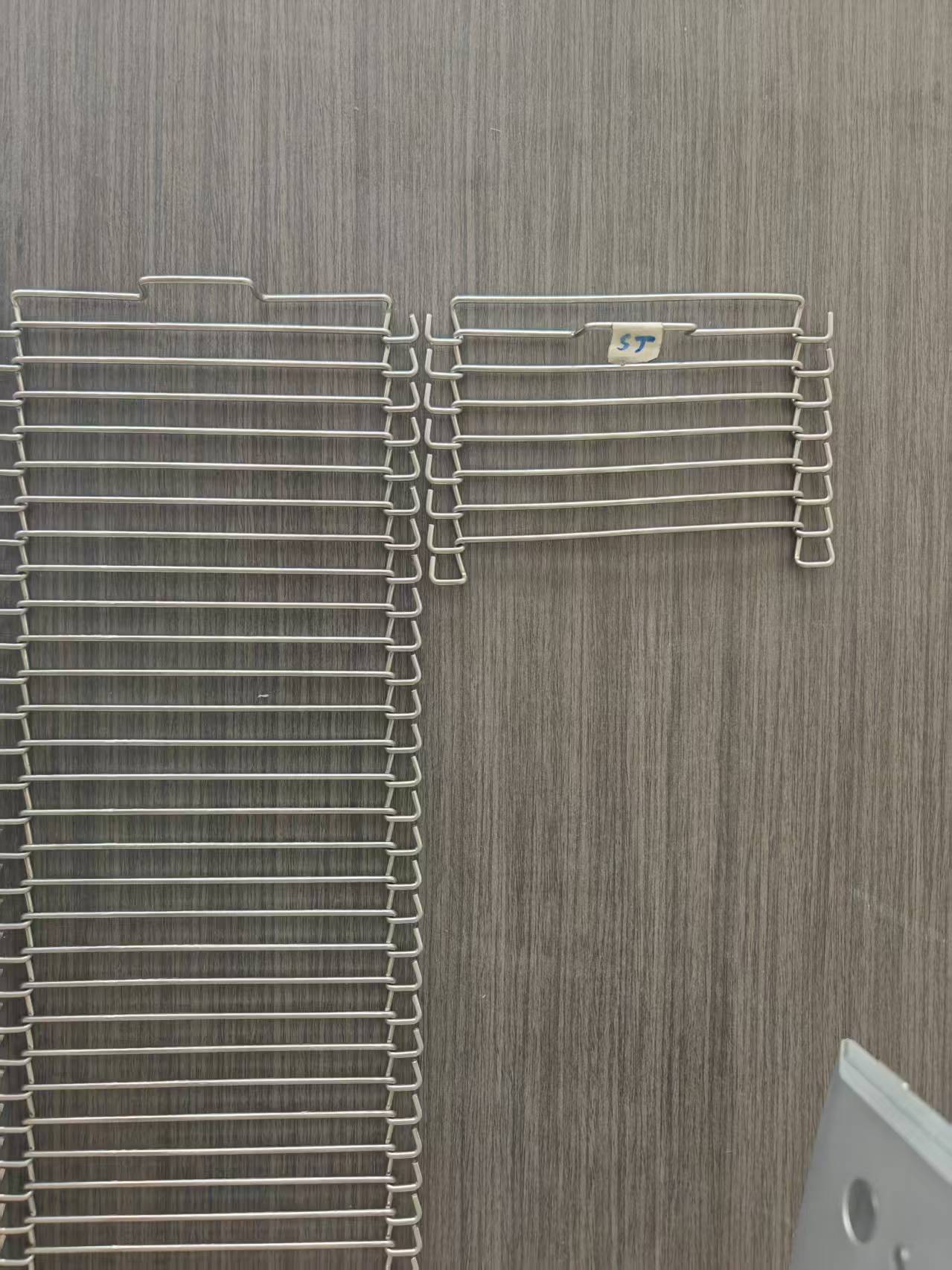
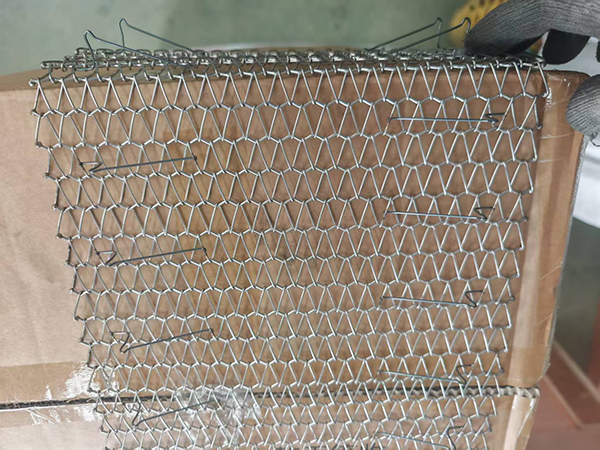
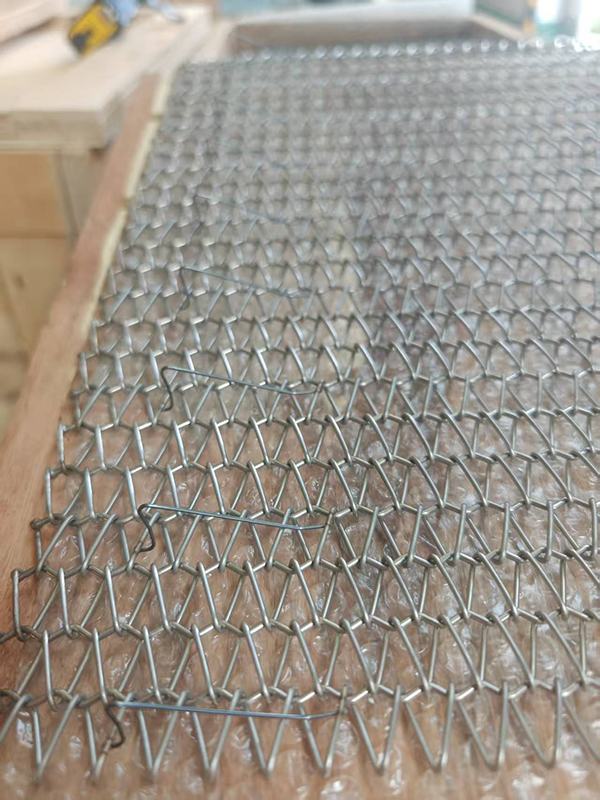
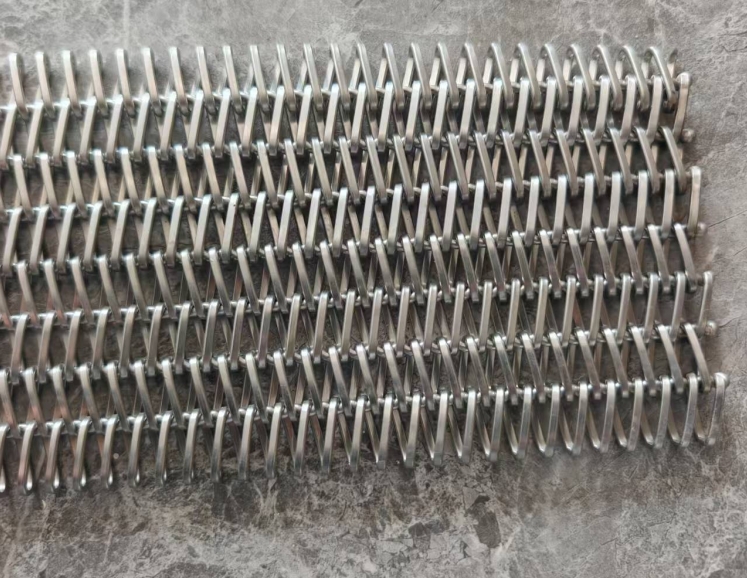
"Creep" is the tendency of a solid material to move slowly or deform permanently under the influence of persistent mechanical stresses. Operating under constant tension at 850℃ can cause inferior belts to stretch, leading to tracking issues and uneven wafer positioning. Elite furnace belts feature precision-woven spiral or mesh structures that distribute tension evenly, minimizing high-temperature creep.
Prevention of Contact Contamination
During sintering, any microscopic flaking or outgassing from the conveyor belt can ruin the electrical properties of the solar cell. Heat-resistant sintering belts must remain entirely stable, ensuring zero micro-scaling or chemical interaction with the silicon wafers or metallization paste.
Flatness and Pitch Uniformity
With silicon wafers becoming thinner and larger, the conveyor surface must remain perfectly flat. High thermal resistance ensures that the belt woven structure does not develop localized buckling, preserving a smooth transport plane across thousands of production hours.
Conclusion: Maximizing Throughput with Premium Mesh Belts
Investing in a furnace belt with optimized thermal characteristics directly translates to reduced downtime, fewer broken wafers, and more consistent cell efficiency. For solar cell manufacturers, the conveyor belt is not just a transport mechanism—it is a critical variable in the thermal equation.
At Huada Metal Mesh Belt, we specialize in engineering high-performance mesh belts tailored for demanding high-temperature applications, including solar sintering, powder metallurgy, and glass fusing. Our products leverage premium alloy selections and precise weaving techniques to ensure maximum service life and minimal thermal elongation in the world's most demanding production environments.