


How to Choose a Reliable Furnace Belt Supplier in China: A Technical Procurement Guide
When operating high-temperature heat treatment furnaces, powder metallurgy sintering lines, or continuous brazing systems, your woven Wire Mesh Belt is often the single most critical consumable on the floor.
A unexpected Furnace Belt failure doesn’t just mean replacing the mesh—it causes catastrophic downtime, lost furnace thermal cycles, potential thermal shock to heating elements, and thousands of dollars in ruined workpieces.
China is home to the world’s largest industrial wire mesh manufacturing ecosystem. However, for international plant managers and procurement officers, separating genuine high-precision belt manufacturers from low-tier trading intermediaries can be challenging.
To protect your continuous thermal processing lines, here is a practical guide on evaluating and selecting a dependable high-temperature furnace belt manufacturer in China.
1. Verify High-Temperature Alloy Metallurgy and Traceability
High-temperature furnace belts operate in brutal physical conditions—frequently enduring continuous thermal cycles ranging from 600℃ to over 1150℃ (1112℉ to 2102℉) alongside carburizing, nitriding, or reducing atmospheres.
Inferior wire materials containing impurities or incorrect nickel-chromium ratios will quickly suffer from rapid oxidation, severe elongation (belt stretch), and creep deformation under load.
When vetting a supplier, do not accept vague descriptions like "high-grade stainless steel." Demand exact alloy specs and mill test certificates:
- Medium Temperatures (400℃- 800℃): SS314, SS310S, or AISI 309.
- High Temperatures & Carburizing (800℃- 1150℃+): Inconel 600/601, Nichrome alloys (NiCr 80/20, NiCr 35/19), or Specialized Fe-Cr-Al alloys.
A reputable supplier performs inbound spectrographic raw material testing (XRF analysis) to ensure every coil of wire strictly matches the required chemical composition before weaving begins.
2. Assess Weaving Precision and Structural Edge Finish
A furnace belt’s operational lifespan depends as much on its mechanical weaving tolerances as it does on metallurgy. Uneven wire tension across the width of the belt leads to tracking errors, cambering, and premature edge tearing.
Key structural details to evaluate with your prospective supplier include:
1.Pitch Uniformity: Spiral pitches and cross-rod spacings must be exact. Inconsistent pitch causes uneven weight distribution across drive sprockets or friction rollers.
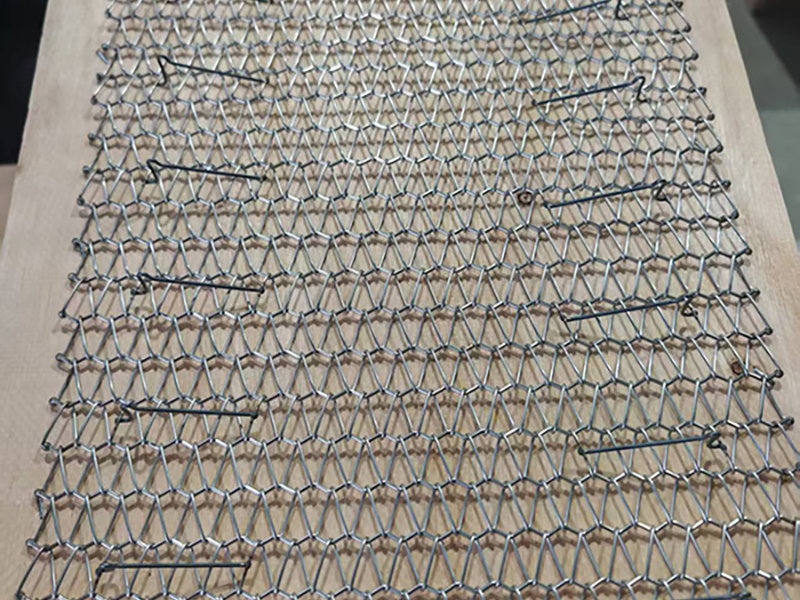
2.Edge Construction: Pay close attention to how the belt edges are terminated. Welded edges (welded cross-rods), knuckled/bent edges, or reinforced chain-drive edges must be executed cleanly to prevent fraying or catching on furnace interior muffles.
3.Pre-Cambering and Stretching: Leading manufacturers pre-stretch and test-run industrial mesh belts prior to shipment to ensure straight tracking and minimize initial field elongation.
3. Key Criteria: Manufacturer vs. Trading Company
Many buyers unknowingly source furnace belts through sourcing agents who lack deep technical understanding of thermal dynamics and furnace drive mechanics.
| Evaluation Criteria | Specialized Factory / Manufacturer | Generic Trading Intermediary |
| Customization Capability | Full engineering control over wire gauge, pitch, rod diameter, and weave style | Limited to standard stock sizes |
| Metallurgy Verification | Direct raw material certificates and spectrographic verification | Third-party claims without direct traceability |
| Root-Cause Troubleshooting | Can adjust weave tension or alloy choice based on furnace atmosphere | Relies on generic replacement orders |
| Quality Control | In-house tensile, weld, and dimensional testing | Visual external inspection only |
4. Evaluate Customization and Engineering Support
No two heat treatment furnaces operate identically. Atmosphere chemistry, cooling speeds, belt speed, and maximum component loading per square meter all dictate the ideal mesh configuration.
A reliable supplier acts as an engineering partner rather than a simple order-taker. They should ask detailed questions about your setup:
- What is your furnace atmosphere (e.g., endothermic gas, dissociated ammonia, vacuum, nitrogen flush)?
- What is the precise weight density of the parts being conveyed?
- Is the belt driven by friction drums, positive tooth sprockets, or side drive chains?
Whether you require balanced weave belts, compound balanced mesh, ladder belts, or custom chain-edge drive configurations, your supplier must possess the tooling flexibility to tailor the mesh to your specific furnace drive.
5. Proven Export Packaging and Logistics Experience
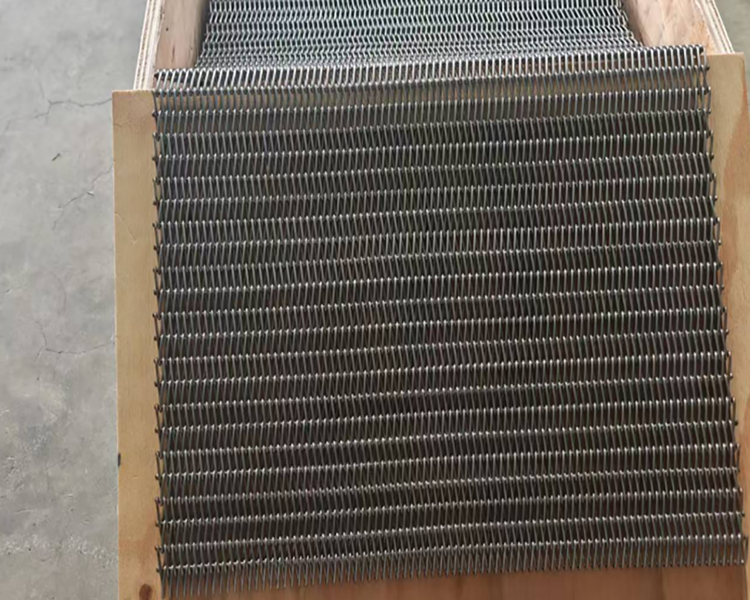
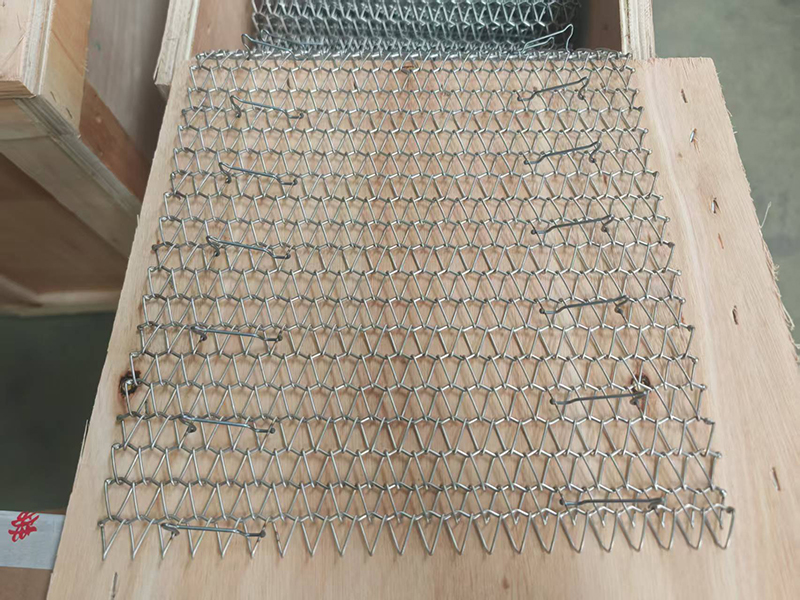
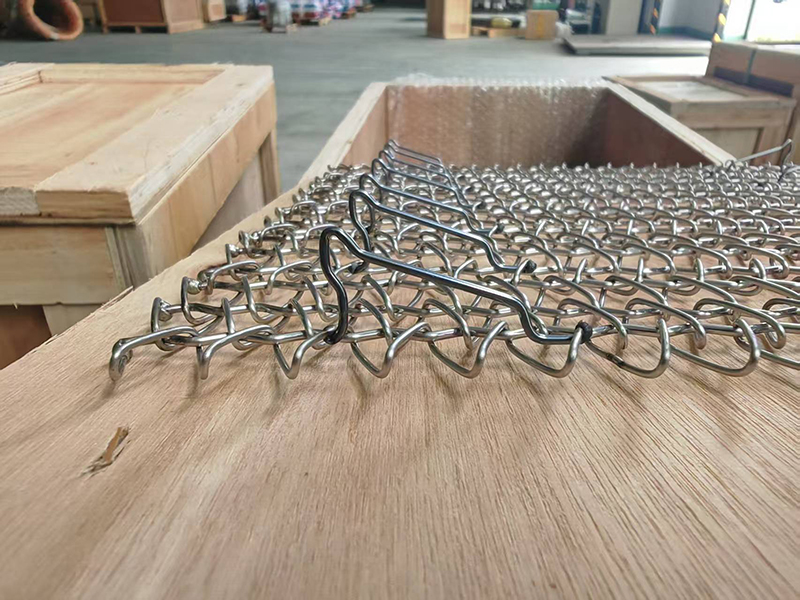
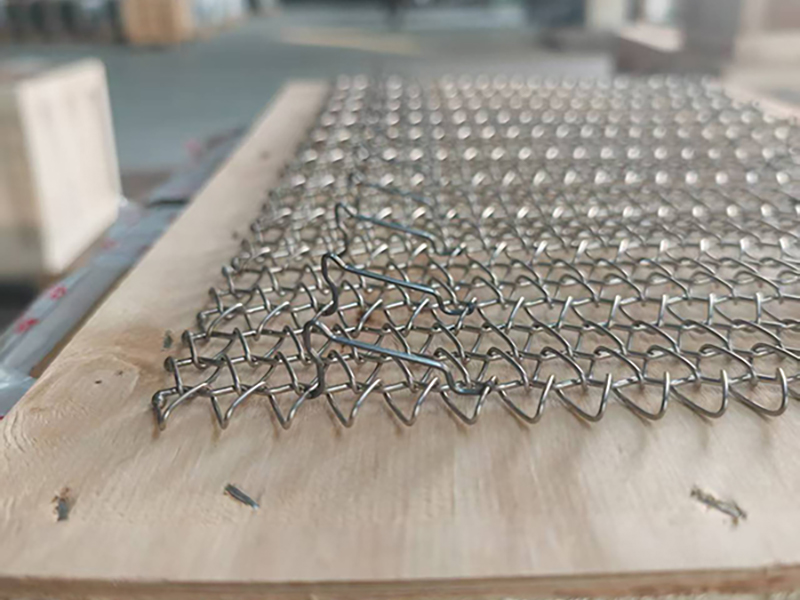
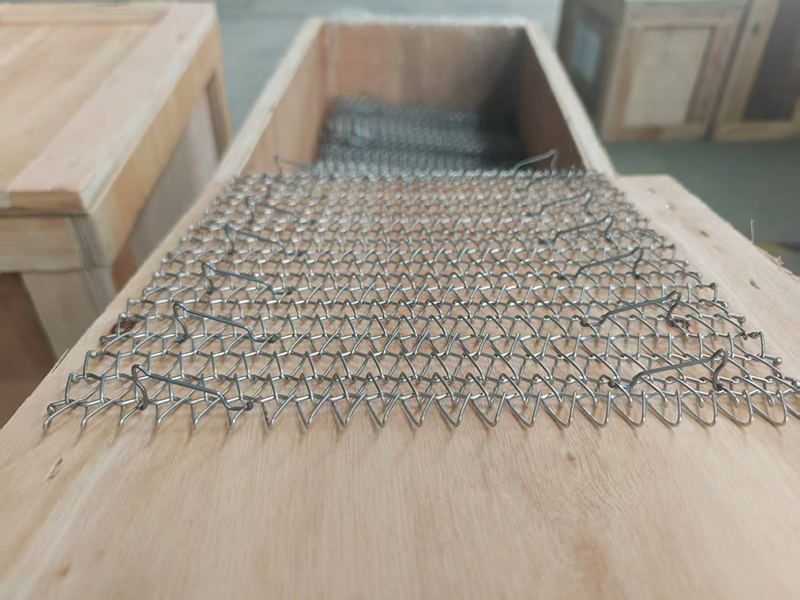
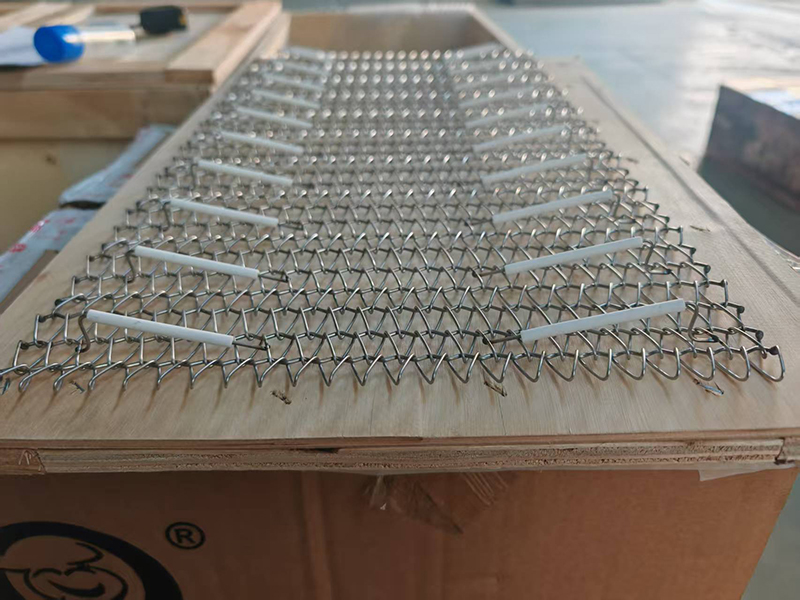
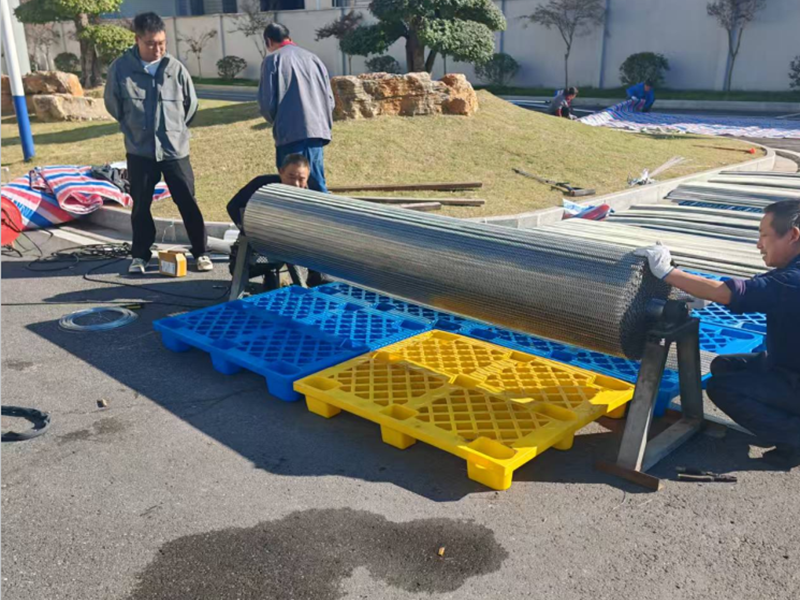
A perfectly woven Inconel furnace belt can be ruined during transoceanic shipping if packaged improperly. Heavy wire mesh rolls are susceptible to physical crush damage, edge bending, and atmospheric moisture corrosion during sea freight transit.
Ensure your supplier uses:
- Heavy-Duty Fumigated Wooden Cases: Built to support multi-ton steel rolls without sagging.
- VCI Moisture-Proof Wrapping: Volatile Corrosion Inhibitor (VCI) plastic sheeting and desiccants to prevent surface oxidation in humid container shipping routes.
- Core Tube Support: Internal steel or heavy PVC core tubes to prevent the roll from collapsing under its own weight.
The Global Mesh Belt Advantage
At Huada Metal Mesh Belt, we specialize in designing and manufacturing high-performance woven wire mesh belts tailored specifically for continuous heat treatment, sintering, quenching, and industrial baking processes.
By combining premium high-temperature alloy wires, precision automated weaving looms, and rigorous quality control protocols, we deliver conveyor belting solutions that maximize service life and reduce operational downtime in demanding furnace environments worldwide.
Quick Checklist Before Placing Your Order:
- Has the supplier provided material mill test certificates (MTC) for the wire alloy?
- Are the wire diameter, spiral pitch, and cross-rod dimensions verified against your original OEM drawing?
- Is the recommended edge finish (welded, knuckled, or chain-driven) suited to your internal furnace guides?
- Is the packaging rated for heavy export sea freight?
Upgrade Your Furnace Reliability Today
Partnering with the right Chinese manufacturer transforms your furnace belt procurement from an unpredictable maintenance headache into a predictable, cost-effective advantage.
Explore our full range of high-temperature furnace belts, balanced weave designs, and custom conveyor solutions at www.globalmeshbelt.com. Contact our engineering team today to discuss your furnace specs or request a factory-direct quote!