






How to Select the Right Furnace Belt Size for Your Equipment
High-temperature industrial processing—whether annealing glass, sintering powdered metals, heat-treating automotive gears, or brazing aluminum—relies heavily on the continuous performance of Mesh Conveyor Belts. Choosing an incorrectly sized furnace belt is one of the quickest routes to unexpected production shutdowns. A belt that is too wide rubs against muffle walls; one that is improperly pitched stretches prematurely under thermal load; and incorrect wire gauge sizing leads to catastrophic tensile failure inside hot zones.
Determining the precise dimensions for your furnace Mesh Belt requires balancing thermal expansion mechanics, mechanical loading, drive drum engagement, and alloy tolerances. Below is a practical step-by-step sizing guide to ensure optimal belt tracking, minimal thermal fatigue, and maximum operational service life.
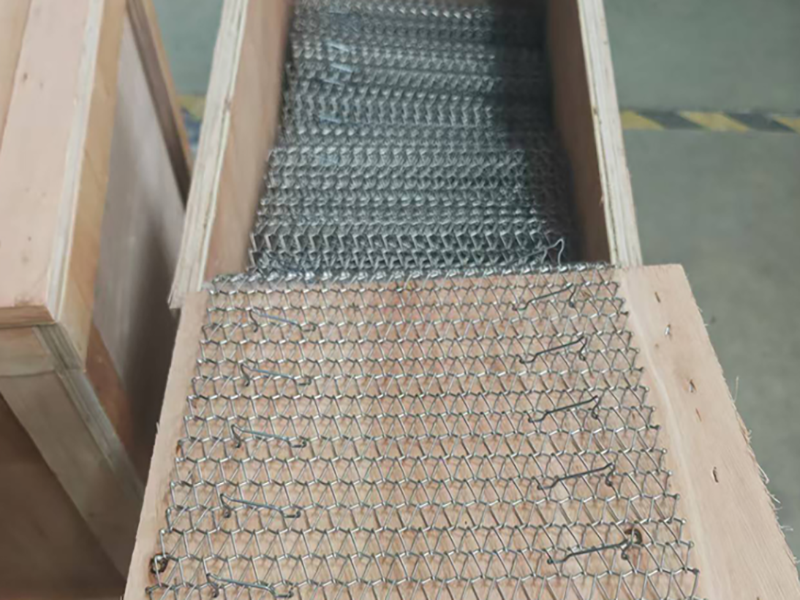
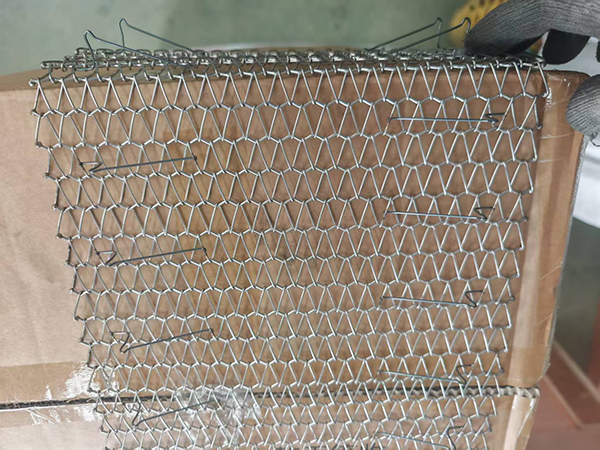
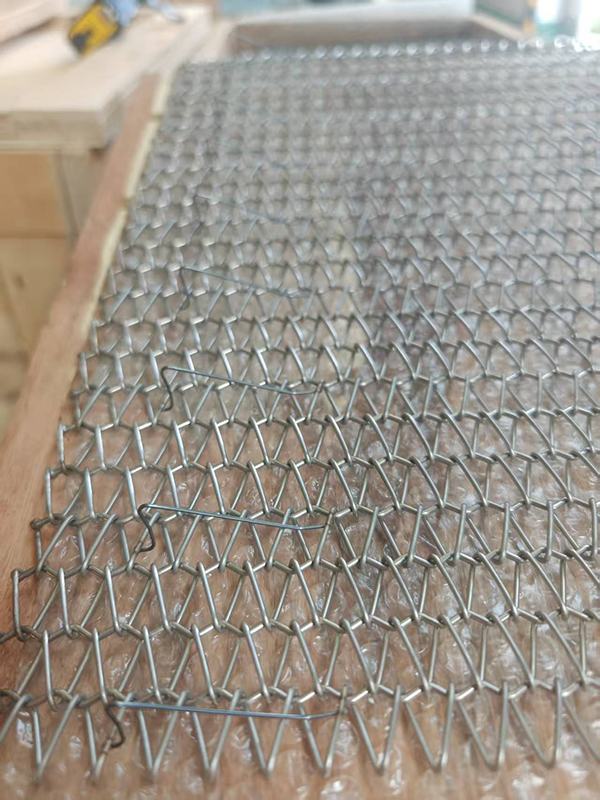
Sizing a woven wire furnace belt goes beyond simple length and overall width. You must define five core geometric dimensions to ensure seamless equipment compatibility:
· Overall Belt Width (W): The distance across the carrying surface from outer edge to outer edge. Subtract thermal expansion clearance from the internal muffle width (typically leaving a minimum 15–25 mm total gap depending on operating temperature) to prevent side-wall friction.
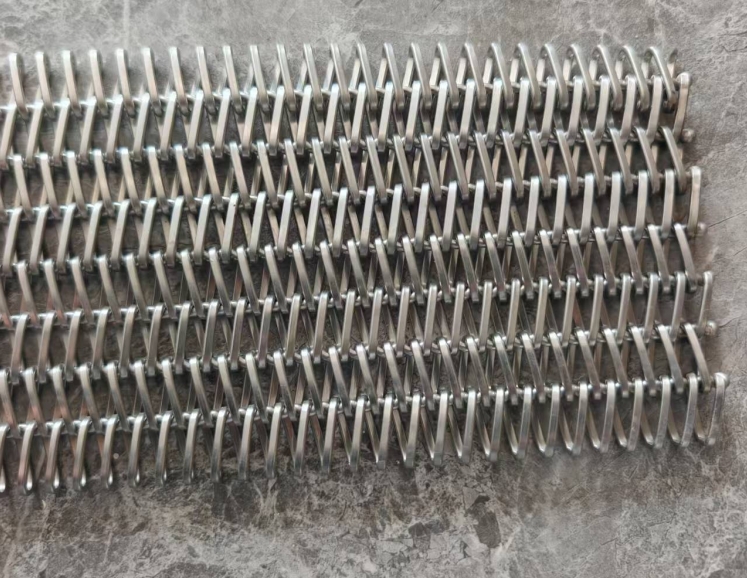
· Spiral Pitch (P) & Cross Rod Pitch (C): Spiral pitch measures the center-to-center distance between adjacent wire loops along the belt length, while cross rod pitch measures the distance between transverse connecting rods. Finer pitches handle smaller workpieces, while wider pitches maximize furnace atmosphere circulation.
· Wire Gauges (Spiral Wire & Cross Rod Diameters): Thicker wire diameters increase load-bearing capability and structural rigidity under elevated temperatures (800°C–1150°C), but add dead weight that increases energy consumption.
· Overall Belt Length (L): Total internal circuit length, including drive drum wraps, take-up loops, loading zones, and cooling tunnels. Always factor in dynamic take-up mechanism travel to accommodate thermal elongation during heat-up cycles.
Metals expand significantly under sustained high temperatures. Standard stainless steel and nickel-chrome alloys (such as AISI 314, Inconel 600, or 310S) undergo measurable dimensional growth when transitioning from room temperature to operating heat.
| Alloy Material | Max Operating Temperature | Thermal Expansion Coeff. (×10⁻⁶ /°C) | Engineering Sizing Impact |
|---|---|---|---|
| AISI 304 / 316 | Up to 800°C | ~18.0 | Standard expansion; requires standard side clearance in low-temp baking/drying. |
| AISI 314 / 310S | Up to 1100°C | ~16.5 | High thermal stability; ideal for continuous heat-treating and annealing furnaces. |
| Inconel 600 / 601 | Up to 1200°C+ | ~15.0 | Low thermal creep; permits tighter pitch tolerances under heavy structural loads. |
A rule of thumb for high-temp heat treatment: calculate approximately 1.5% to 2.0% thermal elongation on overall length and width when operating above 900°C. Without sufficient lateral clearance inside the furnace heating chamber, thermal expansion causes the belt edges to edge-wave, bind, or track erratically off drive sprockets.
The belt edge finish plays a critical role in maintaining dimensional stability under high-speed or heavy-load processing:
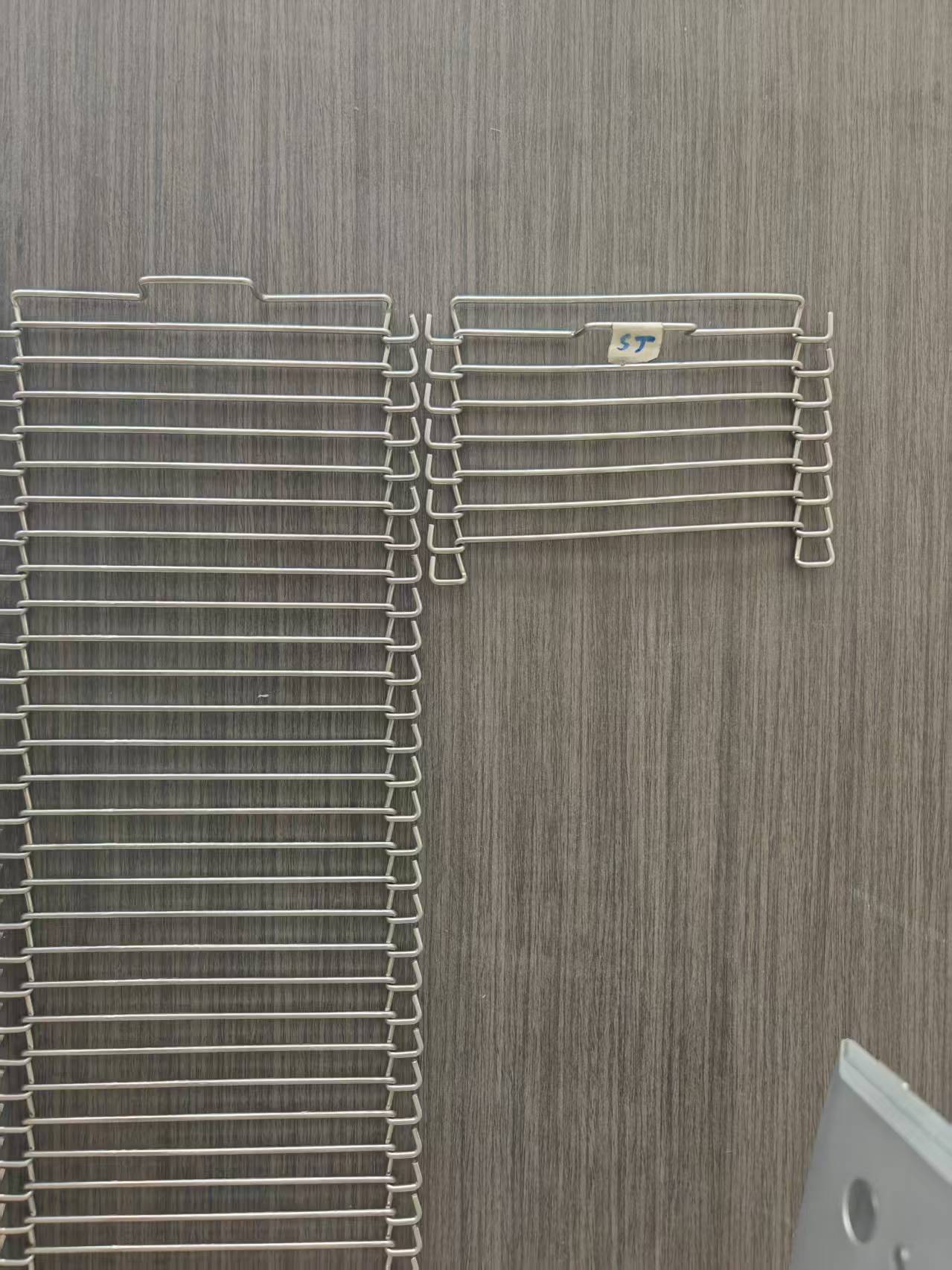
Cross rods and spiral wires are resistance-welded together. Welded edges provide a clean, smooth border suitable for light to medium load applications with minimal lateral sway.
Spiral wire ends are bent back and hooked around adjacent cross rods. This construction offers superior mechanical strength and prevents edge fraying during high-tension conveying.
For extra-wide furnaces or heavy parts loading, attaching precision side drive chains ensures positive tracking, eliminates belt slippage on drive drums, and allows precise speed synchronization.
When selecting a furnace belt, off-the-shelf estimates often lead to premature belt fatigue. At Huada Metal Mesh Belt (www.globalmeshbelt.com), we engineer specialized metal conveyor belts customized to your exact furnace specifications and process requirements.
With advanced automated weave machinery and strict quality control, Global Mesh Belt produces balanced weave belts, compound mesh belts, ladder belts, and chain-driven wire mesh solutions built for extreme thermal conditions. Our engineering team assists you in calculating precise mesh open areas, wire tensile limits, thermal expansion allowances, and alloy selection to optimize fuel efficiency and maximize belt service life in sintering, annealing, and quenching operations.
Selecting the right furnace belt size requires evaluating working dimensions, temperature-induced expansion, load density, and drive dynamics. By taking accurate measurements and allowing proper clearance for thermal growth, you protect your furnace lining and extend the lifespan of your mesh belt. Partner with the thermal processing experts at Huada Metal Mesh Belt to specify the perfect high-temperature conveyor solution for your facility.