


Innovations in High-Temperature Belts for the Solar Photovoltaic Industry
As global clean energy targets accelerate, solar photovoltaic (PV) panel manufacturers face continuous pressure to boost cell efficiency while lowering processing costs per watt. Achieving these ambitious goals requires precise control over thermal processing stages, particularly during solar cell metallization sintering, stringer soldering, and thin-film deposition.
At the heart of these continuous thermal processing kilns and furnaces lies a critical, often understated component: the high-temperature Metal Mesh Belt. Operating continuously at temperatures scaling above 800℃ to 1000℃, Conveyor Belts in solar manufacturing must deliver absolute mechanical stability, minimal thermal mass, and zero surface contamination.
At Huada Metal Mesh Belt, we engineer advanced woven Wire Mesh belts tailored specifically to meet the rigorous thermal and mechanical demands of modern solar PV manufacturing line setups. Here is a look at the key technological innovations transforming high-temperature mesh belts in the solar sector today.
1. Advanced High-Nickel and Cr-Fe-Al Alloy Formulations
Traditional stainless steels like 304 or 316 struggle under the repeated thermal cycling of solar furnace lines, suffering from rapid oxidation, scaling, and thermal elongation.
2. Ultra-Fine Wire Weaving and Ultra-Low Thermal Mass
In solar metallization firing furnaces, heat transfer speed and temperature uniformity across the silicon wafer directly govern cell efficiency.
3. Precision Edge Finishes and Flatness Control
Silicon wafers used in high-efficiency N-type TOPCon and HJT solar cells are growing larger and thinner (often under 130μm). Any micro-vibration, unevenness, or edge fraying on the conveying mesh belt can lead to high wafer breakage rates.
4. Anti-Deformation Drive Mechanisms
Thermal expansion is an unavoidable physical reality in heat-treatment furnaces. If a conveyor belt expands non-uniformly across its width, it develops tracking errors, sag, and surface warping.
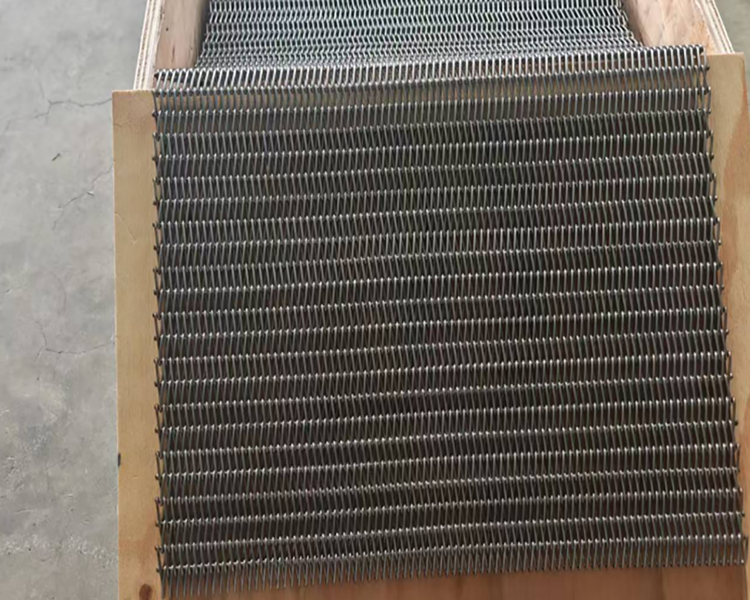
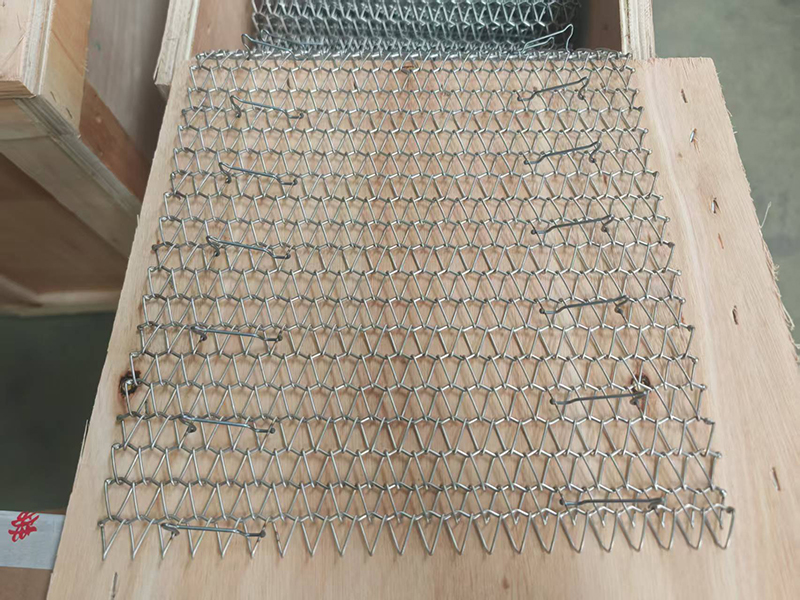
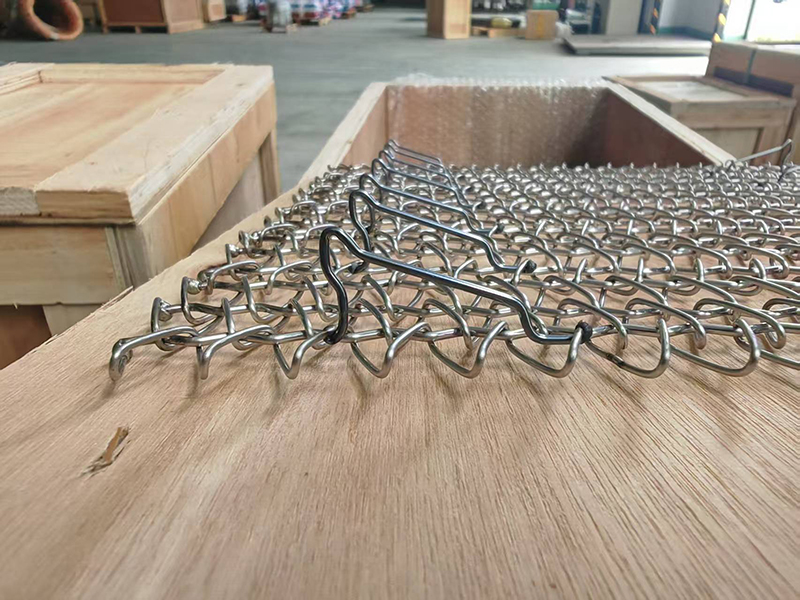
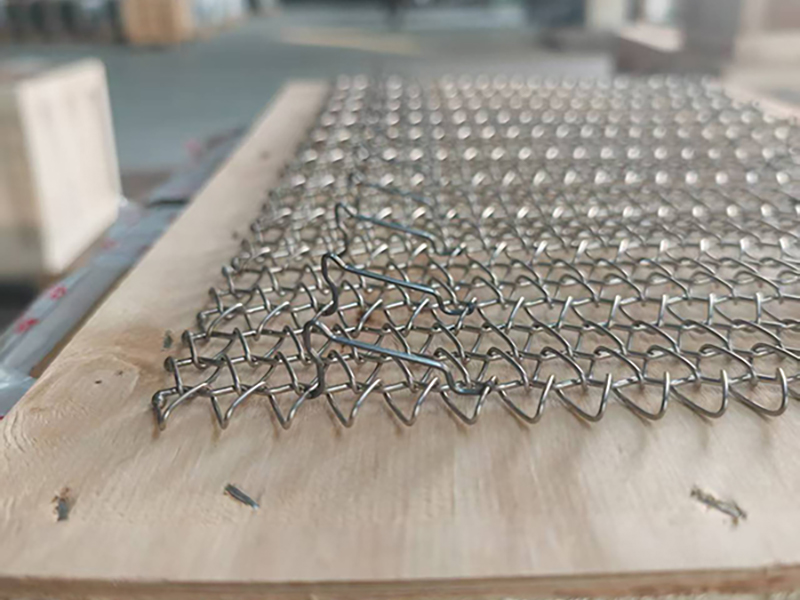
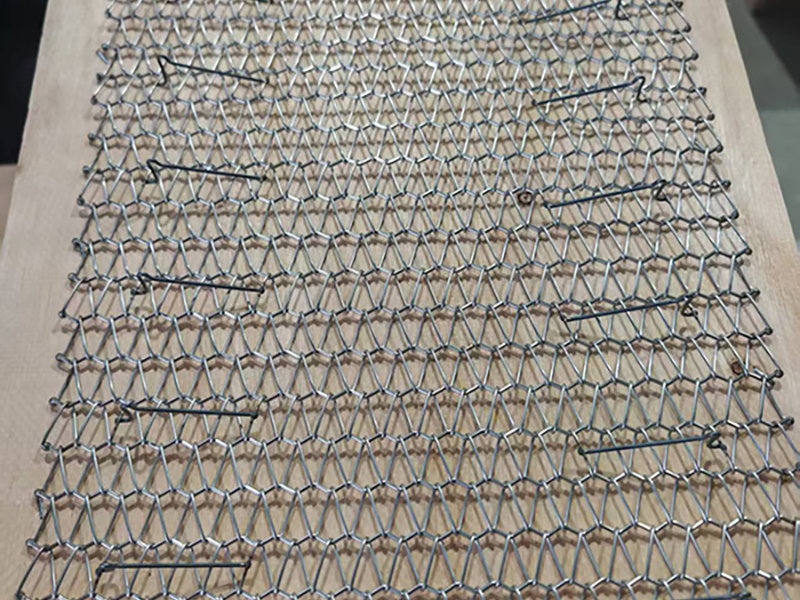
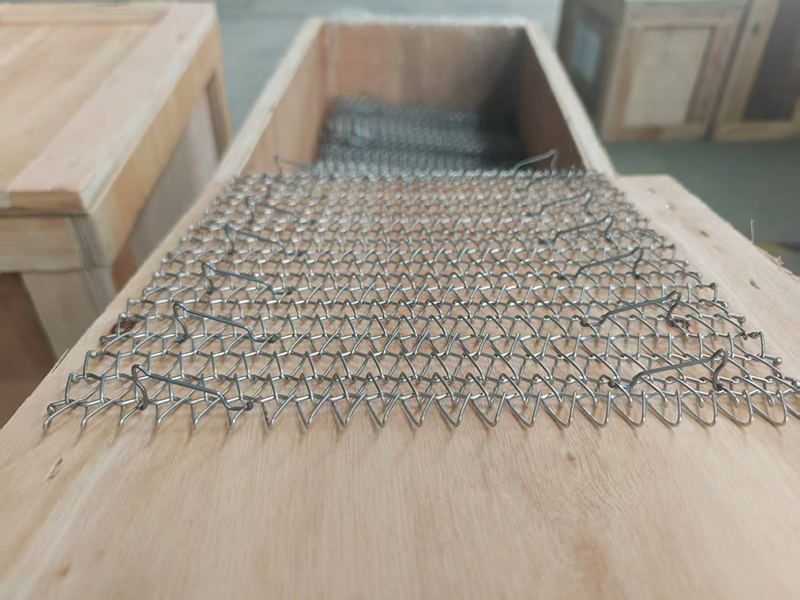
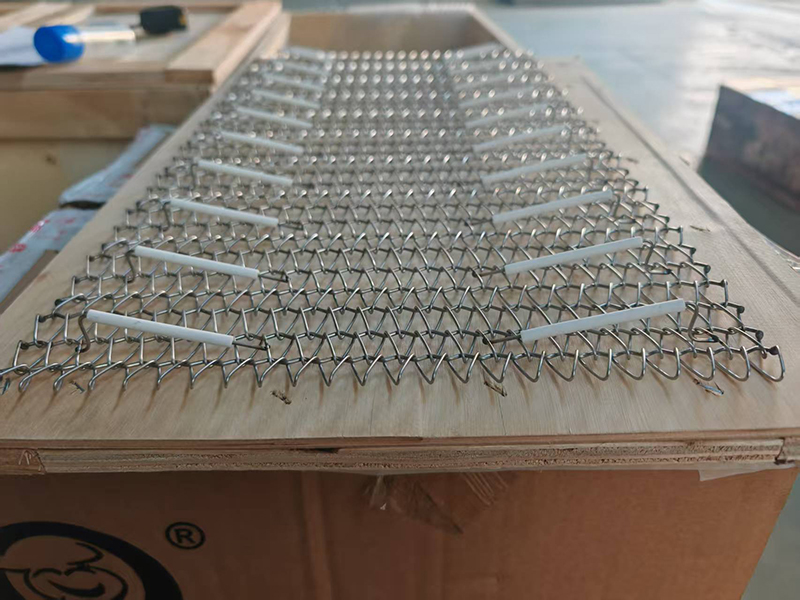
Modern solar mesh belt systems incorporate precision-matched drive sprockets and balanced-weave spiral structures. By alternating left-hand and right-hand spiral weaves held together by crimped connector rods, driving torque is balanced across the belt face. This prevents lateral drift and keeps thermal expansion uniform throughout long furnace runs.
Partner with Huada Metal Mesh Belt for Solar Manufacturing Excellence
As solar panel manufacturers transition toward higher-efficiency cell architectures, the demands on production line equipment will only intensify. Investing in high-performance high-temperature mesh belts reduces furnace downtime, minimizes wafer breakage, and ensures stable manufacturing yields.
At Huada Metal Mesh Belt, we design and supply a broad range of heat-resistant wire mesh belts, balanced weave belts, and custom conveyor components engineered for high-temperature thermal processing industries worldwide. Explore our specialized product catalog or consult with our technical engineers today by visiting Huada Metal Mesh Belt.