






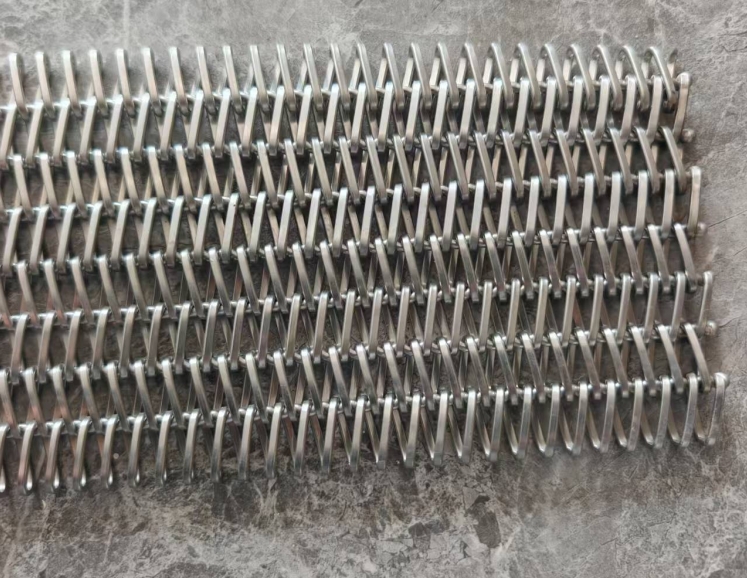
Key Quality Standards for Solar Sintering Furnace Belts
In modern photovoltaic (PV) solar cell manufacturing, the contact firing or fast sintering process plays a decisive role in establishing high-efficiency metallization contacts. Because solar sintering furnaces operate under aggressive rapid thermal processing (RTP) profiles—with heating ramp rates exceeding hundreds of degrees per second and peak thermal zones reaching 800°C to 950°C—the Mesh Conveyor Belt is subjected to continuous thermal shock, chemical atmosphere exposure, and mechanical tension.
Selecting high-quality mesh belts is essential to avoid wafer micro-cracking, metallization contamination, and costly furnace downtime. This guide examines the critical quality standards and metallurgical parameters engineering teams must evaluate when sourcing solar sintering furnace Conveyor Belts.
1. High-Temperature Alloy Metallurgy and Scaling Resistance
The primary determinant of a solar sintering furnace belt’s lifespan is its metallurgical composition. Conventional stainless steel alloys degrade rapidly when subjected to repeated high-temperature thermal cycling, leading to embrittlement, structural sagging, and oxidation scaling.
- Nickel-Chromium-Iron Alloys: Premium sintering belts are manufactured from high-nickel alloys (such as specialized Ni-Cr or Inconel series). These formulations create a stable, adherent passive oxide film on the wire surface upon initial heating.
- Elimination of Oxide Spalling: Spalling occurs when loose metal oxide flakes detach from the wire surface during movement. In solar cell production, even microscopic oxide particles landing on silicon wafers cause pinhole contamination and shunting defects on anti-reflective coatings (ARC).
- Resistance to Microstructural Creep: Operating continuously near thermal limits induces metallurgical creep—the slow, permanent deformation of metal wire under mechanical load. High-purity alloys processed through controlled wire drawing and grain-refining anneals exhibit superior stress-rupture resistance.
2. Dimensional Precision and Mesh Weave Uniformity
Photovoltaic wafers are remarkably thin (frequently under 160 μm) and vulnerable to stress-induced breakage. The geometric precision of the woven wire mesh directly impacts physical yield rates across fast-firing lines.
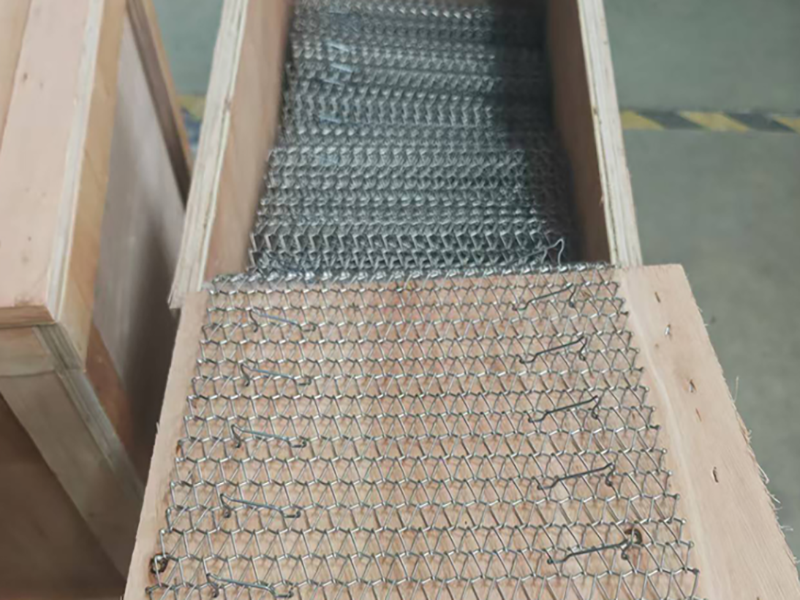
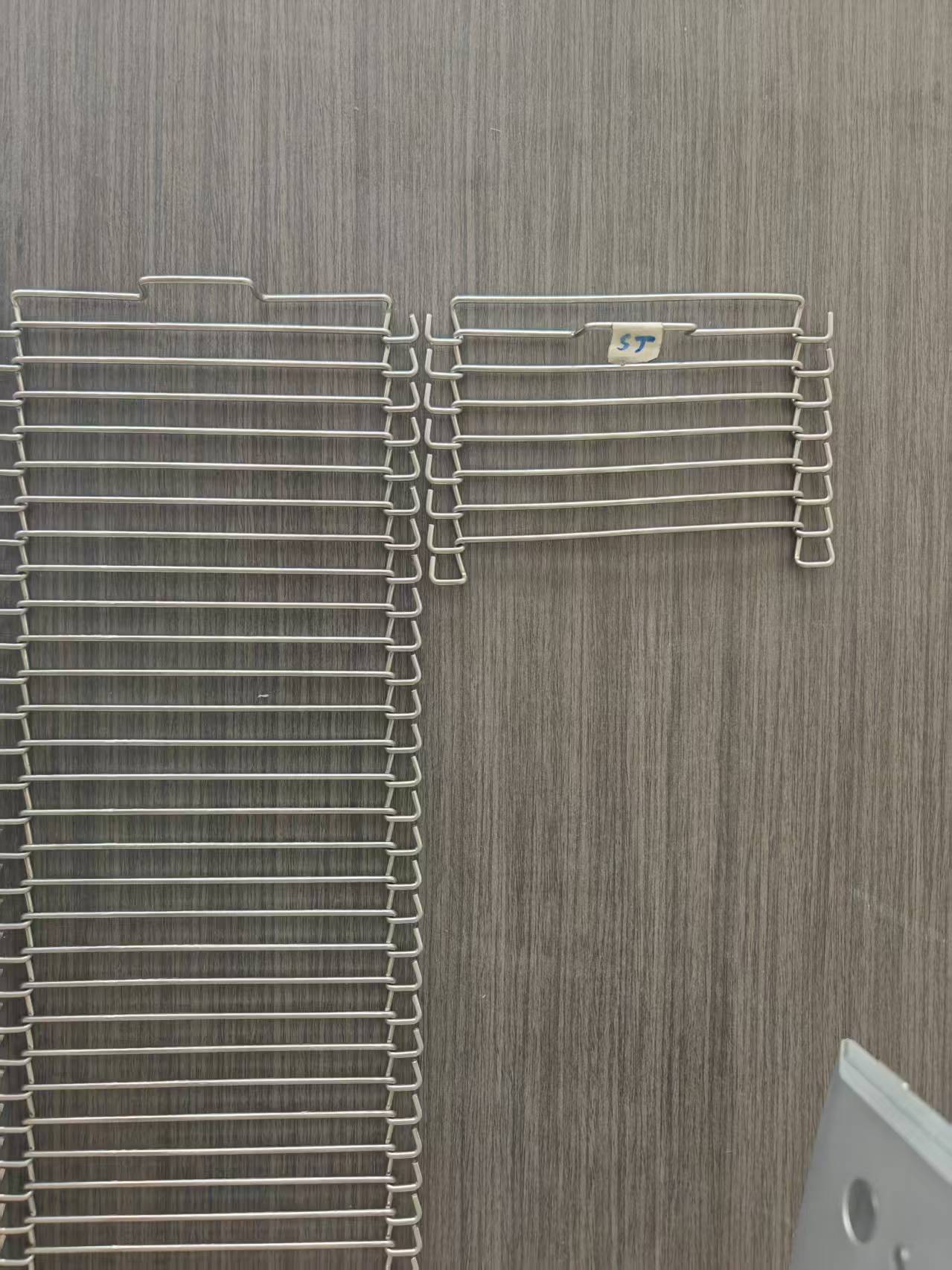
- Spiral Pitch and Cross-Rod Tolerance: The distance between wire spirals and cross-connecting rods must maintain extreme dimensional accuracy (within ±0.05 mm). Inconsistent pitch causes mechanical vibration as the belt engages drive sprockets, transferring micro-shocks directly to delicate silicon substrates.
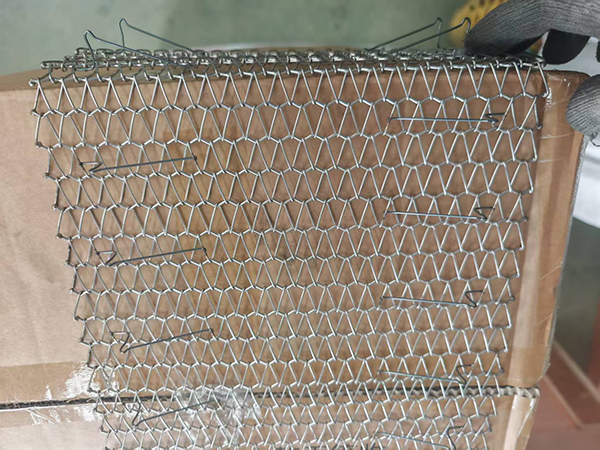
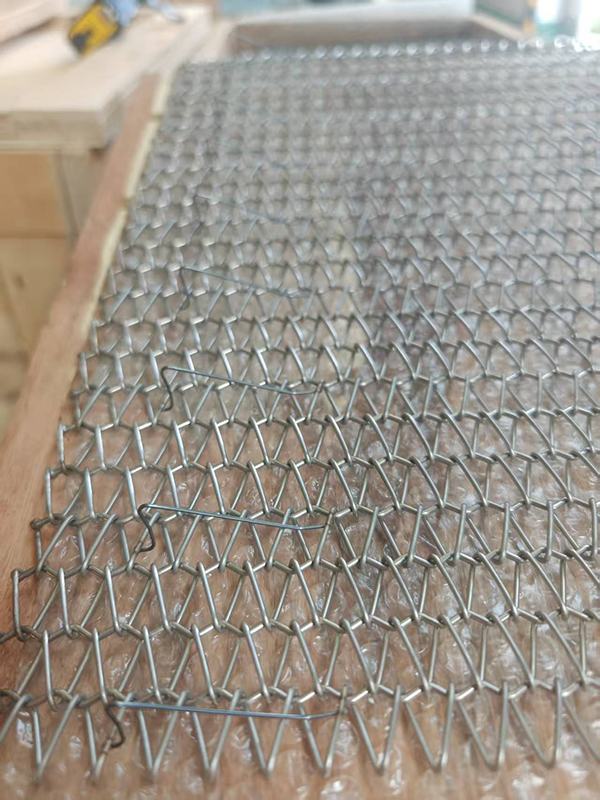
- Precision Surface Flattening: Wire spirals must undergo specialized flattening processes to create a smooth, continuous contact plane. A flat bearing surface ensures uniform heat transfer across the entire wafer backside and prevents point-pressure stress concentrations.
- Smooth Edge Finishing: Belt edge loops (whether welded or knuckled) must be flawlessly flush. Rough or uneven edge terminations can snag internal furnace guides, trigger tracking drift, or generate particulate wear debris inside the heated chamber.
3. Key Quality Metrics Matrix
When auditing mesh belt suppliers for solar cell contact firing furnaces, technical procurement teams focus on four foundational benchmark criteria:
| Quality Benchmark | Technical Requirement | Operational Impact on PV Cell Production |
|---|---|---|
| Thermal Stability | Continuous thermal resistance up to 950°C with low expansion coefficient. | Prevents belt waviness, localized thermal warping, and wafer displacement. |
| Anti-Scaling Integrity | Zero particulate shedding; stable oxide layer in air or nitrogen atmospheres. | Protects silver/aluminum gridlines and silicon surfaces from metallic contamination. |
| Tensile & Creep Strength | High yield strength under continuous furnace pull-tension. | Minimizes structural stretching, reducing frequent drive adjustment and downtime. |
| Surface Flatness | Uniform wire flattening across full belt width. | Ensures consistent back-surface field contact and eliminates mechanical point loading. |
4. Optimized Open Area and Thermal Mass Efficiency
Solar firing furnaces depend on precise temperature control across multiple heating zones. Conveyor belts with excess thermal mass absorb unnecessary heat energy, resulting in elevated power consumption and slower thermal response times.
- Open Area Optimization: High-performance sintering mesh designs achieve an ideal ratio between structural load capacity and open mesh area. This allows swift air circulation and unobstructed infrared radiation penetration, ensuring balanced firing of front silver paste and back aluminum contact layers.
- Straight-Line Tracking Stability: Balanced weave construction—alternating left-hand and right-hand wire spirals—ensures neutral tracking forces. True-running belts prevent side drift, protecting furnace muffle walls and ensuring exact wafer alignment with automated loading/unloading robotic arms.
5. Identifying Substandard Mesh Belts
To maintain high throughput and extend furnace service intervals, plant managers should watch for early signs of mesh belt degradation:
Sideways curvature caused by uneven wire tension during weaving, leading to edge friction and uneven wear.
Rapid pitch stretching caused by low-grade alloy substitutes, requiring constant tensioning adjustments.
Poorly controlled micro-welding on cross rods that leads to unexpected belt breakage under operational tension.
Partner with Huada Metal Mesh Belt for Solar Conveyor Solutions
Achieving maximum efficiency in solar cell metallization requires furnace components designed for extreme environments. At Huada Metal Mesh Belt, we specialize in engineering high-temperature metal mesh belts designed specifically for photovoltaic fast-firing, sintering, and annealing furnaces.
By combining ultra-pure heat-resistant alloys, precision spiral flattening technology, and rigorous dimensional tolerance controls, Huada Metal Mesh Belt provides durable, low-maintenance conveyor solutions that safeguard solar cell yield and reduce operational costs.
Visit Huada Metal Mesh Belt today to consult with our engineering specialists, request custom mesh specifications, or receive a technical quotation tailored to your furnace production line.