






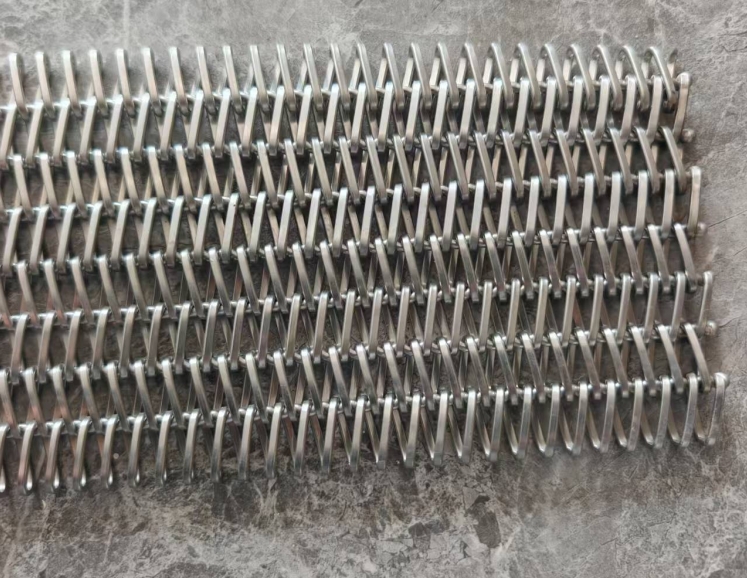
Stainless Steel vs Alloy Furnace Belts: Which Is Better?
In high-temperature thermal processing, Metal Conveyor Belts are subjected to extreme thermodynamic and mechanical stresses. Choosing the right material for continuous industrial furnaces—such as brazing, sintering, or heat-treating ovens—directly impacts thermal efficiency, belt elongation rates, and replacement intervals. Procurement managers frequently debate between standard stainless steel and engineered high-nickel/chrome alloys. The ideal selection is determined not by a general ranking, but by the specific operating temperatures and atmospheric chemistry inside your furnace zones.
To avoid premature mesh deformation, metallurgical embrittlement, and unscheduled line stoppages, here is an engineering analysis contrasting stainless steel and high-performance alloy Furnace Belts.
1. Thermal Thresholds and Creep Rupture Resistance
The primary differentiator between these material groups is their mechanical performance at elevated temperatures. Standard heat-resistant stainless steels (such as AISI 304, 314, or 310S) perform exceptionally well in moderate thermal environments, maintaining structural integrity up to approximately 850°C to 1000°C. However, when operating temperatures surpass 1000°C, stainless steels experience accelerated creep—the gradual, permanent deformation under mechanical load. Engineered alloys (such as Inconel 601, Nichrome, or specialized Incoloy series) feature higher concentrations of nickel and chromium, providing superior creep rupture strength and maintaining structural alignment during heavy-load sintering at 1100°C and above.
2. Atmospheric Chemistry and Oxidation Scaling
Furnace atmospheres are rarely inert; they involve carburizing, nitriding, or alternating reducing/oxidizing environments. At high temperatures, stainless steel forms a protective chromium oxide layer, but this layer can spall (flake off) during rapid thermal cycling, leading to accelerated thinning of the wire mesh. High-nickel alloys form a much tighter, more adherent oxide scale that resists cyclic thermal shock. Furthermore, in high-carbon atmospheres (carburizing furnaces), stainless steel easily absorbs carbon, forming brittle carbides along grain boundaries that cause sudden snapping. High-nickel alloys resist carbon penetration, significantly extending the belt's service life.
3. Total Cost of Ownership (TCO) Analysis
While standard stainless steel mesh belts require a lower initial capital outlay, their replacement frequency in severe environments drives up operational costs. Frequent line shutdowns for belt tracking adjustments, link repairs, or tracking realignment reduce overall factory throughput. Investing in an engineered alloy belt features a higher initial acquisition cost but pays dividends through reduced maintenance labor, minimal downtime, and extended operational cycles, ensuring a lower total cost per production hour.
Industrial Mesh Engineering Alignment: As an international authority in high-temperature conveyor technology, Global Mesh Belt (www.globalmeshbelt.com) specializes in custom-weaving premium stainless steel and advanced high-nickel alloy furnace belts. Our precise metallurgical tailoring guarantees optimal tensile performance, minimal thermal stretching, and robust scale resistance for demanding industrial heat-treating and solar panel production lines.
Conclusion
Determining whether stainless steel or an alloy belt is superior depends entirely on your furnace parameters. For sub-1000°C applications with stable thermal profiles, stainless steel provides a highly cost-effective and dependable solution. However, for extreme heat, aggressive atmospheres, and rapid thermal cycling, high-performance alloy belts are essential to prevent structural deformation and secure high-efficiency, continuous production schedules.