






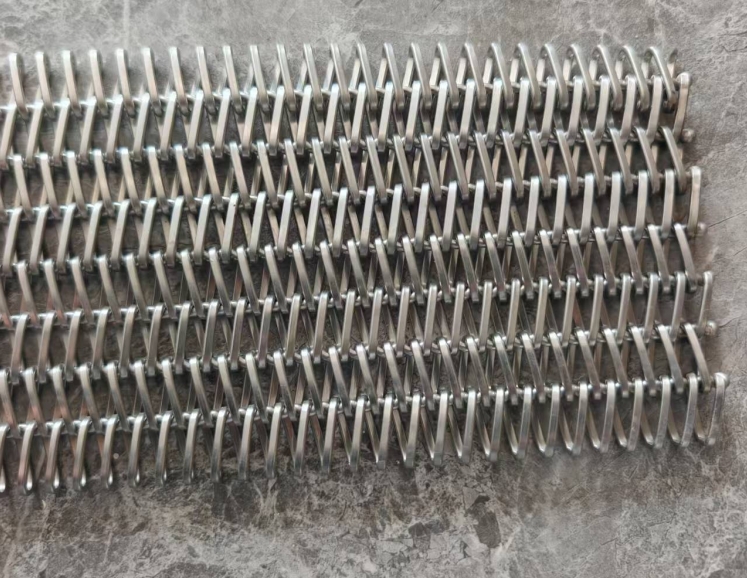
Top Trends in Automated Food Processing: The Role of Spiral Mesh Belts
The global food processing industry is undergoing a massive transformation. Driven by shifting consumer preferences, stringent food safety regulations, and a pressing need for higher operational efficiency, processing facilities are rapidly moving toward fully automated ecosystems. From high-capacity industrial bakeries to massive IQF (Individual Quick Freezing) facilities, automation is no longer a competitive advantage—it is a baseline requirement.
At the heart of these automated assembly lines lies a critical mechanical component that directly impacts product quality, throughput, and food safety: the Spiral Mesh Belt.
In this article, we will explore the defining trends shaping automated food processing today and examine how advanced spiral wire Mesh Belts act as a foundational pillar for modern production lines.
1. The Push for Continuous High-Capacity IQF Freezing
Traditional batch freezing methods create massive bottlenecks in modern food supply chains. Today’s market demands continuous, high-throughput freezing solutions for seafood, poultry, prepared meals, and vegetables. Spiral freezing systems have become the gold standard because they maximize vertical factory space, allowing products to undergo extended dwell times in a compact footprint.
| | [Upward Path] | |
| | Mesh Belt | |
| ==================== | ---> [Outfeed to Packaging]
In these continuous freezing loops, the mechanical performance of the spiral mesh belt is pushed to its limits. Operating in sub-zero environments (often down to -40℃) requires materials that resist cryogenic embrittlement.
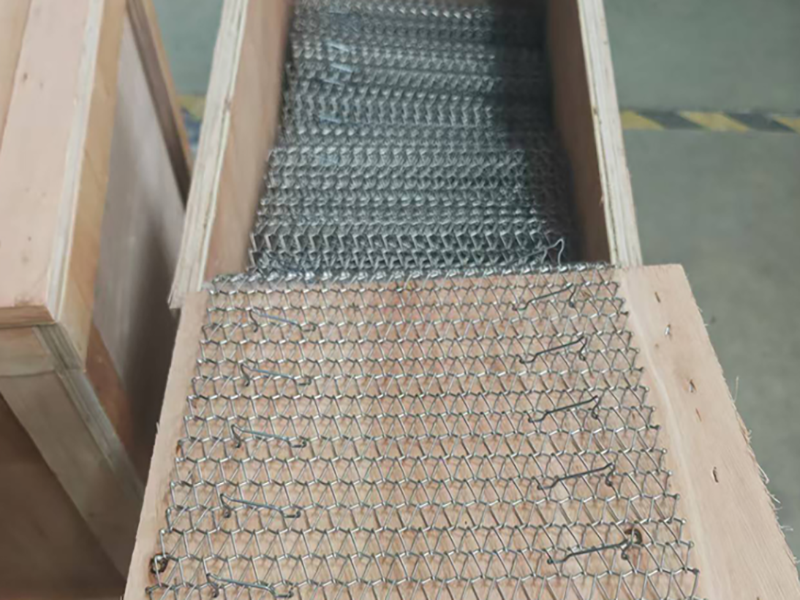
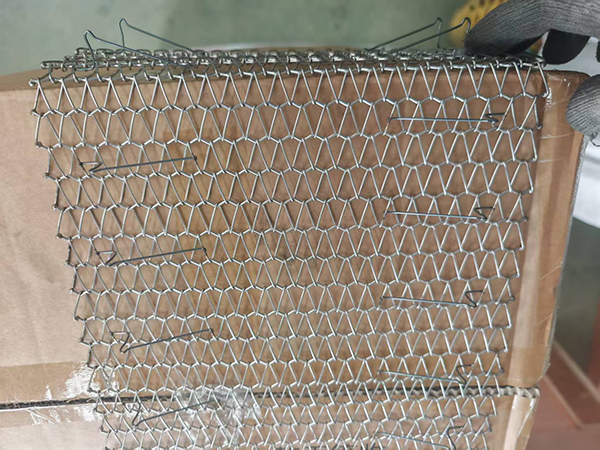
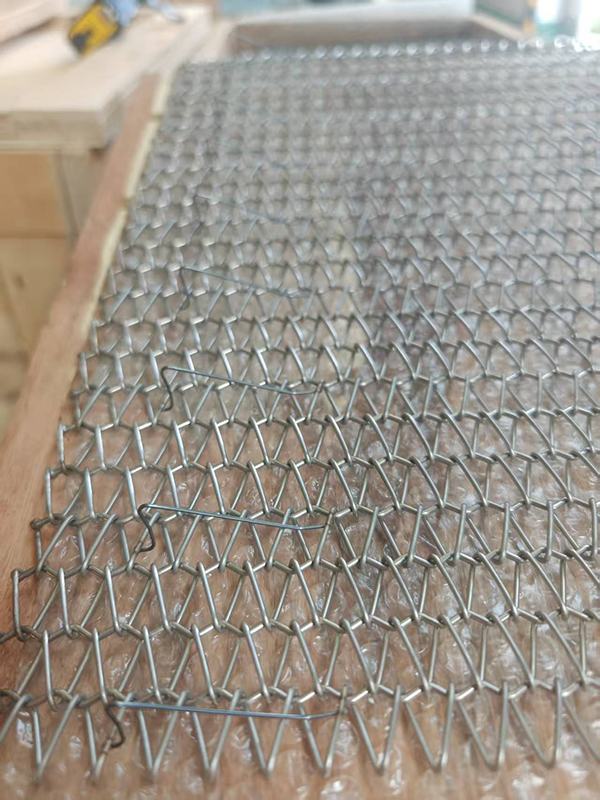
Advanced spiral belts constructed from specialized stainless steel alloys prevent structural deformation and fatigue failures caused by extreme temperature transitions. Furthermore, the open-mesh design allows optimized, high-velocity airflow to circulate uniformly around the food products, ensuring rapid crust freezing and maintaining optimal cellular structure.
2. Ultra-Hygienic Design and Pathogen Mitigation
Foodborne illnesses and subsequent product recalls represent catastrophic financial and reputational risks for food brands. As a result, global regulatory bodies have tightened standards around cleanability and sanitary equipment design. Automated systems must be built to eliminate "dead zones" where bacteria, food debris, and allergens can hide.
Traditional solid or heavy-link conveyor belts often present complex pivot points and crevices that resist standard Clean-in-Place (CIP) processes. Modern automated lines are shifting heavily toward high-sanitation spiral wire belts featuring:
- Minimal Cross-Contamination Risk: Open-weave structures allow juices, crumbs, and sanitizing fluids to pass straight through rather than pooling on the carrying surface.
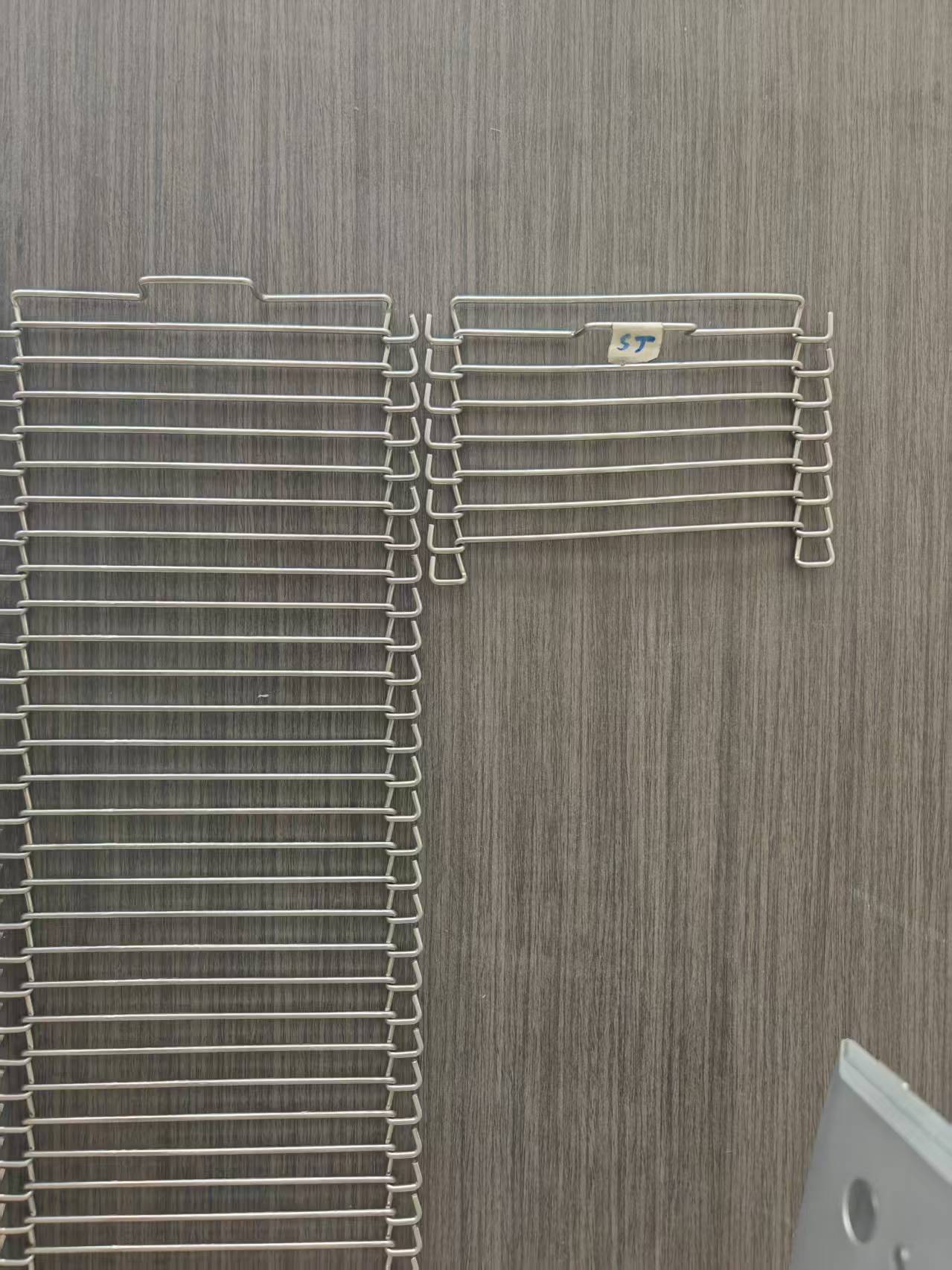
- Smooth Welded Edges: High-quality spiral belts utilize proprietary button-edge or knuckle-edge welding techniques. This eliminates sharp burs or open gaps that can trap organic matter or snag wiping cloths.
- Resistance to Aggressive Chemical Washdowns: The use of premium 304 and 316 grade stainless steel ensures the belt can withstand daily exposure to harsh caustic cleaners and high-pressure sanitizing sprays without pitting or rusting.
3. High-Temperature Integration: Proofing, Baking, and Roasting
Automation trends are not restricted to cold-chain processing. Automated industrial ovens and proofing boxes rely on continuous spiral configurations to manage dwell times for large-scale baking operations.
Continuous Heat Inflow ---> [ Open Mesh Structure ] ---> 100% Uniform Bake
The challenge in automated baking is achieving a perfectly uniform crust and bake color across thousands of units per hour. Spiral mesh belts solve this via highly calibrated thermodynamics. Because the metal belt features a calculated open-area percentage, it allows radiant heat and moisture to envelop the dough evenly.
Unlike solid bands, spiral wire configurations minimize heat retention bottlenecks, reducing the energy footprint of industrial ovens while preventing "soggy bottoms" or uneven baking in high-volume pastry, bread, and pizza production.
4. Total Cost of Ownership (TCO) and Downtime Reduction
In an automated factory, a single line stoppage can cost thousands of dollars per minute in lost productivity and wasted raw ingredients. Food processors are looking beyond the initial purchase price of equipment; they are focusing heavily on the Total Cost of Ownership (TCO).
To address this trend, spiral mesh belts have evolved to incorporate advanced mechanical engineering upgrades designed to maximize service life and simplify field maintenance:
Direct Drive and Positive Drive Systems
Traditional friction-driven spiral systems are prone to surging, belt slip, and uneven tensioning, which can cause premature wear or catastrophic belt breaks. Modern automated lines utilize positive drive or direct drive spiral configurations. By interlocking the belt edges directly with the drive drum sprockets, the system operates under significantly lower tension, smoothly eliminating tracking issues and extending the functional lifespan of both the belt and the conveyor framework.
Modular Repairability
If a section of a wire mesh belt suffers mechanical damage from an accidental tool drop or foreign object debris, entire belt replacement is unnecessary. High-performance spiral belts are engineered for rapid rod and spiral link replacement, allowing maintenance crews to swap out localized segments in minutes, keeping unscheduled facility downtime to an absolute minimum.
Conclusion: Engineering the Future of Food Conveying
As food automation technology accelerates toward smarter, faster, and more sanitary configurations, your choice of conveying components dictates the true performance ceiling of your production floor. Investing in precision-engineered spiral mesh belts is a direct investment in your facility's throughput, safety compliance, and long-term profitability.