






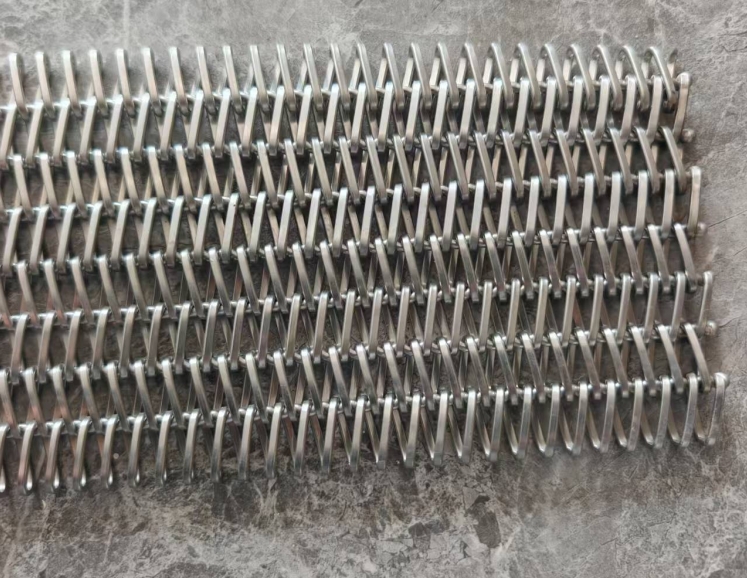
The Importance of Edge Finishes: Welded, Knuckled, or Clevis?
When designing or ordering a stainless Steel Wire Mesh belt, it is easy to get caught up in specifications like wire gauge, spiral pitch, and alloy selection. While these parameters are vital for load capacity and thermal resistance, there is one critical component that is frequently overlooked: the edge finish.
The edge of a conveyor belt is its primary point of vulnerability. It bears the brunt of lateral tracking forces, rubs against conveyor frame guides, and handles the stress of transitioning over rollers. Choosing the wrong edge finish can lead to snagging, premature fraying, or catastrophic structural failure.
At Jiangsu Huada Metal Mesh Belt (Global Mesh Belt), we have spent over three decades engineering customized wire mesh solutions for global industries. In this guide, we will break down the three most common edge finishes—Welded, Knuckled, and Clevis (Side Chain)—to help you determine which configuration your application demands.
⚙️1. Welded Edges: The Industrial Standard
The welded edge is the most common and economical finish for standard wire mesh belts, particularly Balance Weave Belts.
The Mechanics
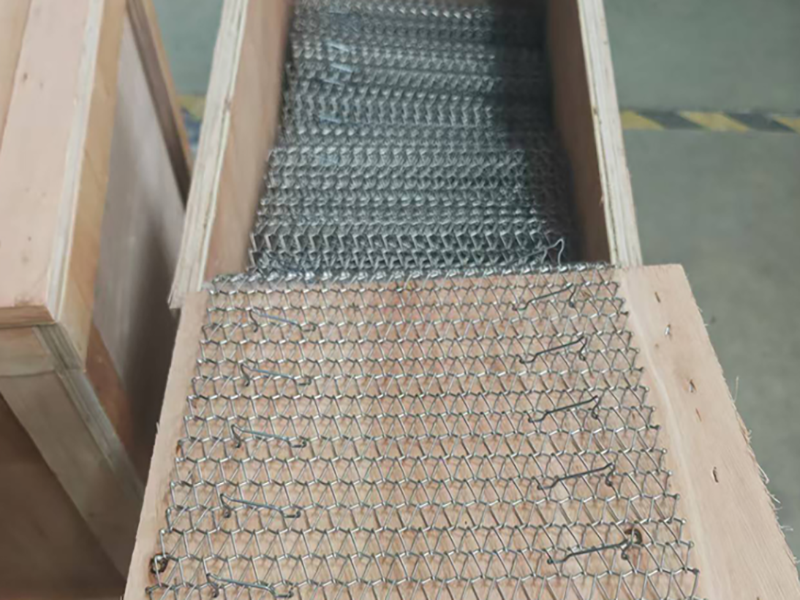
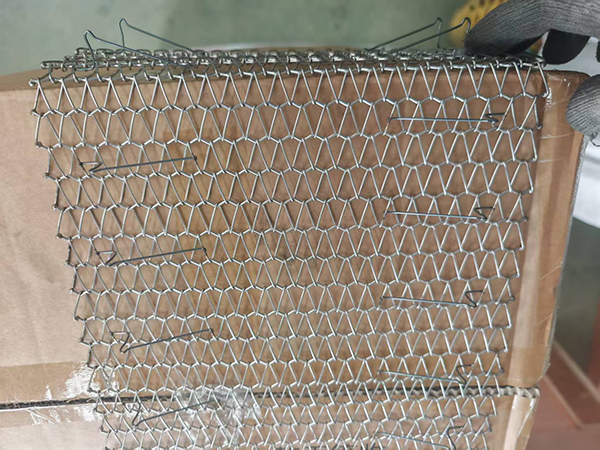
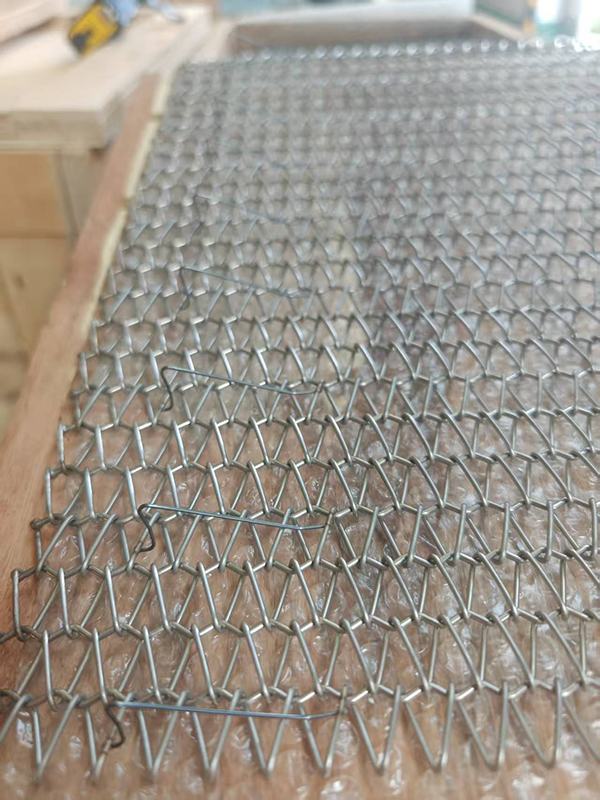
In a welded edge configuration, the alternating left- and right-hand spirals are cleanly cut, and the cross rods are securely spot-welded to the edge of the mesh fabric. This locks the entire structure into a rigid, unified matrix.
Advantages & Best Uses
Cost-Effective: Because it can be easily automated during our ISO 9001-certified manufacturing process, it offers an excellent balance of performance and affordability.
Smooth Profile: A well-executed weld results in a flush, smooth edge that minimizes the risk of catching on conveyor side guards.
Ideal Applications: Perfect for ambient or medium-temperature applications like industrial baking ovens, drying tunnels, and general packaging lines.
Limitations
Welded edges do not handle severe thermal cycling or extreme mechanical flexing well. At high temperatures, different parts of the belt expand at slightly different rates. This differential expansion puts immense localized stress on the rigid weld points, which can cause them to crack over time.
🔧2. Knuckled (Clinch) Edges: Built for Flex and Thermal Expansion
If your production line involves tight turns, small-diameter pulleys, or rapid temperature changes, a welded edge may fail prematurely. This is where the knuckled edge becomes essential.
The Mechanics
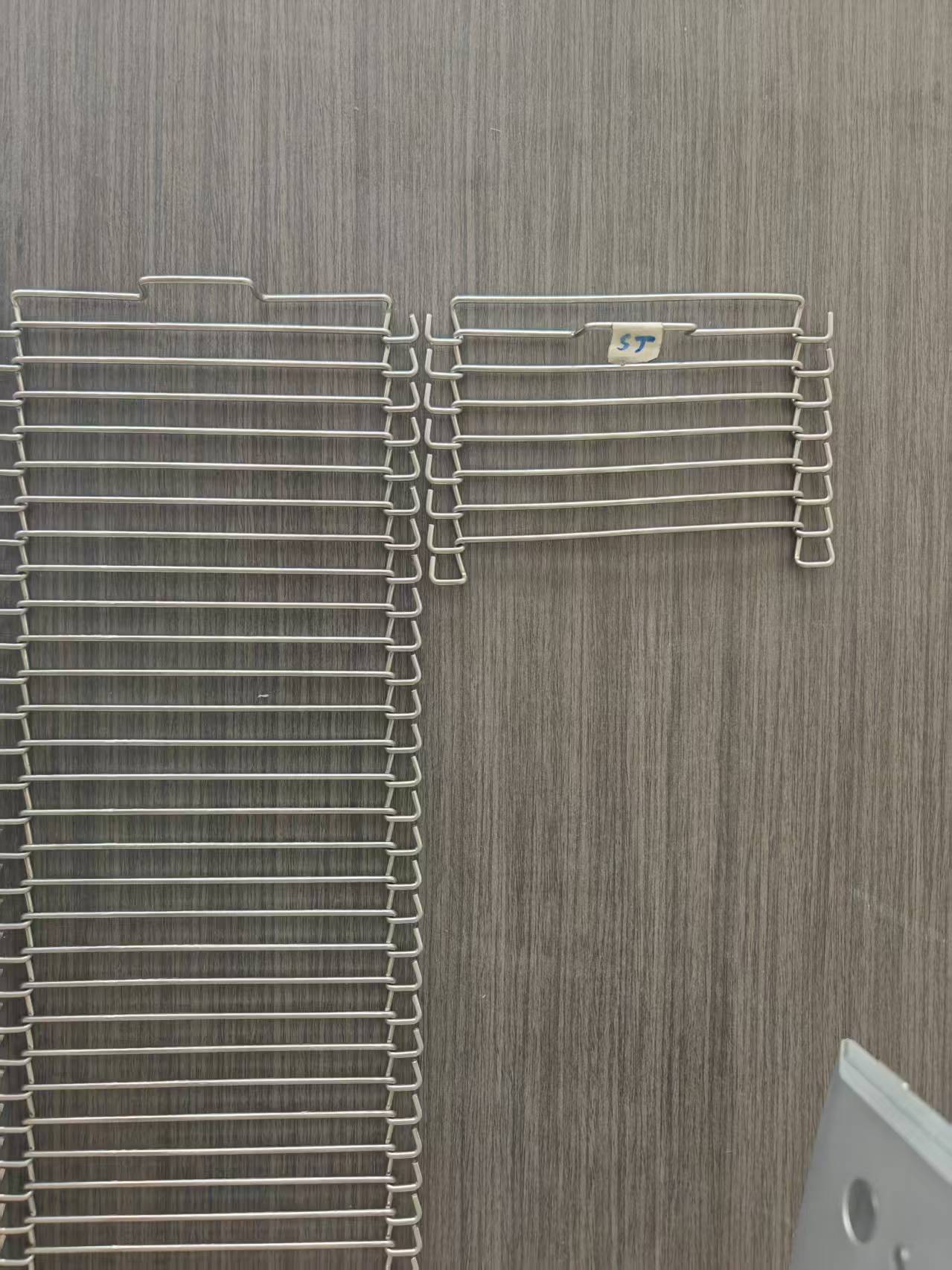
Instead of using heat to fuse the metal components together, a knuckled edge relies on mechanical interlocking. The ends of the cross rods are bent or looped back over the adjacent spiral wires, creating a secure, hook-like connection.
Advantages & Best Uses
- High Flexibility:Because there are no rigid weld points, the individual wires retain their ability to pivot freely. This drastically reduces the risk of fatigue cracking when the belt travels around small drive drums.
- Thermal Breathing:In high-temperature applications—such as our AshPro High-Temp Belts used in solar cell sintering—a knuckled edge allows the belt to "breathe" as it expands and contracts, preventing warping and edge distortion.
- Ideal Applications:Found extensively in high-heat furnace environments, glass annealing lehrs, and freezing tunnels.
Limitations
Knuckled edges can have a slightly wider profile than welded edges, requiring a bit more clearance within the conveyor frame to prevent the loops from catching on structural components.
⛓️3. Clevis and Side Chain Edges: The Heavy-Duty Powerhouses
When a process requires absolute tracking precision, handles heavy structural loads, or operates in slick environments, the mesh fabric itself should not be used to pull the load. Instead, the tension must be transferred to dedicated side chains.
The Mechanics
In this heavy-duty configuration, the cross rods of the wire mesh belt extend past the fabric edge and are securely fastened to standard or custom roller chains via clevis pins, cotter pins, or extended plates.
Advantages & Best Uses
- Positive, Slip-Free Drive:Because the side chains engage directly with drive sprockets, the belt cannot slip, even when submerged in oil, water, or chemical quenching tanks.
- Perfect Alignment:The side chains act as built-in tracking guides, ensuring the belt travels in a perfectly straight line and completely eliminating edge wear against the conveyor frame.
- Extreme Load Bearing:The mechanical pull is borne entirely by the high-strength chain links, leaving the mesh fabric completely unstressed to serve purely as a product carrier.
- Ideal Applications:Essential for heavy industrial heat treatment, metal parts quenching, food washing lines, and inclined elevators.
Limitations
This is the most expensive edge configuration due to the cost of the precision roller chains and the complexity of the assembly. It also requires a more rigorous maintenance schedule to ensure the side chains remain properly lubricated and synchronized.
📊Edge Selection Matrix
| Feature | Welded Edge | Knuckled Edge | Clevis / Side Chain |
| Primary Benefit | Low cost, smooth profile | Thermal expansion, flexibility | High load, zero slip, perfect tracking |
| Mechanical Drive | Friction Driven | Friction Driven | Positive (Sprocket Driven) |
| Max Temperature | Medium (Up to 600°C) | Very High (Up to 1150°C) | Dependent on chain lubrication |
| Relative Cost | $ | $$ | $$$ |
At Jiangsu Huada Metal Mesh Belt Co., Ltd., we don't just supply mesh; we engineer solutions. Our technical teams analyze your temperature profiles, conveyor lengths, and load requirements to specify the exact weave, alloy, and edge finish your machinery needs to thrive. From patented AshPro high-precision options for the photovoltaic sector to robust chain-driven systems for heavy manufacturing, we deliver components built to outlast the competition.
Optimize your conveyor system's lifespan today.
Explore our full technical catalog at www.globalmeshbelt.com or consult directly with our engineering department by emailing jerry@meshbelt.cn. Let us help you eliminate tracking issues and minimize your operational downtime.