






What Is a Solar Sintering Furnace Belt and How Does It Work?
The solar energy revolution is moving at a breakneck pace. As the global demand for high-efficiency photovoltaic (PV) cells skyrockets, solar manufacturers are constantly looking for ways to optimize production lines, increase throughput, and reduce wafer breakage.
At the heart of the solar cell manufacturing process lies the metallization co-firing step—a precise, high-temperature operation that permanently fuses conductive pastes onto silicon wafers. The unsung hero of this critical process? The solar Sintering Furnace Belt.
In this article, we will dive deep into what a solar sintering furnace belt is, how it operates under extreme manufacturing conditions, and why selecting the right Mesh Belt is paramount to your production yields.
Understanding the Solar Sintering Process
Before looking at the belt itself, it helps to understand the environment it operates in. During the solar cell manufacturing process, silver and aluminum pastes are screen-printed onto silicon wafers to create the front and back electrical contacts (the grid lines and busbars).
To turn these pastes into highly conductive electrical contacts, the wafers must go through a sintering furnace (often called a co-firing furnace). This process requires:
Temperatures spiking between 700°C and 900°C.
Peak zone traversed in just a few seconds.
Uniform cooling to freeze microstructures.
Because the process happens at such high speeds and temperatures, the mechanism carrying the fragile silicon wafers through the furnace must be flawless. That is where the solar sintering furnace belt comes into play.
What Is a Solar Sintering Furnace Belt?
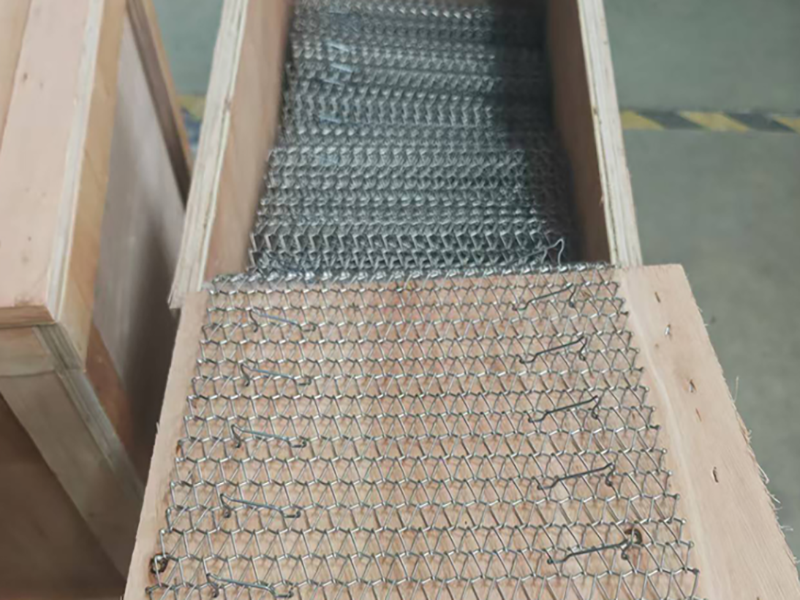
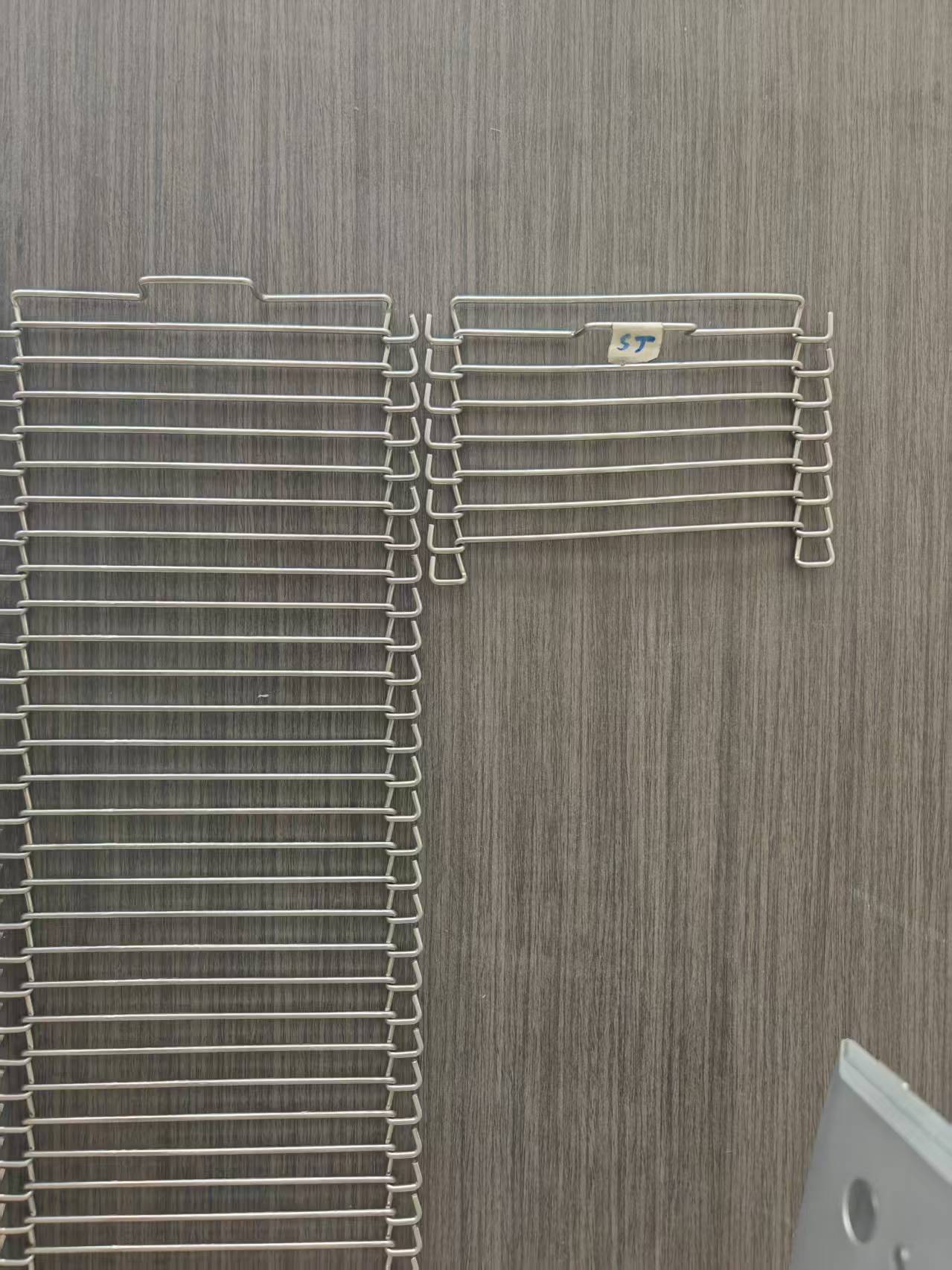
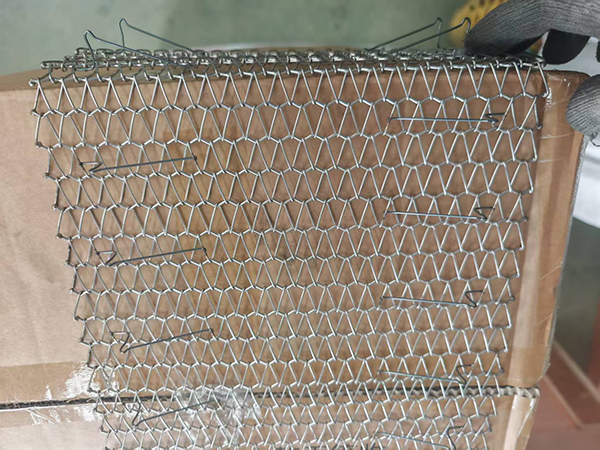
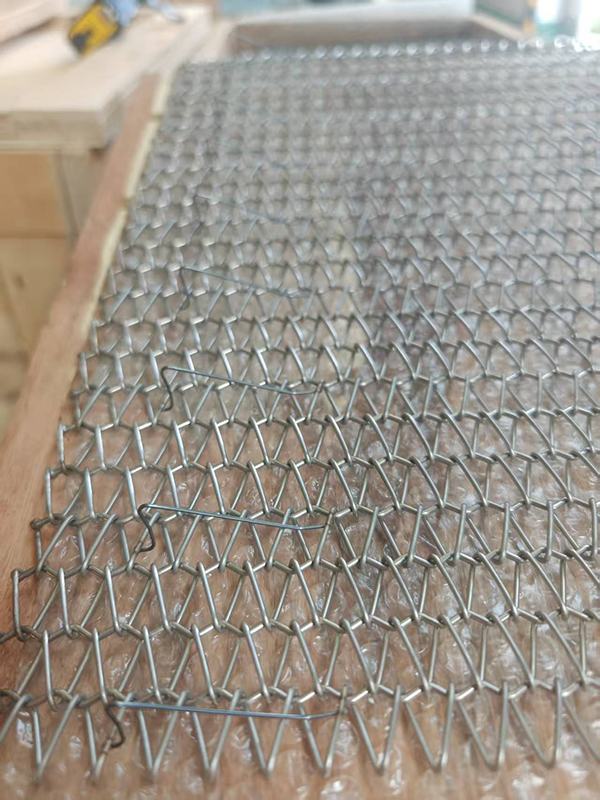
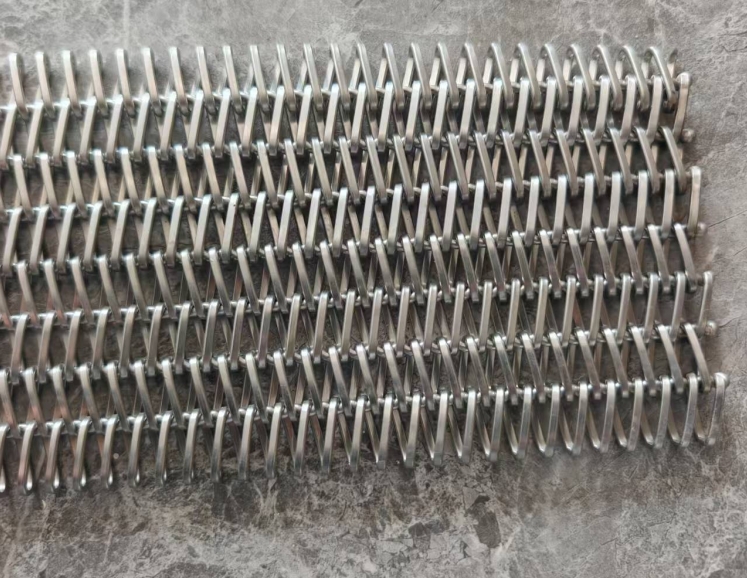
A solar sintering furnace beltis a highly specialized, continuous metal Mesh Conveyor belt designed specifically to transport silicon wafers through co-firing furnaces. Unlike standard industrial conveyor belts, these belts are precision-engineered to withstand rapid thermal cycling, resist oxidation, and maintain a perfectly flat profile.
At Global Mesh Belt, we manufacture these belts using advanced alloys—typically high-grade Nichrome (Nickel-Chromium) or specific stainless steel variants. These materials ensure that the belt does not stretch, warp, or contaminate the pristine environment of the solar furnace.
Key Anatomical Features:
- Balanced Chute/Wave Weave: The mesh pattern is tightly controlled to provide a smooth, flat surface so that wafers do not tilt or vibrate during transport.
- Smooth Edges: The edges are meticulously finished (often welded or knuckled) to prevent snagging on furnace internals.
- High Strength-to-Weight Ratio: The belt needs to be lightweight enough to heat up and cool down rapidly, yet strong enough to handle continuous mechanical tension.
How Does a Solar Sintering Furnace Belt Work?
The operation of a solar sintering furnace belt can be broken down into four distinct phases as it cycles continuously through the furnace:
Fragile silicon wafers are precisely placed onto the moving mesh belt by automated robotic arms. Because silicon wafers are incredibly thin (often under 170 microns), any vibration or unevenness on the belt surface can cause micro-cracks or misalignment. The smooth, uniform weave of the belt ensures the wafers sit perfectly flat from the start.
As the belt moves into the furnace, it passes through multiple heating zones. The belt must absorb heat quickly and uniformly. If the belt expands unevenly, it will warp, causing a phenomenon known as "belt tracking issues" or "snaking." High-quality solar sintering belts are pre-treated and engineered to expand linearly, ensuring the wafers stay on a perfectly straight path.
In the peak zone, the temperature reaches its maximum (700°C -900°C). Here, the metal paste penetrates the silicon's antireflective coating to form an ohmic contact. The mesh belt must remain completely inert during this phase. It cannot off-gas or shed microscopic metallic particles, as any contamination would ruin the electrical efficiency of the solar cell.
After the peak spike, the belt carries the wafers into the cooling section. The belt cools down rapidly alongside the wafers. Once outside the furnace chamber, the finished solar cells are unloaded, and the belt loops underneath the furnace to return to the loading zone, ready to repeat the cycle.
Why the Choice of Mesh Belt Critically Impacts Your Yield
In solar cell manufacturing, profit margins are defined by efficiency and yield rates. Choosing a subpar furnace belt can lead to catastrophic line stoppages. Here is why investing in a premium belt from a trusted manufacturer matters:
📉 Minimizing Thermal Mass
A heavy, thick conveyor belt acts as a heat sink. It sucks up valuable thermal energy, requiring your furnace to work harder and consume more electricity. Premium solar sintering belts utilize optimized wire diameters that maximize mechanical strength while minimizing thermal mass, saving significant energy costs.
🛡️ Preventing Wafer Contamination
At 800°C, low-grade metals begin to scale and oxidize. This creates microscopic debris that can settle on the solar cells, causing electrical shorts or reduced cell efficiency. Using high-purity Nichrome alloys ensures the belt remains clean and scale-free over thousands of cycles.
⚙️ Longevity and Reduced Downtime
Every time a production line shuts down to replace a warped or broken belt, it costs thousands of dollars in lost throughput. A precision-engineered belt offers superior resistance to thermal fatigue, vastly extending the operational lifespan and ensuring predictable maintenance schedules.
Optimize Your Solar Production with Huada Metal Mesh Belt
The solar manufacturing industry moves fast, and your equipment needs to keep pace. At Huada Metal Mesh Belt, we specialize in designing and manufacturing high-performance metal mesh belts tailored for the solar photovoltaic industry.
Our solar sintering furnace belts are built to offer excellent flatness, superior oxidation resistance, and extended service life under the most demanding thermal cycles. Whether you are upgrading an existing co-firing line or designing a new high-throughput furnace, our engineering team is here to provide the perfect mesh solution.
Discover our full range of high-temperature industrial belts by visiting Huada Metal Mesh Belt today, or reach out to our team for a custom quote tailored to your specific furnace requirements.